20% rabatGratis afbestilling
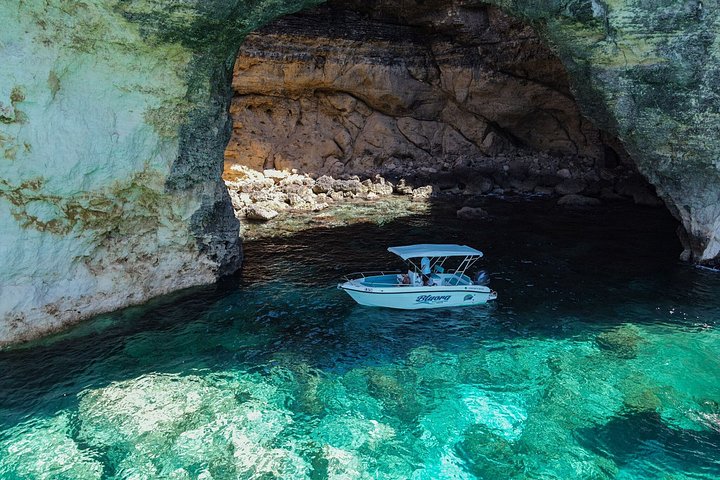
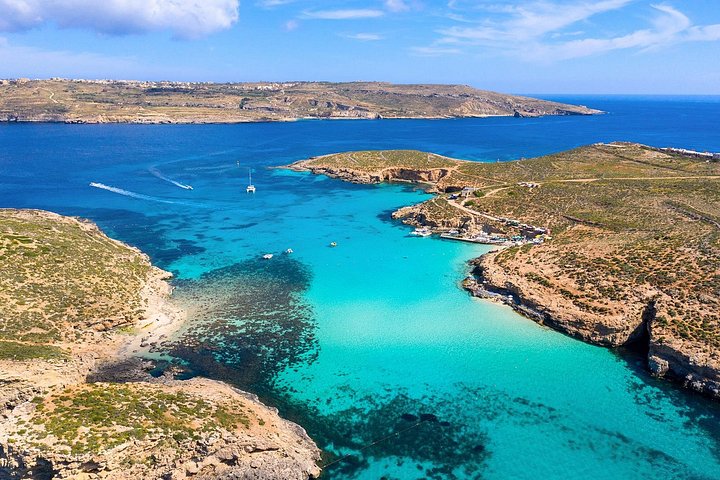
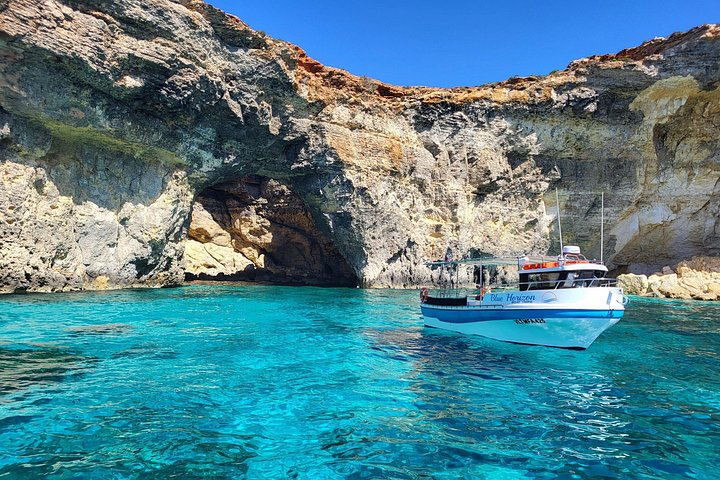
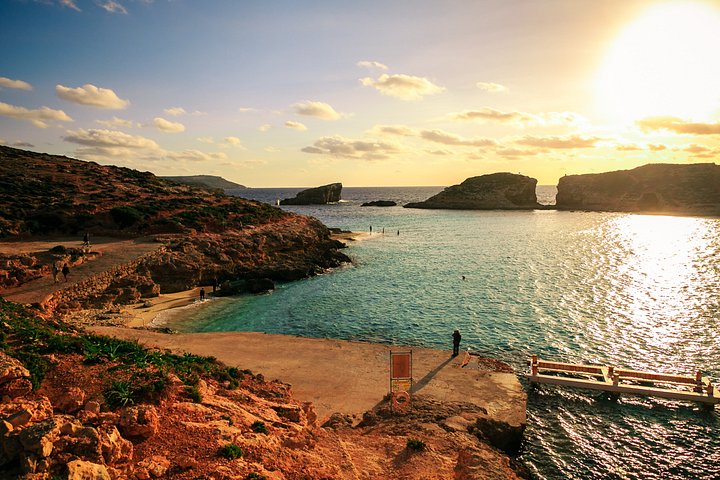
Mellieha: Gozo, Comino, Sea Caves, and Blue Lagoon Cruise
fra34 US$27 US$
Beskrivelserne vises på engelsk.
The Malta multi pass is an all-in-one multi-site & multi-day pass for 3, 4, 6 or 7 days offering you great savings on cruises, buses & entrances. All Malta multi passes include unlimited use of City Sightseeing Malta hop-on hop-off buses on the north (blue) & south (red) routes, & Captain Morgan's Grand Harbour cruise. The 3 day leisure pass, 4 day leisure+ pass & 7 day premium pass include entrance to Malta 5D OR Malta Experience & Sacra Infermeria, the National Aquarium & Esplora Interactive Science Centre. The 6 day heritage pass & 7 day premium pass include entry to up to 20+ Heritage Malta sites, including the Grand Master's Palace in Valletta & UNESCO Hagar Qim Temples. The 4 day leisure+ pass & 7 day premium pass include 1 round trip on Captain Morgan's Two Islands ferries from Malta to Comino's Blue Lagoon & Gozo, & you can also choose to include a 1 Day Gozo Heritage Pass which includes: - City Sightseeing Gozo hop-on hop-off buses - entrance to Heritage sites in Gozo
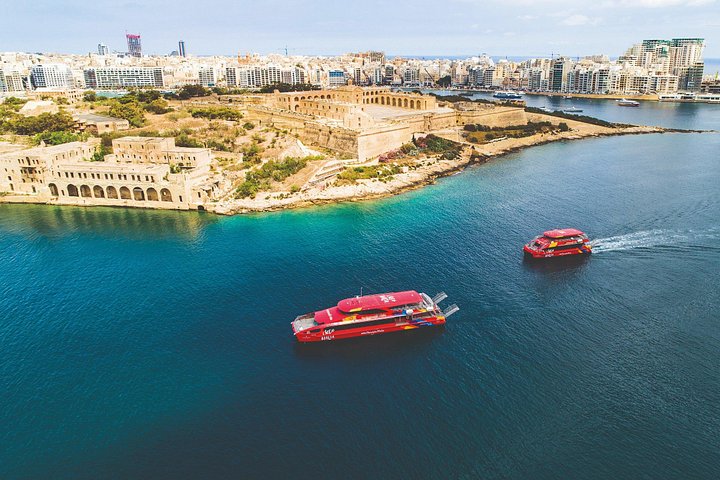
Grand Harbour Cruise Join us on a 90 minute cruise of Malta's Grand Harbour and Marsamxett Harbour, the two natural harbours either side of Valletta, on a state of the art, eco-friendly, 20 metre, harbour catamaran ferry boat. You will be able to relive Malta's gallant history with a detailed live commentary in English and German unfolding the history connected with the two Great Sieges of 1565 and 1942. The cruise offers fantastic views of the magnificent forts, battlements, creeks and skylines of Valletta and the Three Cities which can only be admired from the sea and is a great opportunity for some superb photos. The harbour cruise is available with a choice of daily departure times and you can choose to sit outdoors or indoors in air-conditioned comfort. Free WiFi and restroom facilities are available on board and food and drink is available to purchase from on board vending machines.
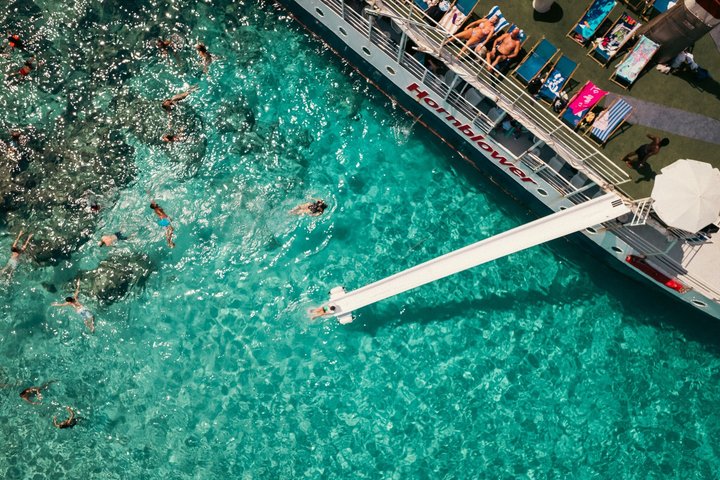
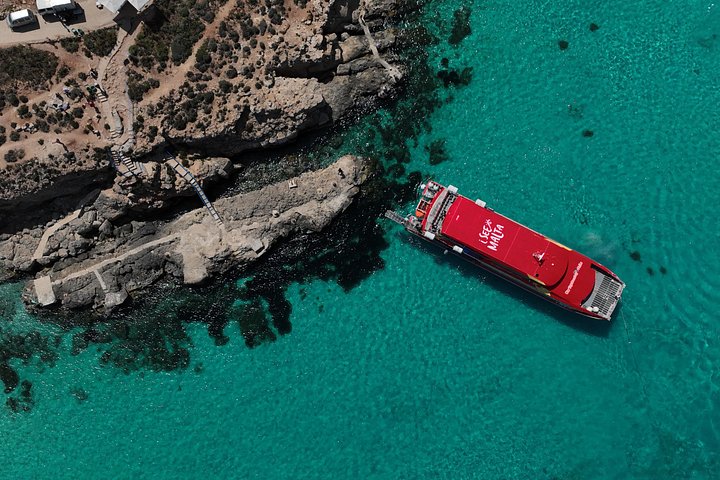
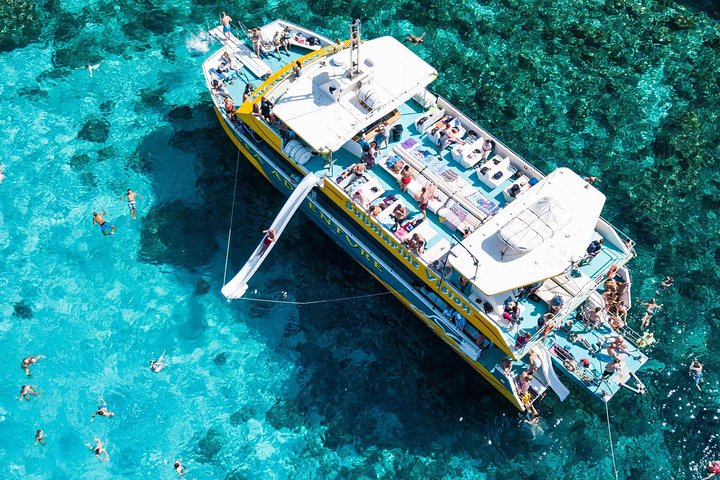
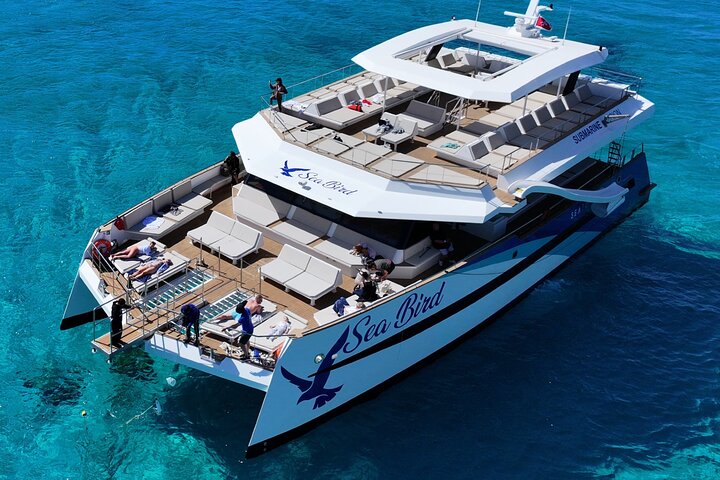
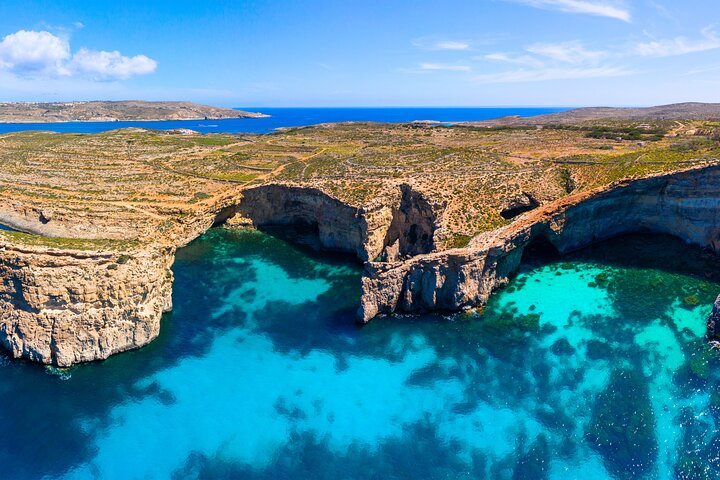
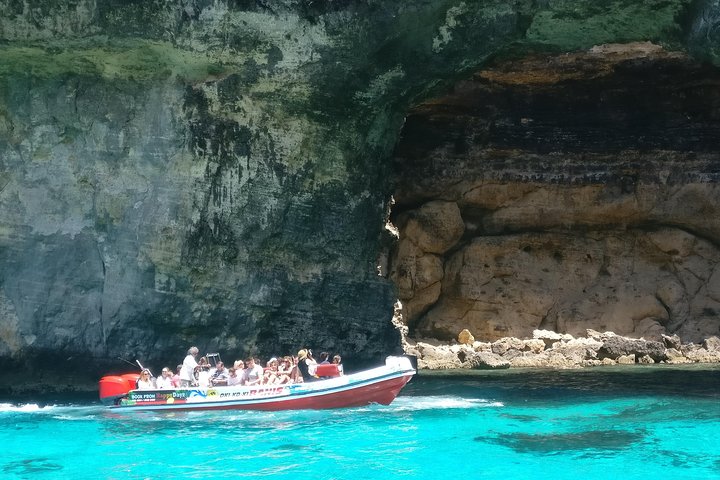
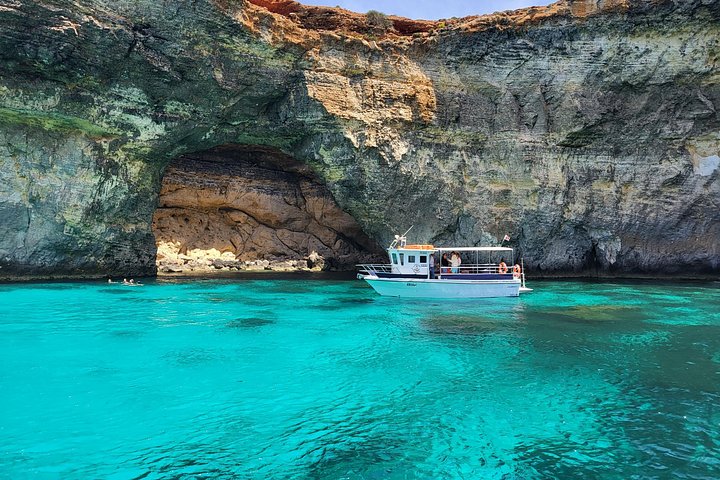
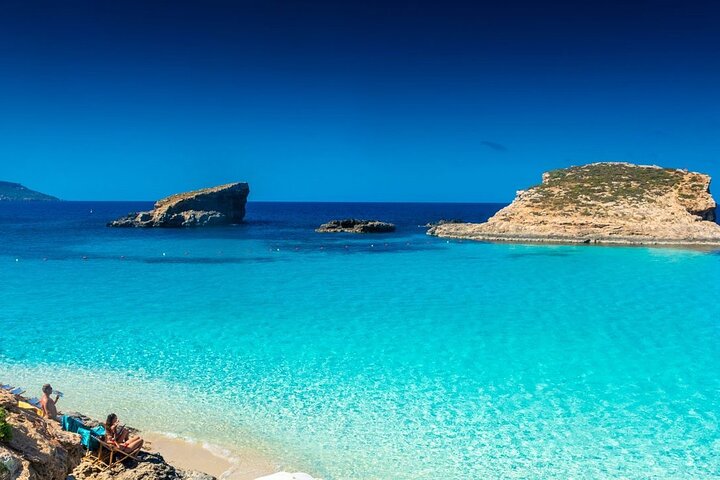
Comino hop-on hop-off ferry from Malta This is a perfect way to visit Comino's Blue Lagoon and Gozo by sea from Malta, with free time on land for you to discover both of Malta's smaller islands independently. With year round departures from Sliema or Bugibba in Malta, you will able to admire the north-east coast of Malta as you cruise on board a state of the art, eco-friendly, 33 metre, catamaran ferry to Comino's Blue Lagoon and Gozo. You can choose to sit outdoors or indoors in air-conditioned comfort. Additional ferries travel between the islands of Comino and Gozo during the day. Comino's Blue Lagoon is famous for its turquoise crystal clear waters and you will have free time in Comino to swim, sunbathe, relax or discover the island independently. Later board the catamaran at Comino's Blue Lagoon or Gozo to return back to Sliema or Bugibba in Malta. A cash bar is available on the catamaran for the purchase of drinks and snacks. Toilet facilities are also available on board.
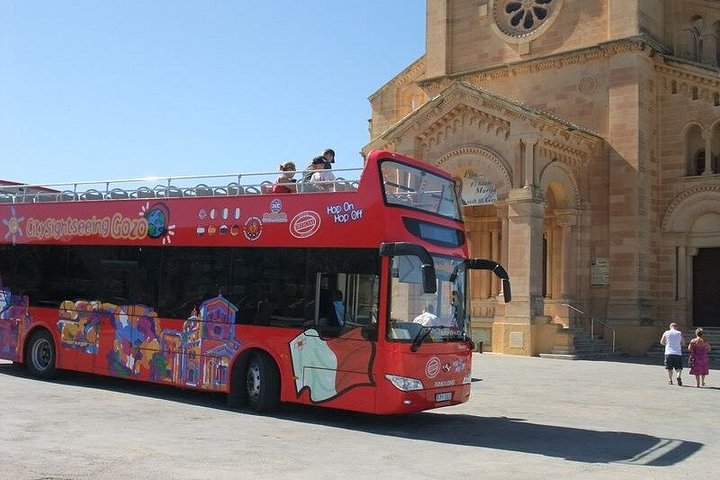
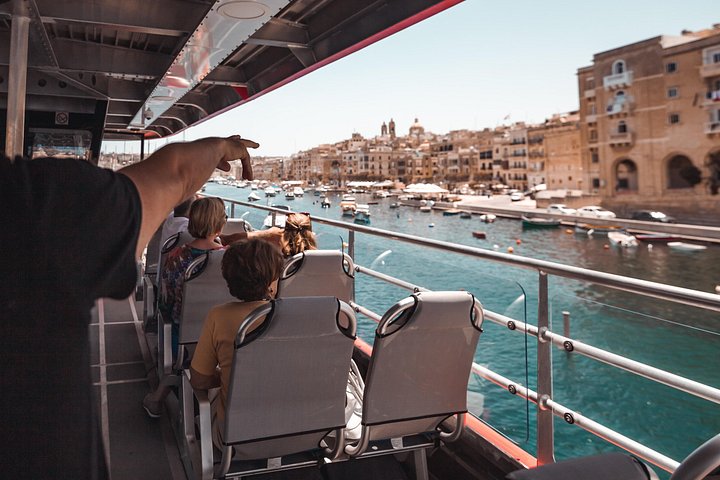
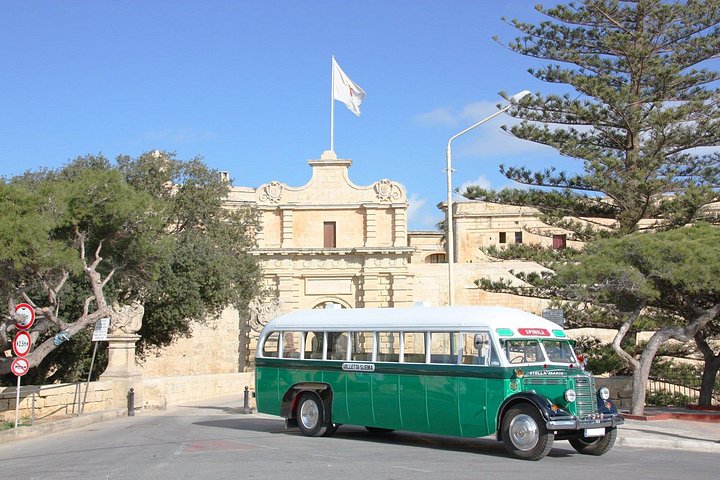
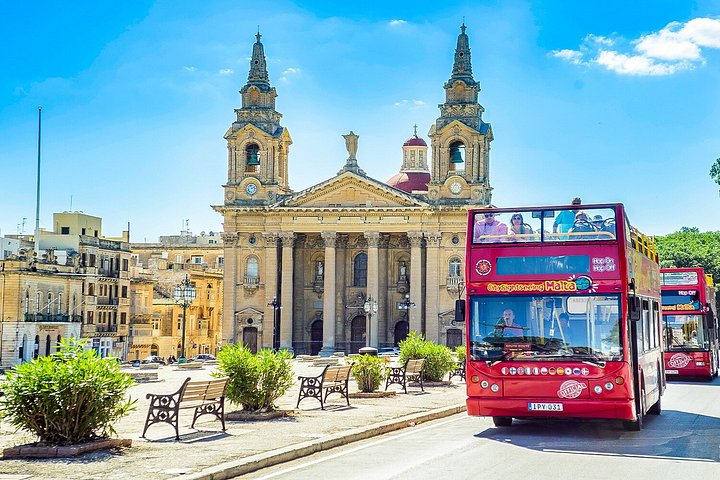
CitySightseeing Malta forms part of the world's leading open top bus tour operator present in over 100 locations worldwide! With distinctive buses and friendly staff and the choice of 12+ multi-lingual commentary channels, sightseeing has never been so much fun! Hop On and Hop Off as much as you like at any of the bus stops on the Malta north or south routes and see all the best sites and attractions that Malta has to offer. Both the north and south lines start from Valletta Harbour and visit sites such as San Anton Presidential Gardens, the Historic City of Mdina, Ta Qali Crafts Village, Mosta, the Three fortified cities of Vittoriosa, Cospicua and Senglea, the fishing village of Marsaxlokk, the Blue Grotto at Wied iz-Zurrieq (April - October) and Valletta city centre. With over 30 stops and 40 points of interest along our routes, CitySightseeing Malta buses give you the opportunity to discover the Malta like never before!
The temple of Ħaġar Qim stands on a hilltop overlooking the sea and the islet of Filfa. The site is included in the UNESCO World Heritage List. First excavated in 1839, the remains suggest a date between 3800 – 2200 BC, a period known as the Ġgantija phase in Maltese prehistory. The site consists of a central building and the remains of at least two more structures. Along the external wall, one may find some of the largest megaliths used in the building of these structures, such as a 5.2m high stone and a huge megalith estimated to weigh close to 20 tonnes. The building itself is made up of a series of C-shaped rooms, known as apses. Walking through the main entrance, one finds a central paved space with an apse on each side. One of the prehistoric chambers at Ħaġar Qim holds an elliptical hole which is hewn out in alignment with the Summer Solstice sunrise. A dedicated visitor centre offers information about the site in a fun and interactive manner.
Mnajdra is located on Malta’s southern coast, overlooking the isle of Fifla. The site is included in the UNESCO World Heritage List. The site consists of three buildings facing a common oval forecourt. The first and oldest structure dates to the Ġgantija phase (3600 – 3200 BC). The second structure known as the South Temple was built in the early Tarxien phase (3150 – 2500 BC). The Central Temple, which lies between the two, was the last to be constructed. The South Temple has its entrance set in a concave monumental facade and leads to two rooms, or apses. Opposite the main entrance is the doorway to the second set of apses flanked by two large blocks decorated with small drilled holes. This doorway and the decorated blocks mark the position of the rising sun on the first day of spring and autumn (the Equinoxes) and the first day of summer and winter (the Solstices). A dedicated visitor centre offers information about the site in a fun and interactive manner.
Until further notice, the Palace State Rooms are temporarily closed The Grand Master's Palace was one of the first buildings constructed at the heart of the new city of Valletta, founded by Grand Master Jean de Valette. During the British Period, it served as the Governor’s Palace, and was the seat of Malta’s first constitutional parliament in 1921. Visitors can view the most comprehensive visual narrative of the Great Siege of 1565 painted by Matteo Perez d’Aleccio, the only complete and intact set of the famous 18th century French Gobelins tapestries entitled “Les Teintures des Indes”, and the late 18th century Baroque illusionistic ceiling paintings, which reflect the pageantry and grandeur of the Grand Masters who indulged in imitating the great aristocratic courts of Europe. A portrait gallery of the various rulers of the Maltese Islands, spanning from the arrival of the Knights of St John in Malta till today is also present.
The Palace Armoury is a showcase of the opulence of the Knights of St John. Ruling the Maltese Islands from 1530 to 1798, these knights formed a unique brotherhood of resolute warrior monks who defended the Catholic faith against the relentless attacks of the Ottoman Turks. A visit to the Armoury’s collection will demonstrate that during that era, armour was not simply a means of defending the body against injury during combat. It was also a status symbol and a means of showing one’s wealth and power. The laboriously fashioned and lavishly decorated armour of some of the knights reflect clearly this phenomenon. Among the most notable artefacts, visitors can view the unique display of suits of armour which were owned by Grand Masters Alof de Wignacourt and Jean de La Valette, armour and weapons used by the Ottoman Empire during the Great Siege of 1565, and a selection of artillery pieces.
St Paul’s Catacombs are located on the outskirts of the old Roman capital Melite (today’s Mdina) since Roman law prohibited burials within the city. Serving as a burial ground from Punic and Roman times, the site represents the earliest and largest archaeological evidence of Christianity in Malta. The catacombs form a typical complex of interconnected underground Roman cemeteries that were in use up to the 7th century AD. The area is littered with more than 30 hypogea, of which the main complex comprises an intricate system of interconnected passages and tombs that cover an area of over 2000 square metres. The entrance to the main complex of St Paul’s Catacombs leads to two considerably large halls, adorned with pillars made to resemble Doric columns. The main halls are equipped with two circular rock tables set in a low platform with sloping sides. These triclinia, or Agape tables, were used to host commemorative meals during the annual festival of the dead.
The Domvs Romana allows visitors to take a glimpse at the private life and habits of an ancient Roman aristocrat. The intricate mosaics which survived for centuries, as well as the artefacts found within the remains, are testimony to the original richness of this dwelling. The museum display is designed to take the visitor through the various aspects of a Roman family and household, with aspects ranging from the actual division of roles in a Roman family, to fashion, education, entertainment, food and drink. A highlight at this museum is the only set of marble statues portraying the Emperor Claudius and his family that can be seen in a private house. During the Roman empire, such artworks were normally found in public spaces.
Malta’s oldest prehistoric site of Għar Dalam engages visitors to step back in time. Rows of ancient animal bones which were unearthed from Għar Dalam cave are exhibited in the museum. No such animals have lived on the Maltese Islands for thousands of years. The bone remains of small-sized elephants and hippopotami are among the most notable exhibits. More bones of the Ice Age animals are still visible inside the cave. An extensive amount of animal bones were discovered in the ‘Hippopotamus Layer’, deposited by water during the Pleistocene era, around 500,000 years ago. Pebbles and sparse animal bones belonging to species were identified in the next layer, while remains dating from 25,000 to 18,000 years ago were recovered from the ‘Deer Layer’. The ‘Cultural Layer’ holds the earliest evidence of human presence in Malta, some 7,400 years ago. The site of Għar Dalam is also renowned for its ecological value. A garden of indigenous plants and trees introduce visitors to local flora.
Borġ in-Nadur boasts a unique location, situated high between two valleys and overlooking St. George’s Bay in Birżebbuġa. It is also 500m away from the prehistoric site of Għar Dalam. The site was in use during both the late Temple Period (3,150 – 2,500 BC) and the Bronze Age (2,400 – 700 BC). Excavated in the 1920s by eminent archaeologist Margaret Murray, the site of Borġ in-Nadur yielded information that helped our understanding of facets of Maltese prehistory which had until then remained problematic, such as the differences between the Temple Period and the Bronze Age. The remains and the items which were retrieved during the excavations, are to this day still being analysed by researchers, using techniques which were not available to archaeologists of decades past. The four apsed temple found within the site is fronted by a large enclosed area which is unique for such buildings.
During the past thousand years, whoever gained control of Fort St. Angelo could effectively rule the Maltese Islands. The fort dominates Grand Harbour, strategically located on a hillock. No other fortress has been engaged with the same intensity in the shaping of Malta’s destiny. After 1530, the Order of St. John christened the military structure as Fort St. Angelo and turned it into their headquarters. The fort played a major role during the Great Siege of 1565. Between 1906 and 1979 the Royal Navy relocated its command hub inside the fort. During the Second World War, Fort St. Angelo was once more called into action to offer protection against the Axis air raids. Today, Fort St. Angelo offers spectacular panoramic views of the Grand Harbour and its surrounding fortified towns. Through traditional and innovative immersive displays, visitors can experience the colourful history and various architectural styles of this fort, together with staggering examples of artillery.
Gratis afbestilling indtil 24 timer før oplevelsen starter, med fuld refusion.
3,9
Bedømmelserne kommer fra 14 anmeldelser, som vores bookingpartner har indsamlet. Det er de rejsendes egne ord, i den rækkefølge de blev skrevet — aldrig omrokeret for at pynte på oplevelsen.
Før/nu-priser kommer fra udbyderen, aldrig fra os.
fra34 US$27 US$
fra30 US$24 US$
fra30 US$24 US$
fra296 US$48 US$
fra263 US$237 US$
Føj Ticket Hall til din hjemmeskærm
Billetter og byguider, ét tryk væk, også offline.
Ticket Hall