30% rabatGratis afbestilling
Kanazawa Half Day Private Tour - Castle, Garden, Geisha District
fra194 US$136 US$
Kategorier i Kanazawa
Beskrivelserne vises på engelsk.
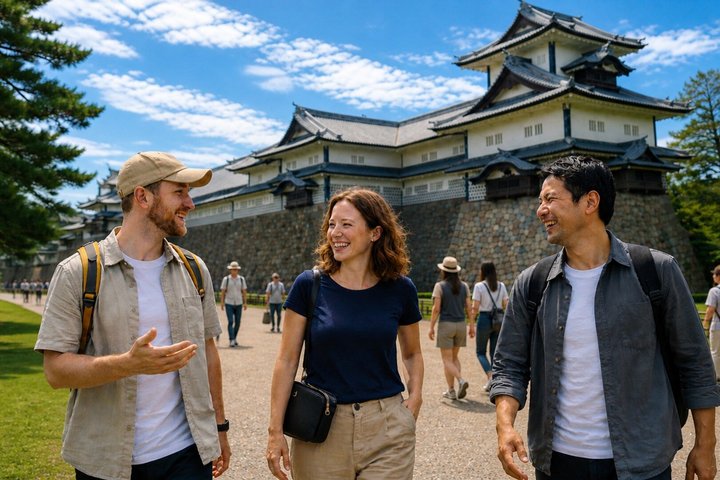
Explore the beautiful town of Kanazawa on this customized, four-hour walking tour. Your government-licensed and experienced multilingual guide will efficiently provide views of the city that most tourist do not get to see. Start your day by meeting your guide at your hotel, then visit possible sites such as Kenrokuen, one of the "Three Great Gardens of Japan"; the expansive Higashi Chaya District, a traditional teahouse district founded in the Edo Period; or the 21st Century Museum, a museum of contemporary art. Let us know what you would like to experience, what time you would like to start your tour, and where you are staying, and we'll arrange a tour that's best for you! Note*1: Please select your must-see spots from a list in the tour information to create your customized itinerary. Note*2: National Government Licensed Guide Interpreter certification is issued by the Japanese government requires a good knowledge and understanding of Japanese culture and history.
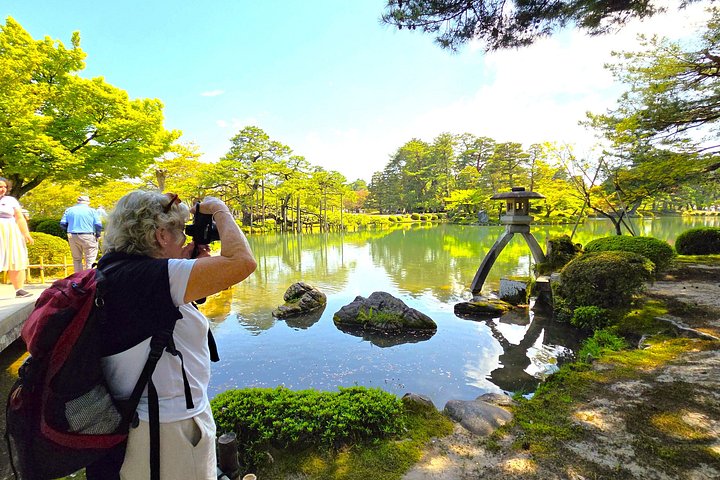
Kenrokuen (兼六園) in Kanazawa is justifiably classified as one of Japan's "three most beautiful landscape gardens" alongside Mito's Kairakuen and Okayama's Korakuen. The spacious grounds used to be the outer garden of Kanazawa Castle and were constructed by the ruling Maeda family over a period of nearly two centuries. Opened to the public in 1871, Kenrokuen features a variety of flowering trees which provide the garden with a different look for each season.
The D.T. Suzuki Museum (鈴木大拙館, Suzuki Daisetsu Kan) is a small museum commemorating the life and works of Suzuki Daisetz Teitaro (1870-1966), a prominent Buddhist philosopher. The museum was opened in 2011 in the district of Kanazawa where Suzuki was born, a ten minute walk from Kenrokuen. On display are exhibitions showcasing the writings of D.T. Suzuki which allow the visitor to learn more about his life and philosophy. In addition, the architecture of the museum serves as an interpretation of D.T. Suzuki's life and religious scholarship; its use of clean, simple lines and open spaces causes visitors to pause and reflect.
Myoryuji Temple (妙立寺, Myōryūji), commonly known as Ninjadera ("Ninja Temple"), was built by the Maeda lords, rulers over the region during the Edo Period. While not actually associated with ninja, the temple earned its nickname because of its many deceptive defences. Since the shogun imposed strict building restrictions as one way of weakening his regional lords, Myoryuji was designed to circumvent the restrictions and serve as a disguised military outpost. It was built with considerable defences and escape routes, so that its defenders could alert the castle in the event of an attack.
A chaya (lit. teahouse) is an exclusive type of restaurant where guests are entertained by geisha who perform song and dance. During the Edo Period, chaya were found in designated entertainment districts, usually just outside the city limits. Kanazawa has three, well preserved chaya districts, Higashi Chayagai (Eastern Chaya District), Nishi Chayagai (Western Chaya District) and Kazuemachi.
The 21st Century Museum of Contemporary Art (金沢21世紀美術館, Kanazawa Nijūichiseiki Bijutsukan) opened in 2004 in downtown Kanazawa, just a few steps from Kenrokuen. It exhibits works of acclaimed contemporary artists from Japan and all over the world, and is among Japan's most popular art museums. The architecture of the 21st Century Museum is unique and distinguishes it from other museums and buildings around Kanazawa. The museum is comprised of a circular building, 112.5 meters in diameter, with no facade or main entrance. It was designed without a front or back to discourage its patrons from approaching the museum, and consequently its art, from only one direction.
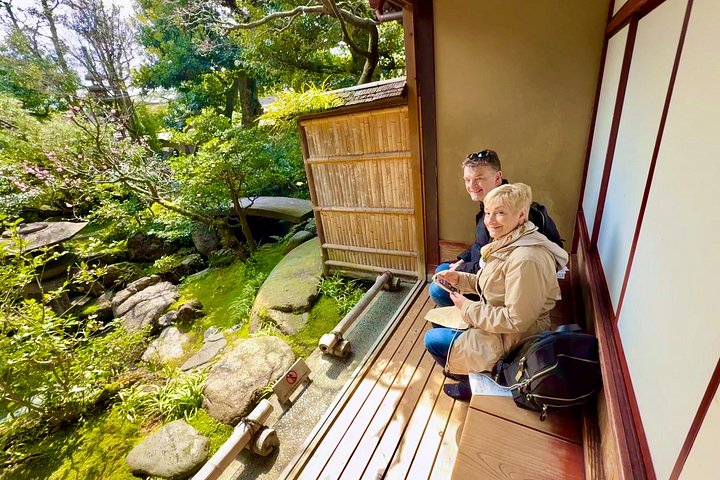
The Seisonkaku Villa (成巽閣, Seisonkaku) was built in the last years of the Edo Period by a Maeda lord for his mother. It is one of the most elegant, remaining samurai villas in Japan. Located in the southeast corner of Kenrokuen, Seisonkaku is a large structure with a number of expansive tatami rooms on two floors. One of its interesting features is the roof which covers its garden viewing deck. It was built without supports that would interrupt the view of the garden.
Nagamachi (長町) was a samurai district located at the foot of the former Kanazawa Castle, where samurai and their families used to reside. The area preserves a historic atmosphere with its remaining samurai residences, earthen walls, private entrance gates, narrow lanes and water canals. One of the main attractions of the district is the centrally located Nomura-ke, a restored samurai residence displaying the lifestyle and artifacts of the era when samurai were prosperous. In contrast is the Shinise Kinenkan Museum, a restored pharmacy displaying the lives of the merchant class which rose in prosperity as the samurai declined.
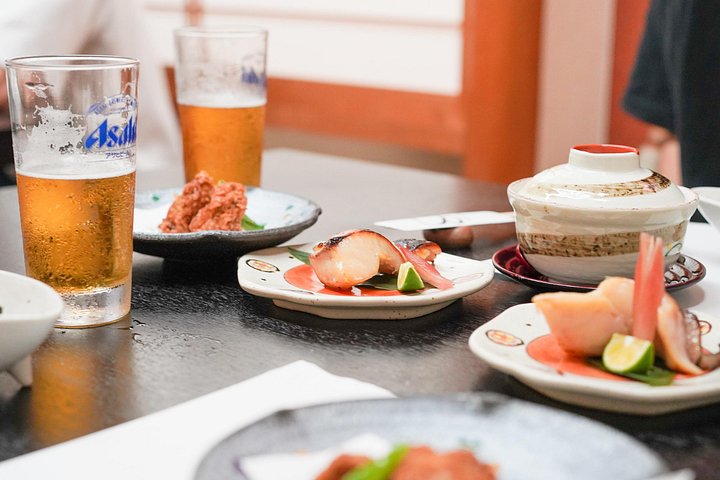
Omicho Market (近江町市場, Ōmichō Ichiba) has been Kanazawa's largest fresh food market since the Edo Period. Today, it is a busy and colorful network of covered streets lined by about 200 shops and stalls. While most shops specialize in the excellent local seafood and produce, you can also find flowers, clothing, kitchen tools and more on sale. Although the market is most exciting during the morning hours, it also gets quite busy around noon, when tourists and locals arrive to have lunch at restaurants inside the market. It is not unusual for lines to build in front of the popular restaurants, many of which specialize in rice bowls topped with fresh Kanazawa seafood.
From 1583 to the end of the Edo Period, Kanazawa Castle (金沢城, Kanazawajō) was the seat of the powerful Maeda Clan, lords of Kaga, a feudal domain ranking second only to the Tokugawa possesions in terms of size and wealth. The castle burnt down several times over the centuries, and the most recent fires of 1881 were survived only by two storehouses and the Ishikawa-mon Gate. The gate dates from 1788 and faces Kenrokuen. For several decades, Kanazawa University occupied the former castle grounds until the campus was moved to the city's outskirts in the early 1990s. Since then, a project is underway to rebuild the castle's former buildings. In the meantime, most central structures are standing again and make a visit more interesting.
A chaya (茶屋, lit. teahouse) is an exclusive type of restaurant where guests are entertained by geisha who perform song and dance. Kanazawa has three well preserved chaya districts, Higashi Chayagai (Eastern Chaya District), Nishi Chayagai (Western Chaya District) and Kazuemachi. Each of the three districts has its own charms and mix of shops, cafes and chaya restaurants. The Nishi Chaya District (西茶屋街, Nishi Chayagai), is a compact area just a short walk from the Ninja Temple. It is much smaller and quieter than the Higashi Chayagai and has just one attraction open to the public: a museum, the Nishi Chaya Shiryokan, which displays the history of the district and is a meeting place for free tours of the area (Japanese only).
Oyama Shrine (尾山神社, Oyama Jinja) is dedicated to Maeda Toshiie, the first lord of the powerful, local Maeda Clan. The shrine was constructed in 1599 by Toshiie's successor, Maeda Toshinaga on Mount Utatsu. It was later moved to its present location. Oyama Shrine is known for its unusual gate, which was designed by a Dutch architect, using elements of European and Asian religious themes. While the first story displays a mixture of Japanese and Chinese influence, the upper stories once served as a lighthouse and feature a Dutch style, stained glass window.
Gratis afbestilling indtil 24 timer før oplevelsen starter, med fuld refusion.
4,9
Bedømmelserne kommer fra 121 anmeldelser, som vores bookingpartner har indsamlet. Det er de rejsendes egne ord, i den rækkefølge de blev skrevet — aldrig omrokeret for at pynte på oplevelsen.
Her vises anmeldelser skrevet på engelsk.
5Great tour of key areas of Kanazawa
Yoshi gave us a great tour of the castle, gardens, Geisha area and Samurai neighbourhood. Very informative.
5Amazing tour in Kanazawa
Yoshi was truly amazing! Such a knowledgeable and kind man guiding us through ancient and modern Kanazawa. We had a wonderful day with him and can highly recommend him!
5Highly recommended!
Yoshi is an exceptional guide where he took us to the best market stalls at the fish market where every food we indulged in (including the sea snails and eel liver) were superb. The walking tour of the tea houses (Geisha district) and knowledge of the history of both the precinct and greater Japan was first class. Yoshi is also a kind and caring person and made conversation very easy, including when we wanted to dig into the country’s cultural values and lifestyle
5Would recommend! Yoshi San was incredible
This tour was great! Our guide was YOSHI and he was extremely knowledgeable about the city and it's treasured history. We visited samurai quarters, one of the old geisha districts, Kentucky gardens to name a few places. He was provided a lot of interesting information during our tour, and even some helpful recommendations for after our tour. He inspired me to read up on Maeda San, who was a key player in building the city. YOSHI san was GREAT, highly recommend! Note: you will need an IC card to board the local buses.
5A morning in Kanazawa
We had a fab tour with Yoshi our guide, we visited the tea district then the gardens and castle which were my favourite. Yoshi was very informative , explaining the history and mechanisms of the castle was built and the water system. He was also very helpful with explaining the bus service.
5Kanazawa tour with Masa
Kanazawa was a beautiful and more intimate city coming from Tokyo beforehand. We loved the time with our tour guide Masa and learning about samurai history and culture, the ninja temple, Geisha districts, and the food market. Masa was knowledgeable on everything, plus given the heat and our kids, she easily pivoted from walking to bus rides to help us see as much as possible without tiring. The entire family really enjoyed it and I highly recommend a tour when visiting. It felt like a more classic piece of Japan and we ended our visit with authentic kimono rentals (which Masa joined for fun and helped with translation) and stayed at a beautiful Ryokan. It was absolutely lovely!
Kanazawa is a castle city on Japan's Sea of Japan coast, with the celebrated Kenrokuen garden, geisha and samurai districts, gold leaf and fresh seafood.
Kanazawa was the seat of the Maeda clan, who ruled the rich Kaga domain through the Edo period, and it escaped the bombing of the Second World War, so its old streets survive. Kenrokuen, one of Japan's three great landscape gardens, spreads over a hill beside the castle, with ponds, stone lanterns and pines that are held up by ropes against the winter snow. The turrets and gates of Kanazawa Castle have been rebuilt.
Før/nu-priser kommer fra udbyderen, aldrig fra os.
fra194 US$136 US$
fra103 US$72 US$
fra107 US$75 US$
Føj Ticket Hall til din hjemmeskærm
Billetter og byguider, ét tryk væk, også offline.
Ticket Hall