10% rabatGratis afbestilling
Warsaw Pub Crawl Bars, Nightclub Entry, Free Shots and Games
fra27 US$25 US$
Beskrivelserne vises på engelsk.
This tour focuses on visiting places connected with lasting for centuries Jewish presence in Poland. You can see still functioning Jewish cemetery; Nozyk Synagogue which survived WWII; remaining part of the ghetto wall; installation of the bridge connecting small and big ghetto; Umschlagplatz memorial at the former station from which Jews were deported to the death camp; Rappaport monument dedicated to heroes of the ghetto; and Polin, the Museum of the History of Polish Jews. Also visit Jewish Historical Institute in original building of former Judaistic Library. In Prague site (across the Vistula river) we can see pre-war mykveh, former nursery and shelter for Jewish children, and Jewish students' dormitory. Stroll along unchanged streets where "The Pianist", film by Polanski was made.
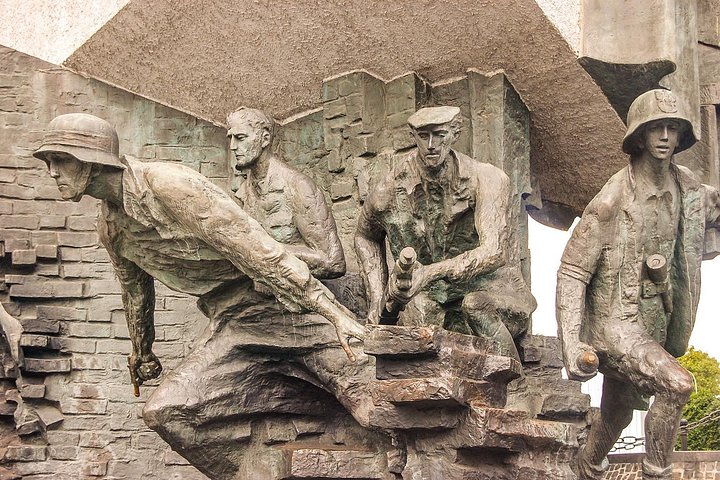
Former Warsaw ghetto was totally destroyed after the collapse of Uprising in ghetto, but now it is marked with Rappaport monument deduated to Heroes of ghetto, Mila 18, Umschlagplatz and Shmul Zygelbojm memorial.
Looking at the preserved matzevots you can learn a lot about the history of Jews in Warsaw and their input to Polish literature, science and art. Closed on Saturdays. Mass graves from WWII and symbolic stones dedicated to those who perished in extermination camp in Treblinka.
It is located in the site of former railway station from which 300 thousands Jews from Warsaw ghetto were deported to death camp in Treblinka in summer 1942. On walls of it 300 first names in alphabetical order of thoses who started their last journey make symbolic inscription.
It is the only synagogue in Warsaw which survived WWII. It was built at the beginning of 20th c., still functioning. On Saturdays (Sabbath) opened only for prayers, then no admission fee charged.
Since Praga site was not so much destroyed as Warsaw downtown, there are preserved some Jewish edifices like students' dormitory where Menachem Begin lived as a student, and shelter for poor people and orphans, now puppet theater. Former mykveh also survived even though as a high school now.
Former Judaistic Library, which survived WWII. Because of the vicinity of the Great Synagogue and its being blown up, the traces of the fire can be seen on the floor. The map of prewar Poland with former shtetles. Exhibition of Ghetto archives, which miraculously survived are on desplay.
Gratis afbestilling indtil 24 timer før oplevelsen starter, med fuld refusion.
4,5
Bedømmelserne kommer fra 4 anmeldelser, som vores bookingpartner har indsamlet. Det er de rejsendes egne ord, i den rækkefølge de blev skrevet — aldrig omrokeret for at pynte på oplevelsen.
Warsaw is Poland's capital on the Vistula River, a city carefully rebuilt after the Second World War, with a restored old town, palaces and modern towers.
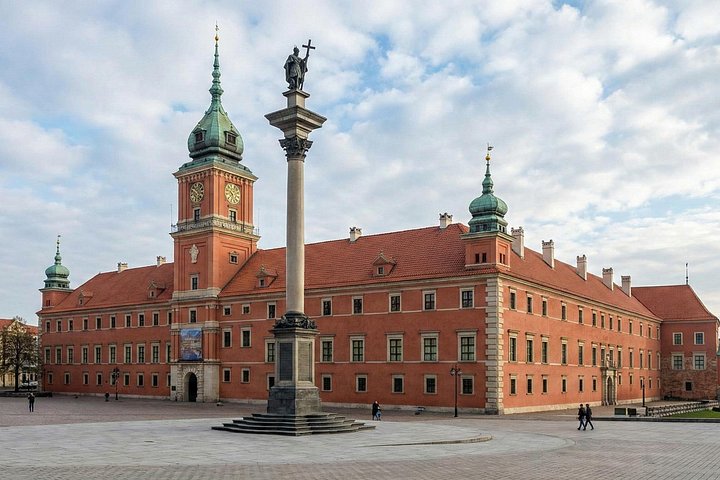
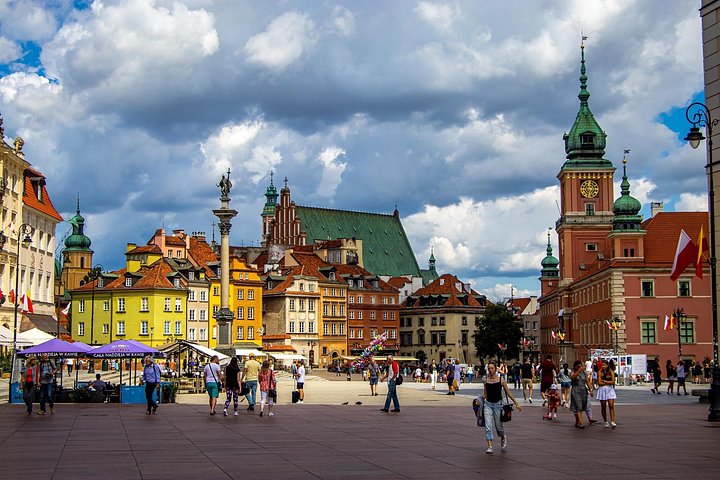
Warsaw was almost entirely destroyed in the Second World War, and its Old Town was rebuilt brick by brick from paintings and plans, work that earned it a UNESCO listing. Castle Square, with the Royal Castle and Sigismund's Column, leads into the market square, where a mermaid, the city's symbol, stands guard. The Palace of Culture and Science, a Soviet-era skyscraper of 1955, still dominates the skyline.
Top-ranked sights in Warsaw: Warsaw Old Town (Stare Miasto), Palace of Culture and Science (Palac Kultury i Nauki), Praga.
Før/nu-priser kommer fra udbyderen, aldrig fra os.
fra27 US$25 US$
fra27 US$25 US$

Føj Ticket Hall til din hjemmeskærm
Billetter og byguider, ét tryk væk, også offline.
Ticket Hall