Harrapa Ancients and Hazrat Farid Shrine Guided Tour with Lunch
Beskrivelserne vises på engelsk.
- 10 timer
- Gratis afbestilling indtil 24 t før
- 2 sprog
- Straks bekræftet
Højdepunkter
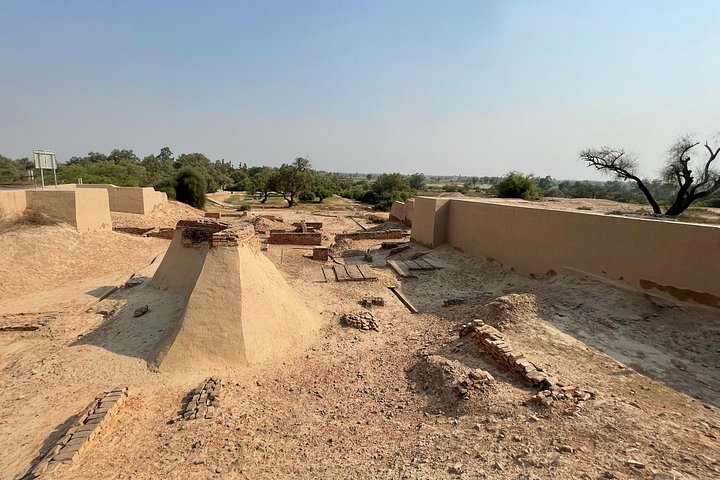
Embark on an exciting full-day excursion from Lahore to explore the ancient ruins of Harappa, an archaeological site of great historical significance. Discover the remains of this once-thriving ancient city, including well-preserved structures, streets, and artifacts. Explore the Harappa Museum, which houses a fascinating collection of artifacts unearthed from the site. Learn about the sophisticated urban planning, drainage systems, and craftsmanship of the ancient inhabitants. Marvel at the intricately carved stone seals, pottery, and figurines. Enjoy a delicious lunch at a local restaurant, savoring the flavors of the region. Immerse yourself in the atmosphere of the ancient past as you wander through the archaeological site. Capture memorable photographs against the backdrop of ancient ruins and the picturesque landscape. Return to Lahore with a deeper understanding of the Indus Valley Civilization and the rich cultural heritage of Pakistan.
Inkluderet
Det er inkluderet
- All Fees and Taxes
- Air-conditioned vehicle
- Lunch at Local Restaurant / KFC / Macdonald
- Experienced Guide (English / Urdu / Punajabi)
Ikke inkluderet
- Breakfast & Dinner
Rute
Harappa Punjabi pronunciation: is an archaeological site in Punjab, Pakistan, about 24 kilometres (15 miles) west of Sahiwal. The Bronze Age Harappan civilisation, now more often called the Indus Valley Civilisation, is named after the site, which takes its name from a modern village near the former course of the Ravi River, which now runs eight kilometres (five miles) to the north. The core of the Harappan civilisation extended over a large area, from Gujarat in the south, across Sindh and Rajasthan and extending into Punjab and Haryana. Numerous sites have been found outside the core area, including some as far east as Uttar Pradesh and as far west as Sutkagen-dor on the Makran coast of Balochistan, not far from Iran.
Farīduddīn Masūd Ganjshakar, commonly known as Bābā Farīd or Sheikh Farīd, was a 13th-century Punjabi Muslim mystic, poet and preacher. Revered by Muslims, Hindus and Sikhs alike, he remains one of the most revered Muslim mystics of South Asia during the Islamic Golden Age.
Sahiwal, formerly known as Montgomery, is a city in Punjab, Pakistan. It is the 21st largest city of Pakistan by population and the administrative capital of both Sahiwal District and Sahiwal Division
The Sahiwal Coal Power Project is a coal power plant project located in the province of Punjab in Pakistan by the name of Huaneng Shandong Ruyi (Pakistan) Energy (Limited). It has an installed capacity of 1320 MW. It commenced full operations on 3 July 2017
Afbestilling
Gratis afbestilling indtil 24 timer før oplevelsen starter, med fuld refusion.
Godt at vide
- Mødested
- Tourist need to reach at our office , if they don't want pickup. We will take them.
- Afhentning
- Afhentning tilbydes, eller I kan mødes ved startstedet.
- Billettype
- Mobile or paper ticket accepted
- Udføres af
- TOUR VISION TRAVEL
- Infants and small children can ride in a pram or stroller
- Public transportation options are available nearby
- Specialized infant seats are available
- Suitable for all physical fitness levels
How it compares in Lahore
- Its from-price is 20% below the median of the 17 dagsture we list in Lahore.
- Its length is typical for the group.
- The operator lists free cancellation on it.
About Lahore
Lahore is the cultural capital of Pakistan, a Mughal city of mosques, forts and gardens, crowded bazaars and rich Punjabi cooking.
Lahore, the capital of Punjab province, grew great under the Mughal emperors, and its Walled City holds some of the finest buildings of that age. The Badshahi Mosque, built by Aurangzeb in the seventeenth century, has a vast courtyard and white marble domes over red sandstone, and the Lahore Fort beside it holds the Sheesh Mahal, a palace of mirror work. With the Shalimar Gardens, the fort is a World Heritage Site, and the Wazir Khan Mosque is covered in tilework.