Bliver nok udsolgt20% rabat
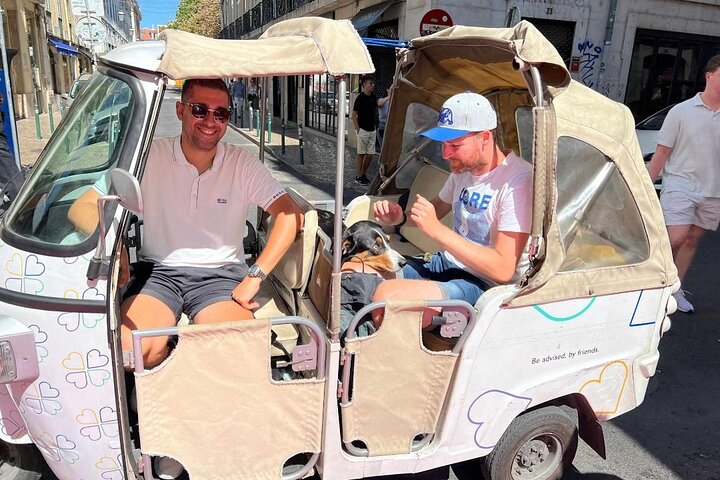
Lissabon Highlights Privat tur med van og lokal guide 4H
fra154 US$124 US$
Kategorier i Lissabon
Beskrivelserne vises på engelsk.
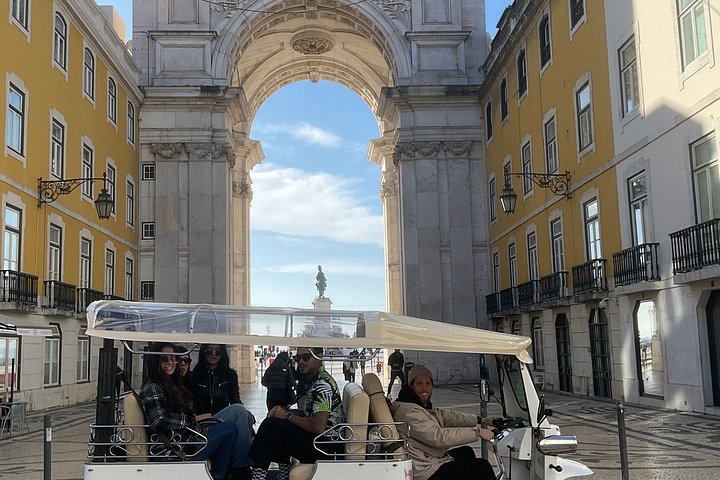
This is probably Lisbon's most complete walking tour. We invite you to explore most of Lisbon's unmissable sites in a very comprehensive full-day tour. In the morning, our guide will uncover the history behind the Discovery Age when we visit the Belém district together. After lunch, it's time to explore the historical center of Lisbon and its most iconic monuments: Arch of Rua Augusta, Elevator of Santa Justa, Church of Carmo, São Pedro de Alcântara viewpoint and the Cathedral. Lisbon has plenty to offer: world heritage monuments, typical and picturesque small streets and also surprising atmospheres. We know this for sure: Lisbon the city of light will stay in your heart forever.
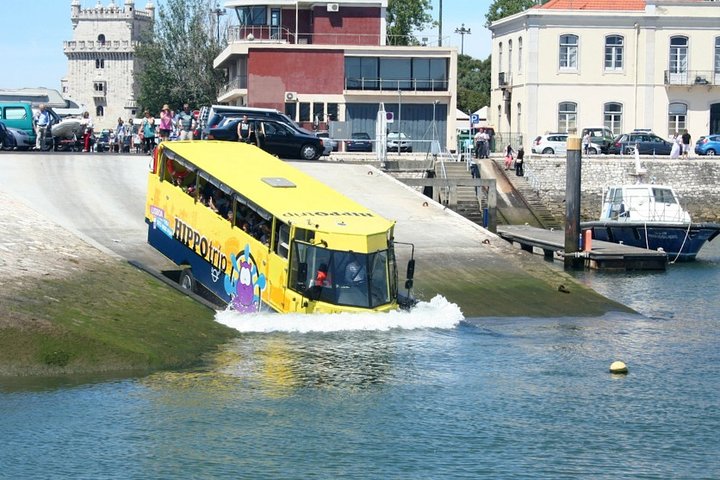
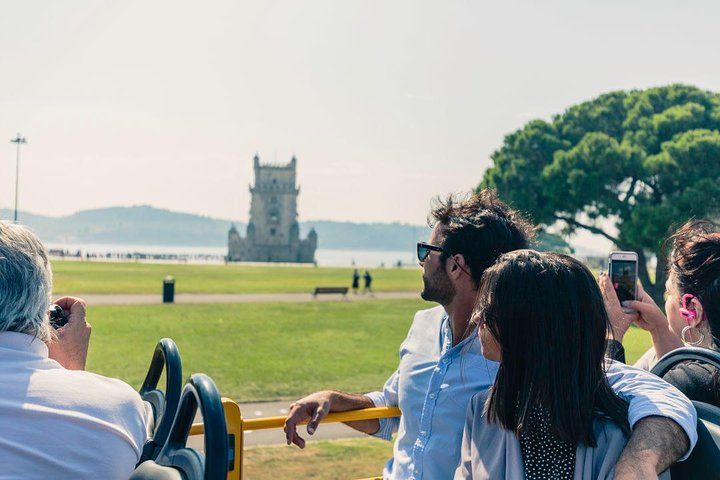
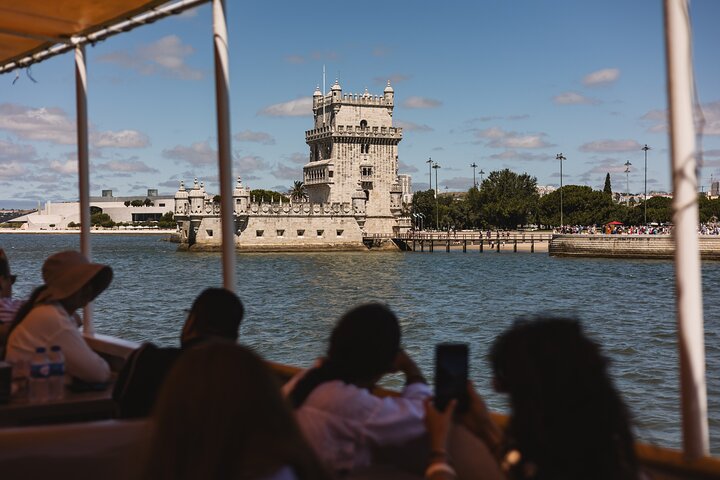
Visit the Torre de Belém one of Lisbon's most iconic monuments.
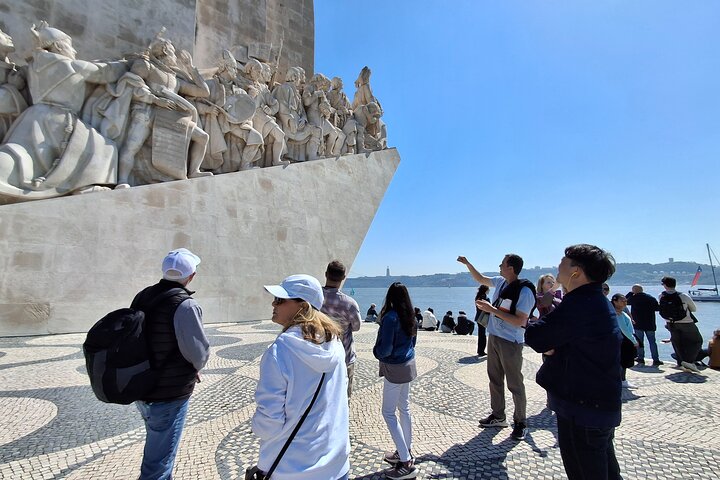
Stroll along the Tagus river and learn about the history of the Portuguese Discoveries
The monument to the Discoveries is an impressive giant caravele with Henry the navigator leading the Portuguese maritim expansion. We will not enter this monument in our visit.
Another highlight attraction in Belém is the beautiful Wind Rose Square with its 14 meter wide map and a 50 meter wide compass rose.
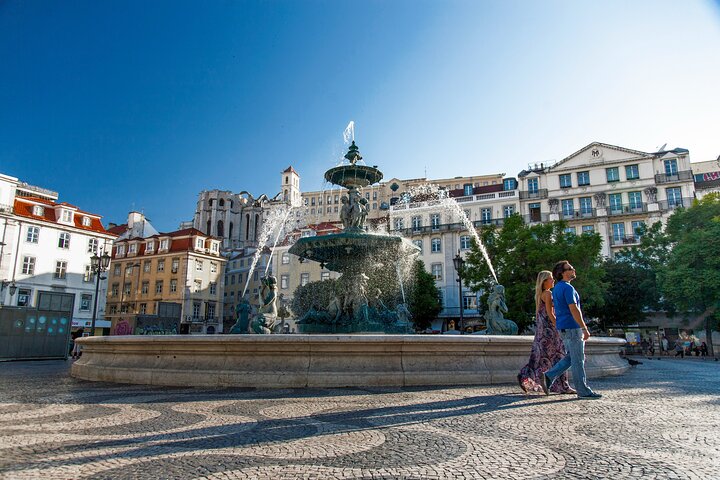
Garden built at the time of the "Portuguese World Exhibition" (1940), an event commemorating the 800th anniversary of Portugal's Independence and the 300th anniversary of the Restoration of Independence, designed by the architect Cottineli Telmo. The Luminous Fountain in the centre of the garden also dates from this period. Its beauty comes from the harmony of the arrangements and architectural design, and it was planted taking into account the organisation of Greek and Roman gardens. There is also a Sundial, all these elements are built in mosaic-culture. The two lakes at the southern top of the garden, topped by two imposing sculptural groups, representing mythical figures of two horses with tails of marine animals.
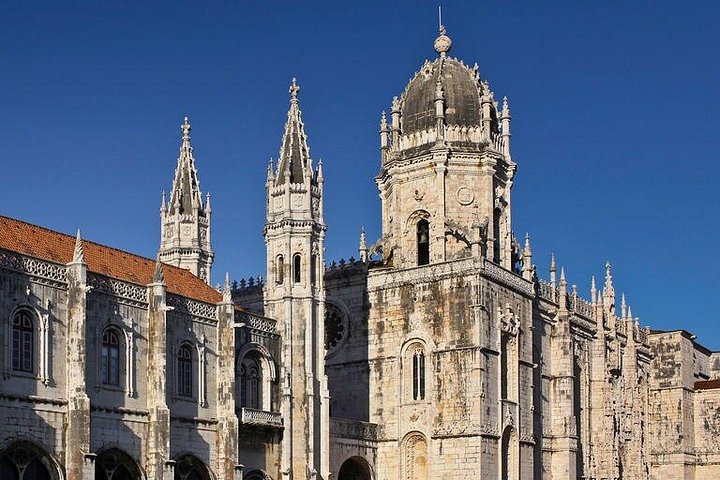
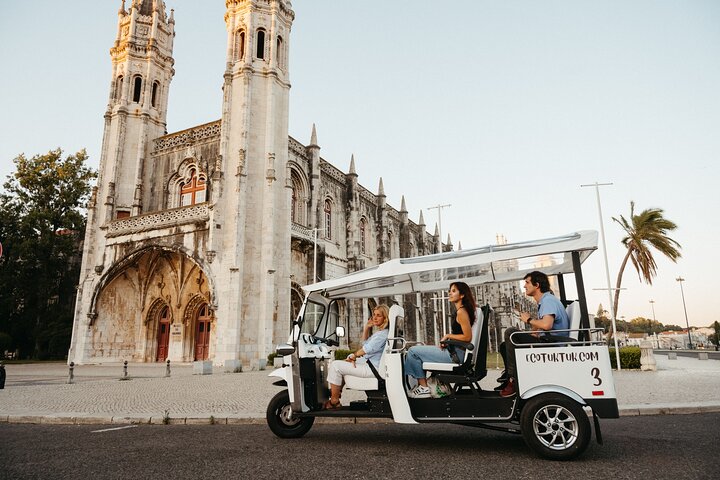
It was 1496 when King Manuel I asked the Holy See for permission to build a large monastery on the banks of the Tagus. Designed by the architect Diogo de Boitaca, the construction of the Jerónimos Monastery began on 6th January 1501 and was finished at the end of the 16th century. The predominant style of the monastery is Manueline and it was built to celebrate the return of Vasco da Gama from the Indies. The site chosen, the Ermida do Restelo, was already a port of refuge for the sailors on their voyage. This sumptuous work was made possible thanks to the resources from the trade with Africa and the Orient and is considered the most emblematic example of the Manueline style, also called Portuguese Gothic. A visit to the Cloisters of the Convent is absolutely unforgettable.
At the beginning of the 19th century, in Belém, next to the Jerónimos Monastery, there was a sugar cane refinery associated with a small varied trade. As a result of the Liberal Revolution of 1820, all convents in Portugal were closed in 1834, expelling the clergy and workers. In an attempt to survive, someone from the Monastery put on sale in that shop some sweet pastries, quickly called "Pastéis de Belém". In 1837, the production of "Pastéis de Belém" began, in installations annexed to the refinery, according to the old "secret recipe", which originated in the convent. Passed down and exclusively known by the master confectioners who make them by hand, in the "Oficina do Segredo", this recipe remains the same to this day.
This is where we recommend our guest to have the lunch break. A former food market, known for its beautiful flowers and the quality of the fish, the renovated market has dozens of food options for every taste and age. Travellers will have a 90 minute lunch break (the value of the meal is not included in the ticket) and they have the freedom to enjoy it at the market or anywhere else.
This iconic square in Lisbon is one of the largest in Europe, with some 36,000 square metres and a total of 79 arches. Before being destroyed by the 1755 earthquake, it was the royal palace and official residence of the Portuguese kings for about 250 years. It was here that the Marquis of Pombal planned a new city, whose square would be its greatest exponent. Nowadays the buildings in Terreiro do Paço Square are occupied by ministries, government departments and mainly hotels and restaurants.
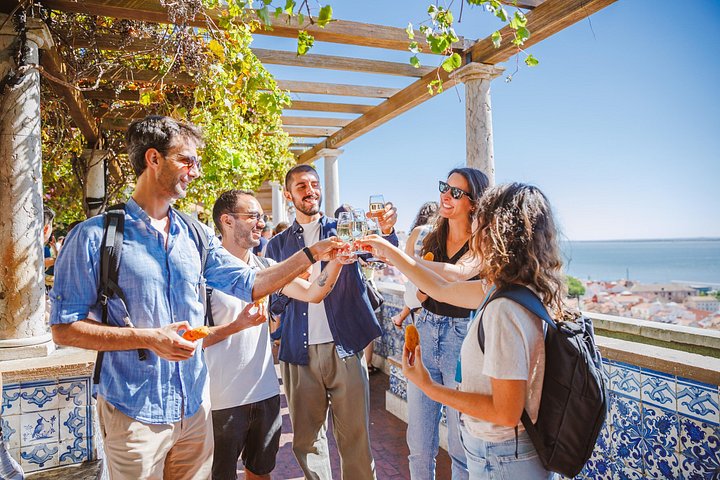
This is probably the most romantic viewpoint in all of Lisbon. A window with creepers that allows you to see the roofs of the labyrinthine Alfama, the churches of the oldest district of Lisbon, and the boats that cross the Tagus River daily. The two tile panels from the Fábrica Viúva de Lamego attached to the side wall of the Igreja de São Brás and the Igreja de Santa Luzia, built over the Cerca Velha, are like postcards within this beautiful city postcard.
Lisbon's Cathedral, also known as Santa Maria Maior Basilica, is considered the oldest church in Lisbon, having been built in the early second half of the 12th century, after the city was recaptured from the Moors by King Afonso Henriques. It was built under a Muslim mosque where before, according to archaeological excavations, it was a Christian temple of the Visigothic Germanic people. The first architect was Master Roberto, a Frenchman who also worked on the Sé of Coimbra and the Monastery of Santa Cruz. Dedicated to Our Lady, the Sé of Lisbon has undergone several alterations over the centuries, particularly after the earthquake of 1755. The Sé presents an incredible mix of architectural styles where you can find Romanesque, Baroque and Neoclassical details. We will not enter this monument in our visit.
This church stands on the spot where St. Anthony was born, before he left for the world as a preacher, eventually dying in Padua. The current temple was built after the Lisbon earthquake of 1755 on the site where a chapel had existed since the 15th century. It offers as noteworthy elements the image of the patron saint, spared by the earthquake, the crypt with his birthplace and the canvas representing Saint Anthony with the most authentic features on record. It was visited by Pope Saint John Paul II in 1982.
Gratis afbestilling indtil 24 timer før oplevelsen starter, med fuld refusion.
5,0
Bedømmelserne kommer fra 542 anmeldelser, som vores bookingpartner har indsamlet. Det er de rejsendes egne ord, i den rækkefølge de blev skrevet — aldrig omrokeret for at pynte på oplevelsen.
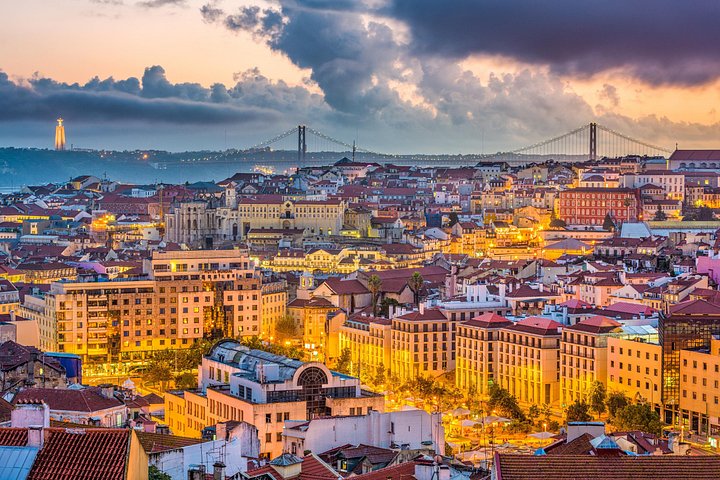
Lissabon vælter ned ad sine bakker mod Tejos munding, en by med kakkelklædte facader, raslende gule sporvogne, udsigtspunkter og sene, rolige middage.
De gamle kvarterer rummer det meste af charmen. Alfamas virvar af stræder klatrer op mod Castelo de São Jorge og genlyder af fado om aftenen, Baixas ordnede gadenet løber ned til det enorme Praça do Comércio ved floden, og Bairro Alto og Chiado blander boghandlere og caféer om dagen med barer om natten. Udsigtspunkter som Santa Luzia og Senhora do Monte indrammer røde tage og skinnende vand.
Top-ranked sights in Lissabon: Commerce Square (Praça do Comércio), Pena National Palace (Palacio Nacional da Pena), Alfama.
Før/nu-priser kommer fra udbyderen, aldrig fra os.
fra154 US$124 US$
fra79 US$71 US$

Føj Ticket Hall til din hjemmeskærm
Billetter og byguider, ét tryk væk, også offline.
Ticket Hall