Bali Culture and Temple Tour
Beskrivelserne vises på engelsk.
- 6–10 timer
- Gratis afbestilling indtil 24 t før
- Guidet på engelsk
- Straks bekræftet
Højdepunkter
This private tour offers a meaningful cultural journey to discover the authentic soul of Bali. You won’t just visit temples—you’ll explore the traditional way of Balinese life, learn about spiritual beliefs, and hear untold stories from the days of ancient Balinese kingdoms. Your local guide will share unique insights about the difference between Western and Balinese culture, and how history, religion, and community are deeply connected here. Perfect for travelers seeking more than just sightseeing—this tour is an immersive experience into Bali’s living culture.
Inkluderet
Det er inkluderet
- Private transportation
- Bottled water
- Sarung to enter the temple.
- Air-conditioned vehicle
- Fuel surcharge
- Parking Fees
Ikke inkluderet
- Lunch
- Additional pickup charge for locations outside Ubud area (cost depends on distance)
- Entrance tickets to all sites are not included and need to be paid directly on the spot.
Rute
Traditional Classical Barong Dance The play tells the story of Kunti, the mother of Sadewa, who promised to give her child to the devilish Rangda. However, Kunti was unable to surrender her beloved son to the forces of evil. Of course, this refusal angered the wicked Rangda who bewitched Kunti and her guards, forcing the guards to Sadewa deep into the forest and leave him in front of Rangda’s palace. The Lord Shiva, who witnesses the helplessness of the innocent child, comes down to help Sadewa, granting the boy immortality. Essentially, the play is about how good triumphs over evil. This is generally the underlying theme in most Balinese performances, which through dance, music and drama aim to spread good moral teachings.The most popular Barong Dance at Batubulan in Gianyar, and the Denpasar suburbs. Shows are locally managed locally; dances performed by villagers, and live gamelan orchestra accompanies the full length of the show.
The Balinese traditional compound is basically divided into three parts on which part has different purposes. Applying the directional concept of their traditional compass, holy structures are built at the mountain at the mountain – wards of the compound such as shrines ( head ), in the middle yard are built all structures of living quarter ( body ), and at the seawards for kitchen and remaining land where they usually throw garbage away. A Balinese traditional compound is mostly enclosed either red bricks, sand stones, or odove walls covered with thatch roof made sedge grass or rice stubble. In front of the compound is the entrance gate.On both sides of the entrance walls, there are two niches as the substitution of shrines where , if the family is a bit financially better off they usually construct separate shrines, sometimes elaborate ones.
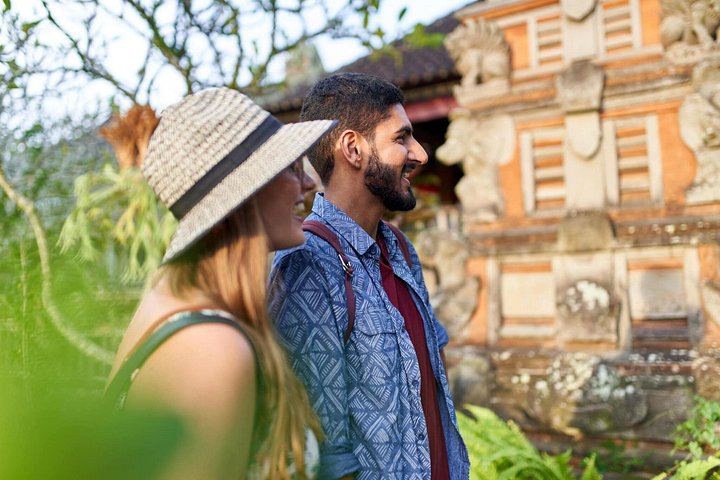
This 11th century temple faces a separate large communal hall, Batuan Temple, referred to locally as ‘Pura Puseh lan Pura Desa Adat Batuan’, is a focal landmark in the namesake village of Batuan, Up the five-tiered ‘candi bentar’ gate of Batuan Temple, you’ll come across various reliefs depicting mythical Balinese figures and floral themes, as well as statues depicting the Hindu trinity, Brahma, Vishnu and Shiva further inside. A series of multi-tiered thatched-roof shrines within the temple’s inner courtyard are set in a layout that is typical of all large temple complexes in Bali. The temple pavilion’s wooden beams and ceilings are heavily engraved and gold gilded.
Goa Gajah’s name is slightly misleading, lending the impression that it’s a gigantic dwelling full of elephants. Nevertheless, Goa Gajah ‘Elephant Cave’ is an archaeological site of significant historical value that makes it a special place to visit. Goa Gajah dates back to the 11th century, built as a spiritual place for meditation. Upon reaching the base you will come across a large ‘wantilan’ meeting hall and an assortment of large old stone carvings, some restored to their former full glory. The pool, excavated in 1954, features five out of supposedly seven statues depicting Hindu angels holding vases that act as waterspouts. Various structures reveal Hindu influences dating back to the 10th century, and some relics feature elements of Buddhism dating even earlier to the 8th century. The cave is shallow; inside are three stone idols each wrapped in red, yellow and black cloths. Black soot lines the cave’s walls as result from the current-day incense burning.
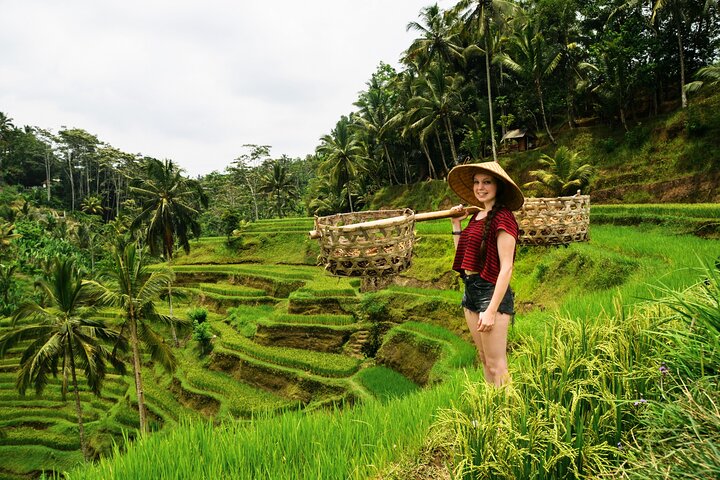
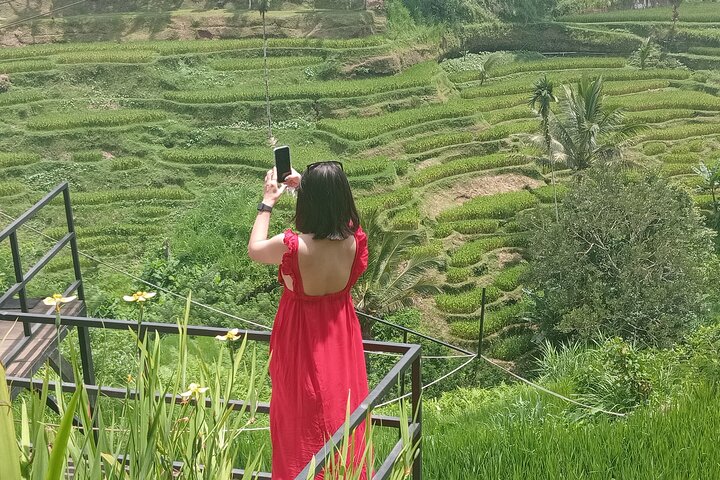
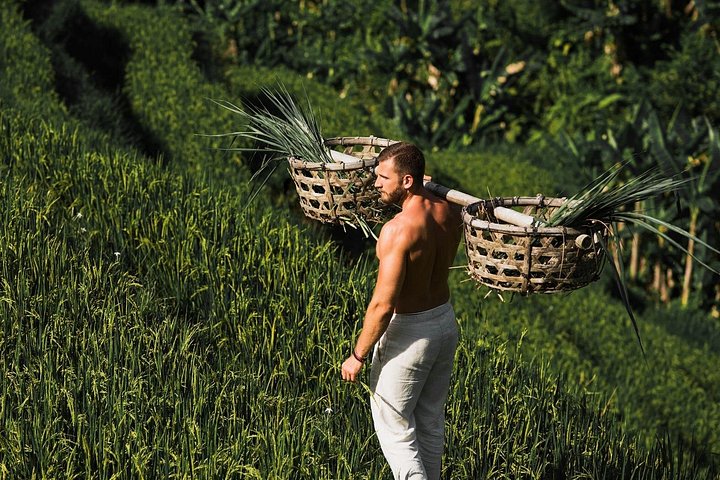
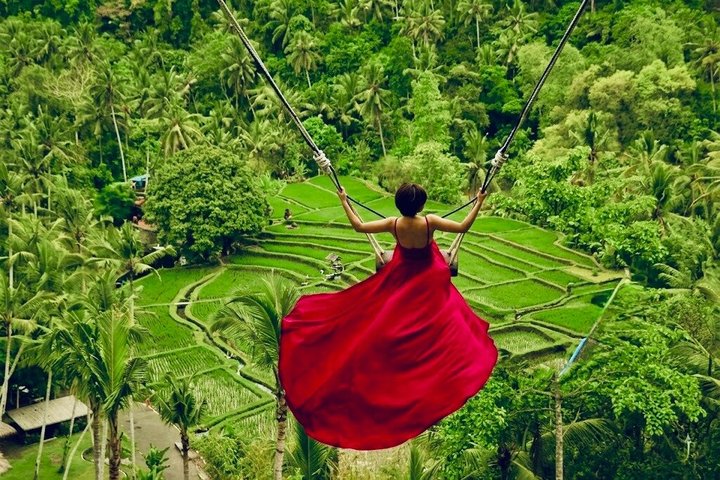
Tegallalang Rice Terraces in Ubud is famous for its beautiful scenes of rice paddies involving the subak (traditional Balinese cooperative irrigation system), Tegallalang forms the three most splendid terraced landscapes in Ubud's shared region, with the others being in the villages of Pejeng and Campuhan. The Tegallalang rice terraces alone offers a scenic outlook that spreads down before you and away to the rice paddies on the slopes across the valley. The high roadside location is cool and breezy and it is a well-known spot for tourists to stop and take photos.
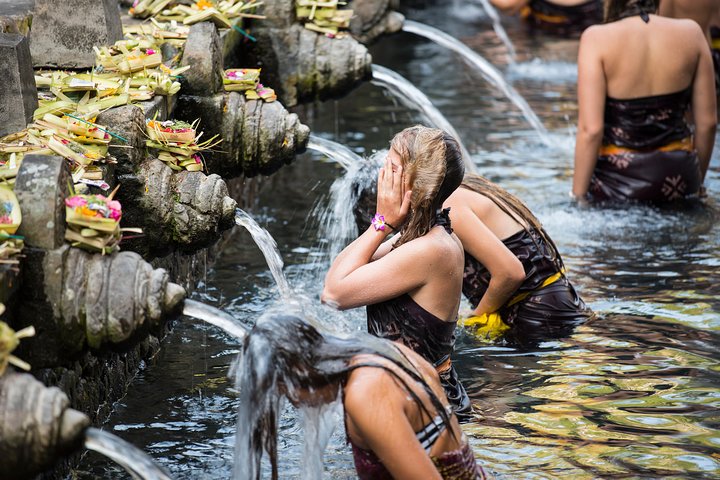
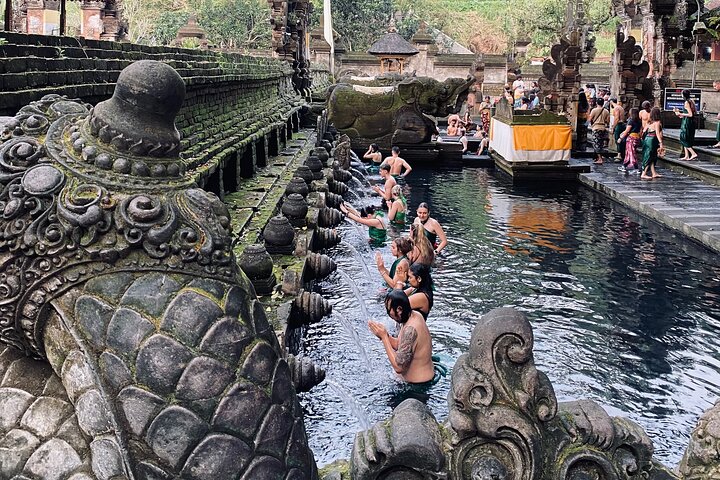
Tirta Empul is an important temple complex and holy mountain spring. The complex, built circa 960 AD, is also a silent witness to the old Balinese kingdom years, particularly at the time of the Warmadewa Dynasty. Tirta Empul, meaning ‘holy water spring’ is actually the name of a water source located within the temple. The spring feeds various purification baths, pools and fish ponds surrounding the outer perimeter, which all flow to the Tukad Pakerisan River. Inside the central courtyard, referred to as ‘madya mandala’ or ‘jaba tengah’, pilgrims first approach a rectangular purification bath where a total of 13 elaborately sculpted spouts that line the edge from west to east. After solemn prayers at an altar-like shrine, they proceed to enter the crystal-clear, cold mountain water. With hands pressed together, they bow under the gushing water of the first spout, carrying on to the eleventh. The water from the last two ofthe 13 spouts is meant for purification purposes in funerary rites
Afbestilling
Gratis afbestilling indtil 24 timer før oplevelsen starter, med fuld refusion.
Anmeldelser
5,0
- 529
- 40
- 30
- 20
- 10
Bedømmelserne kommer fra 29 anmeldelser, som vores bookingpartner har indsamlet. Det er de rejsendes egne ord, i den rækkefølge de blev skrevet — aldrig omrokeret for at pynte på oplevelsen.
Godt at vide
- Afhentning
- Afhentning er inkluderet for alle.
- Billettype
- Mobile or paper ticket accepted
- Udføres af
- Amansuka Tour - Day Tours
- Specialized infant seats are available
- Not recommended for travelers with spinal injuries
- Not recommended for pregnant travelers
- Not recommended for travelers with poor cardiovascular health
- Suitable for all physical fitness levels
How it compares in Ubud
- Its from-price is 30% above the median of the 3390 experiences we list in Ubud.
- Its length is typical for the group.
- By number of reviews it ranks 532 of 3390.
- The operator lists free cancellation on it.
About Ubud
Ubud er Balis kulturelle hjerte, en by af templer, håndværkslandsbyer og dans blandt risterrasser og flodkløfter i øens grønne højland.
Byen har sit centrum ved Ubud-paladset og det travle marked overfor, med traditionel dans opført i tempelgårdene om aftenen. Saraswati-templets lotusdamme ligger lige ved hovedvejen, og Abeskovens helligdom giver ly til langhalede makakaber blandt mosdækkede helligdomme og kæmpemæssige banyantræer.
Top-ranked sights in Ubud: Tegalalang Rice Terrace (Sawah Terasering Tegalalang), Tegenungan Waterfall (Air Terjun Tegenungan), Tirta Empul Temple (Pura Tirta Empul).
Særtilbud i Ubud
Før/nu-priser kommer fra udbyderen, aldrig fra os.
 5% rabatGratis afbestilling
Ubud private Tour : Hidden Waterfall, Rice Terraces & tempel
fra
27 US$25 US$![Hoteller i nærheden af Bali Swing Hot Spring and Waterfall]() 10% rabatGratis afbestilling
Hoteller i nærheden af Bali Swing Hot Spring and Waterfall
fra
23 US$21 US$