خصم 5%إلغاء مجاني
Pompeii and Herculaneum Tour from Sorrento with Tickets and Lunch
ابتداءً من185 US$176 US$
الأوصاف معروضة بالإنجليزية.
Travel in comfort and explore two iconic sites in one unforgettable day — ancient Pompeii and the mighty Mount Vesuvius — on a fully private experience including round-trip transportation from your hotel in Positano. Skip the lines at Pompeii and enjoy a personalized visit with your own expert guide. After the ruins, continue your adventure up to the crater of the volcano that changed history, accompanied by an English-speaking driver. The perfect combination of culture, nature, and convenience all at your own pace.
Your private journey begins with door-to-door pickup from your hotel in Positano.
Pompeii is a vast archaeological site in southern Italy’s Campania region, near the coast of the Bay of Naples. Once a thriving and sophisticated Roman city, Pompeii was buried under meters of ash and pumice after the catastrophic eruption of Mount Vesuvius in 79 A.D. The preserved site features excavated ruins of streets and houses that visitors can freely explore.
The Forum was located at the heart of Pompeii, and was a thriving market and trade center, and also had many connections to politics.
Dominated by the Vesuvius with its statues of Jupiter, Juno and Minerva, the temple was the Capitolium, similar to the one located in the Ancient Rome. The statues were highly placed to be visible to those passing in the Forum.
The Macellum of Pompeii was located on the Forum and as the provision market of Pompeii was one of the focal points of the ancient city. The building was constructed in several phases. When the earthquake of 62 CE destroyed large parts of Pompeii, the Macellum was also damaged.
Via dell’Abbondanza was the ancient main street (decumanus maximus) of ancient Pompeii, which ran across the city in the direction east/west from the Forum to the Porta Sarno. In ancient times the street was crowded and noisy with many shops, workshops ("officinae”), cafes, snack-bars and restaurants for food and drink.
The Forum Baths are located behind the Temple of Jupiter and date back to the years immediately after the founding of the colony of veterans by General Silla (80 BC). Women's and men's quarters had separate entrances. The men's section presents an apodyterium (dressing room), used also as a tepidarium (for medium temperature baths), frigidarium (for cold baths) and calidarium (for hot baths). Like many buildings in Pompeii, the baths were heavily damaged during the earthquake of 62 AD.
The Lupanar of Pompeii is the most famous brothel in the ruined Roman city of Pompeii. It is of particular interest for the erotic paintings on its walls. Lupanar is Latin for "brothel". The Pompeii lupanar is also known as Lupanare Grande.
The House of the Faun (Casa del Fauno) is one of the largest and most luxurious private residences in Pompeii, occupying an entire city block. Named after the iconic bronze statue of a dancing faun found in its main atrium, the house is a masterpiece of Roman architecture and Hellenistic influence. It is most famous for housing the magnificent Alexander Mosaic, which depicts the battle between Alexander the Great and Darius III of Persia. With its two peristyle gardens and intricate floor mosaics, it remains a powerful symbol of the immense wealth and sophisticated taste of the city's eliteThe house belonged to Quintus Poppaeus Sabinus of the Poppei family, relatives of the Empress Poppea Sabina, Nero's second wife.
The Large Theater of Pompeii was built from the Romans on the slope of a hill located in the area; they took advantage of the natural depression of the mountain to create a majesty auditorium divided into 5 sectors. On the stage were played tragedies of the Greco-Roman traditions.
The Basilica is the most sumptuous building of the Forum, and its space was used to carry out business and for the administration of justice
Reach the crater's edge at 1.280 mt to admire a breathtaking panorama on the Gulf of Naples. The surface of the path is uneven, but it' ll be well worth it. Following the devastating eruption, it was named after the Roman God of the Flame and Metal Forgery – Vulcan
إلغاء مجاني حتى 24 ساعة قبل بدء التجربة، مع استرداد كامل.
4.8
التقييمات مبنية على 47 مراجعة جمعها شريك الحجز لدينا. وهي كلمات المسافرين أنفسهم بالترتيب الذي كُتبت به، ولا يُعاد ترتيبها لتجميل التجربة.
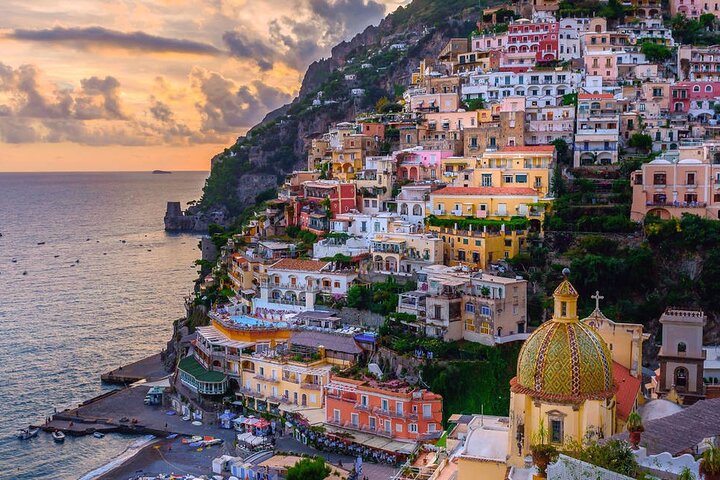
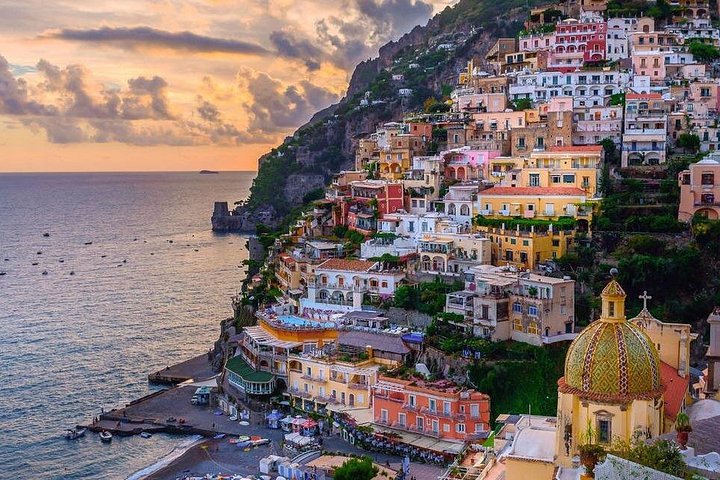
Positano tumbles down a steep hillside to the sea on the Amalfi Coast, a vertical village of pastel houses, bougainvillea and boat-filled coves.
The village spills from the mountainside to the Spiaggia Grande, its main beach, in a cascade of pink, peach and yellow houses linked by stairways. The majolica-tiled dome of the Church of Santa Maria Assunta glints above the shore, and narrow lanes are lined with boutiques selling linen, handmade sandals and ceramics.
Top-ranked sights in Positano: Spiaggia Grande, Church of Santa Maria Assunta (Chiesa di Santa Maria Assunta), Fornillo Beach.
السعر قبل الخصم وبعده من المشغّل، لا منّا.
ابتداءً من185 US$176 US$
ابتداءً من114 US$86 US$
ابتداءً من113 US$106 US$
ابتداءً من125 US$102 US$
ابتداءً من228 US$205 US$
ابتداءً من881 US$660 US$
أضف Ticket Hall إلى الشاشة الرئيسية
تذاكر وأدلة مدن على بُعد نقرة واحدة، حتى دون اتصال.
Ticket Hall