خصم 5%إلغاء مجاني
Kyoto Day Tour: Fushimi Inari, Arashiyama, Kinkaku-ji & Kiyomizu
ابتداءً من65 US$61 US$
الأوصاف معروضة بالإنجليزية.
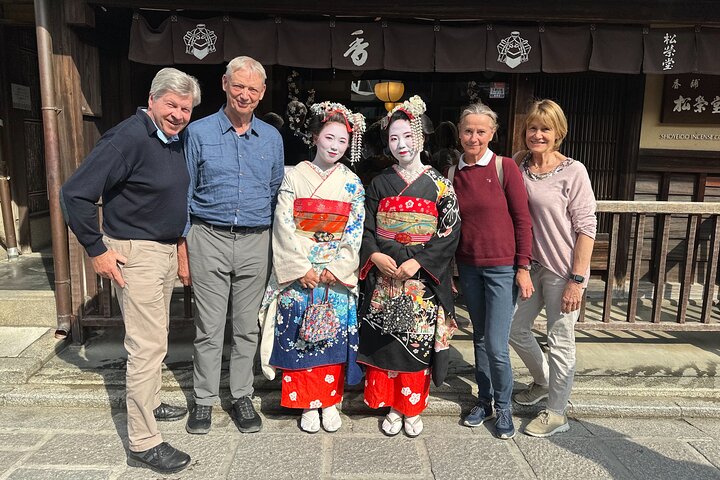
Kimono is the beautiful traditional dress of Japan. This 6 hour Kyoto walking tour includes wearing a Kimono experience! You will be dressed by a professional and have your hair done in a simple hairstyle. It will take about one hour to change for one group (including a simple hair set for women). Afterward, you can walk around the old capitol, Kyoto. The traditions of ancient Japan are still alive and well in Kyoto. Walking around this beautiful city waring a Kimono can feel like you are in a time machine as its architecture has been preserved for centuries. Once your reservation is made, a guide will be in touch to plan your personalized tour. Choose 2 to 3 spots that you wish to visit and your guide will plan a personalized itinerary. If you do not know where to visit, ask the guide to send you their recommended itinerary based on your interests.
You can experience Wargo's Standard Kimono Plan. This budget plan offers an easy introduction to kimono wearing. The simple yet charming designs, featuring a mix of cuteness and elegance, are sure to appeal to everyone. After getting dressed, you can head out on your tour wearing the kimono. Please make sure to return it at least one hour before closing time.
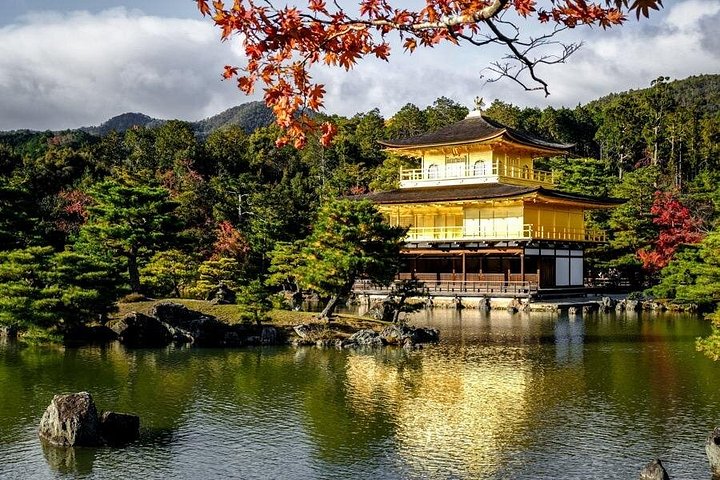
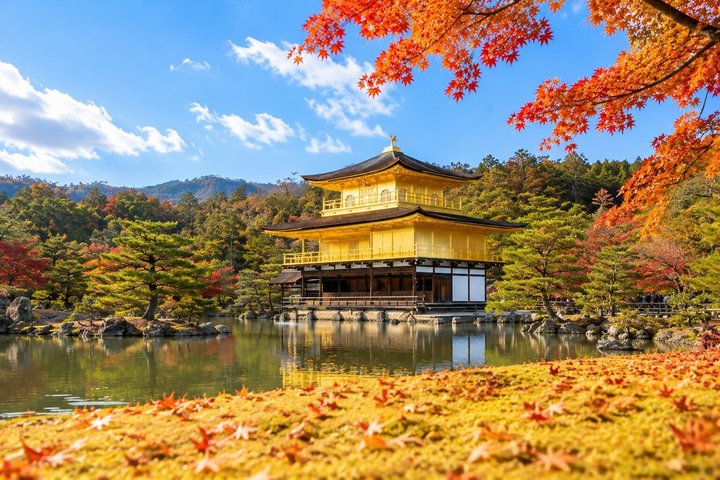
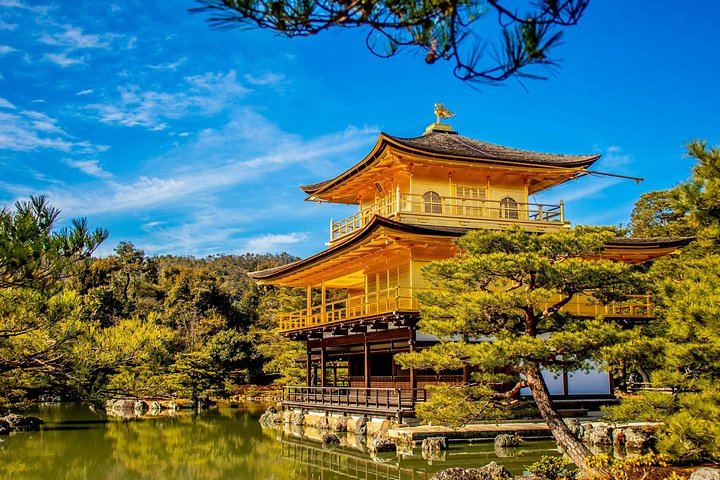
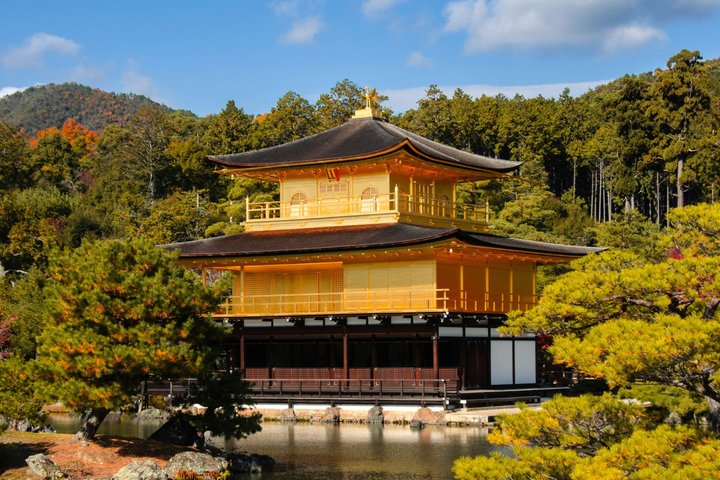
Kinkakuji (金閣寺, Golden Pavilion) is a Zen temple in northern Kyoto whose top two floors are completely covered in gold leaf. Formally known as Rokuonji, the temple was the retirement villa of the shogun Ashikaga Yoshimitsu, and according to his will it became a Zen temple of the Rinzai sect after his death in 1408. Kinkakuji was the inspiration for the similarly named Ginkakuji (Silver Pavilion), built by Yoshimitsu's grandson, Ashikaga Yoshimasa, on the other side of the city a few decades later. Kinkakuji is an impressive structure built overlooking a large pond, and is the only building left of Yoshimitsu's former retirement complex. It has burned down numerous times throughout its history including twice during the Onin War, a civil war that destroyed much of Kyoto; and once again more recently in 1950 when it was set on fire by a fanatic monk. The present structure was rebuilt in 1955.
Ginkakuji (銀閣寺, Silver Pavilion) is a Zen temple along Kyoto's eastern mountains (Higashiyama). In 1482, shogun Ashikaga Yoshimasa built his retirement villa on the grounds of today's temple, modeling it after Kinkakuji (Golden Pavilion), his grandfather's retirement villa at the base of Kyoto's northern mountains (Kitayama). The villa was converted into a Zen temple after Yoshimasa's death in 1490. As the retirement villa of an art obsessed shogun, Ginkakuji became a center of contemporary culture, known as the Higashiyama Culture in contrast to the Kitayama Culture of his grandfather's times. Unlike the Kitayama Culture, which remained limited to the aristocratic circles of Kyoto, the Higashiyama Culture had a broad impact on the entire country. The arts developed and refined during the time include the tea ceremony, flower arrangement, noh theater, poetry, garden design and architecture.
Starting with an incredibly scenic approach that culminates in a moss-covered gate, Honen-in works its magic on the visitor right from the start. Once inside, you’ll pass between two sand mounds that are said to purify the visitor. You then cross a lovely stone bridge over a pond and then make you way through a moss-covered garden to find yourself at a secret grotto behind the main hall.
Nanzenji Temple (南禅寺), whose spacious grounds are located at the base of Kyoto's forested Higashiyama mountains, is one of the most important Zen temples in all of Japan. It is the head temple of one of the schools within the Rinzai sect of Japanese Zen Buddhism and includes multiple subtemples, that make the already large complex of temple buildings even larger. The history of Nanzenji dates back to the mid 13th century, when the Emperor Kameyama built his retirement villa at the temple's present location and later converted it into a Zen temple. After its founding, Nanzenji grew steadily, but its buildings were all destroyed during the civil wars of the late Muromachi Period (1333-1573). The oldest of the current buildings was built after that period.
Tofukuji (東福寺, Tōfukuji) is a large Zen temple in southeastern Kyoto that is particularly famous for its spectacular autumn colors. The temple was founded in 1236 at the behest of the powerful Fujiwara clan. Its name is a combination of the names of two great temples in Nara that were also associated with the Fujiwara, Todaiji Temple and Kofukuji Temple. Tofukuji has historically been one of the principal Zen temples in Kyoto, and is a head temple of one of the schools of the Rinzai sect of Zen Buddhism. In autumn, people come from all over Japan to see Tofukuji's autumn colors. The most popular view is of the Tsutenkyo Bridge, which spans a valley of lush maple trees. The view from the bridge is equally spectacular, and the 100 meter long, covered walkway becomes extremely crowded when the colors reach their peak, usually around mid to late November.
The garden at Taizo-in, one of the subtemples of Myoshin-ji Temple, in northwest Kyoto, is among Kyoto’s most famous. It’s highly recommended in any season.
Shugakuin Imperial Villa (修学院離宮, Shugakuin Rikyū) was built in the 17th century by Emperor Gomizuno and is now managed by the Imperial Household Agency. It consists of the Upper, Middle and Lower Villa areas, each featuring gardens and buildings of the traditional imperial style. Shugakuin's name comes from a former temple built on the same site in the tenth century. The Imperial Villa was constructed between 1655 and 1659, with a palace for Gomizuno's daughter added ten years later. More recently in 1964, the surrounding farmlands were bought by the Imperial Household Agency. They are leased out to local farmers who continue to work the fields.
Ryoanji Temple (龍安寺, Ryōanji) is the site of Japan's most famous rock garden, which attracts hundreds of visitors every day. Originally an aristocrat's villa during the Heian Period, the site was converted into a Zen temple in 1450 and belongs to the Myoshinji school of the Rinzai sect of Zen Buddhism, whose head temple stands just a kilometer to the south. As for the history of Ryoanji's famous rock garden, the facts are less certain. The garden's date of construction is unknown and there are a number of speculations regarding its designer. The garden consists of a rectangular plot of pebbles surrounded by low earthen walls, with 15 rocks laid out in small groups on patches of moss. An interesting feature of the garden's design is that from any vantage point at least one of the rocks is always hidden from the viewer.
Ryoanji Temple (龍安寺, Ryōanji) is the site of Japan's most famous rock garden, which attracts hundreds of visitors every day. Originally an aristocrat's villa during the Heian Period, the site was converted into a Zen temple in 1450 and belongs to the Myoshinji school of the Rinzai sect of Zen Buddhism, whose head temple stands just a kilometer to the south. As for the history of Ryoanji's famous rock garden, the facts are less certain. The garden's date of construction is unknown and there are a number of speculations regarding its designer. The garden consists of a rectangular plot of pebbles surrounded by low earthen walls, with 15 rocks laid out in small groups on patches of moss. An interesting feature of the garden's design is that from any vantage point at least one of the rocks is always hidden from the viewer.
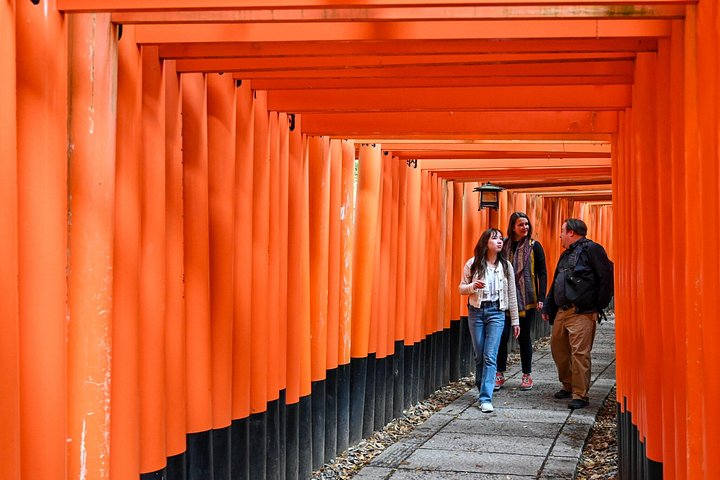
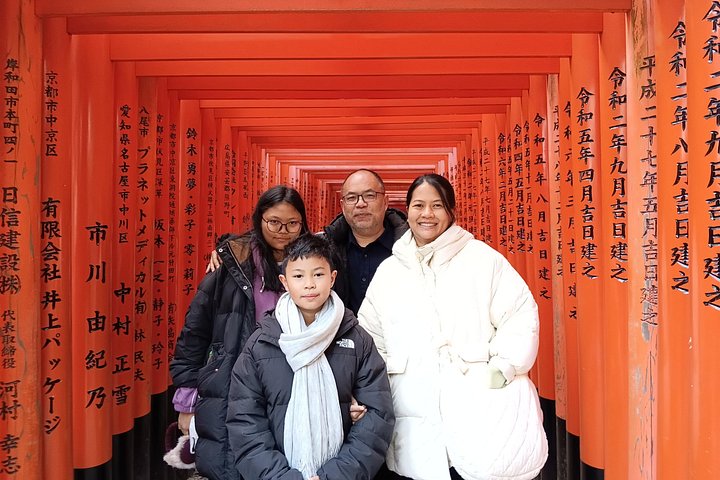
The Fushimi Inari Shrine is so more than its famous tunnels of vermillion-red torii gates. Most people are satisfied by a scenic view of it. But your guide will show you deeper. You will see how politics changes the way people worship, how people struggle to strike a balance between ritual and spontaneity, and how Indians, Koreans, and Americans have shaped the Inari faith. Once you've been on this hike, you'll never see shrines and temples the same way again. You'll be primed to find more hidden symbols, practices, and stories everywhere. Come see a Fushimi Inari-taisha that everyone else has been missing out on, and leave seeing Buddhism and Shintoism in a whole new light!
The Kyoto Imperial Palace (京都御所, Kyōto Gosho) used to be the residence of Japan's Imperial Family until 1868, when the emperor and capital were moved from Kyoto to Tokyo. It is located in the spacious Kyoto Imperial Park (京都御苑, Kyōto Gyoen), an attractive park in the center of the city that also encompasses the Sento Imperial Palace and a few other attractions.
إلغاء مجاني حتى 24 ساعة قبل بدء التجربة، مع استرداد كامل.
5.0
التقييمات مبنية على 5 مراجعة جمعها شريك الحجز لدينا. وهي كلمات المسافرين أنفسهم بالترتيب الذي كُتبت به، ولا يُعاد ترتيبها لتجميل التجربة.
Kyoto, Japan's imperial capital for over a thousand years, is a city of temples, gardens, wooden townhouses and refined traditions.
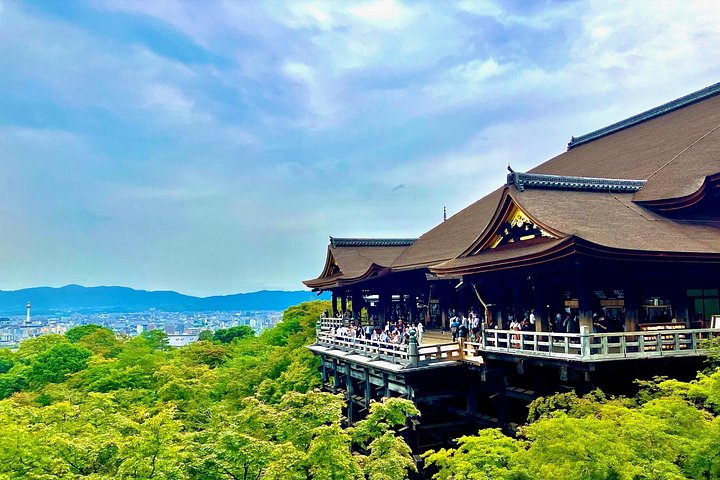
The city holds many of Japan's most treasured sites. Fushimi Inari Taisha's thousands of vermilion torii gates climb a wooded mountain, Kinkaku-ji's Golden Pavilion shimmers over its pond, and Kiyomizu-dera's wooden stage juts from the hillside above the city. The rock garden of Ryoan-ji and the mossy grounds of Ginkaku-ji invite quiet contemplation.
Top-ranked sights in Kyoto: Fushimi Inari Shrine (Fushimi Inari Taisha), Kinkaku-ji (Golden Pavilion), Kiyomizu-dera Temple.
السعر قبل الخصم وبعده من المشغّل، لا منّا.
ابتداءً من65 US$61 US$

ابتداءً من36 US$28 US$
ابتداءً من450 US$405 US$
ابتداءً من119 US$
ابتداءً من110 US$93 US$
أضف Ticket Hall إلى الشاشة الرئيسية
تذاكر وأدلة مدن على بُعد نقرة واحدة، حتى دون اتصال.
Ticket Hall