Bucharest city tour with two visits.
الأوصاف معروضة بالإنجليزية.
- 4 س 30 د
- إلغاء مجاني حتى 24 ساعة قبل الموعد
- بمرشد يتحدث الإنجليزية
- جولة خاصة
أبرز ما فيها
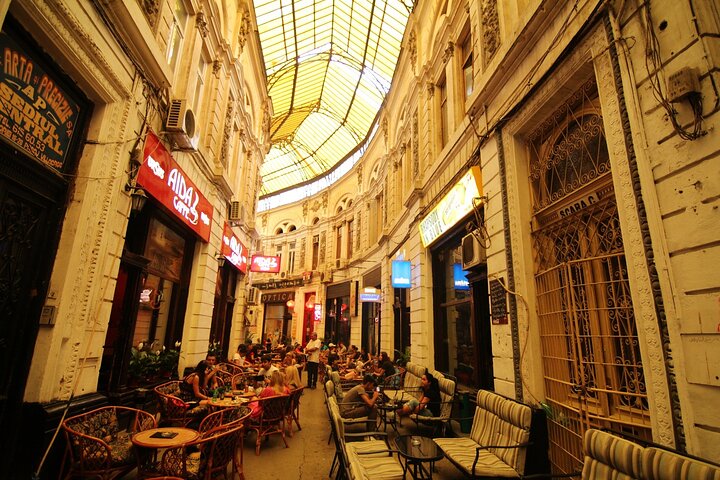
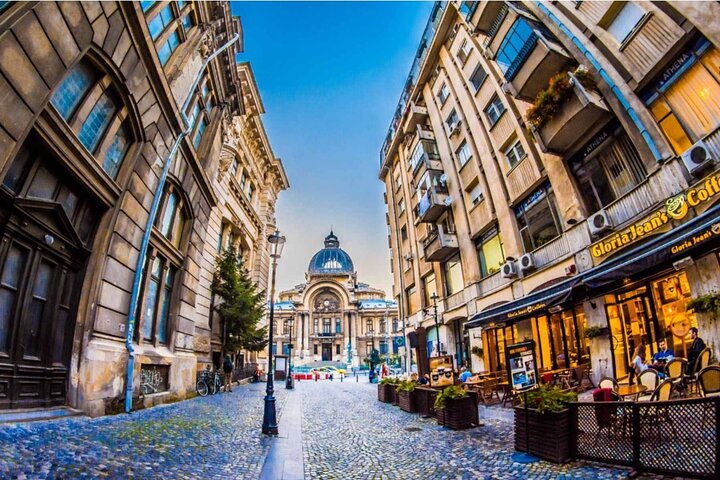
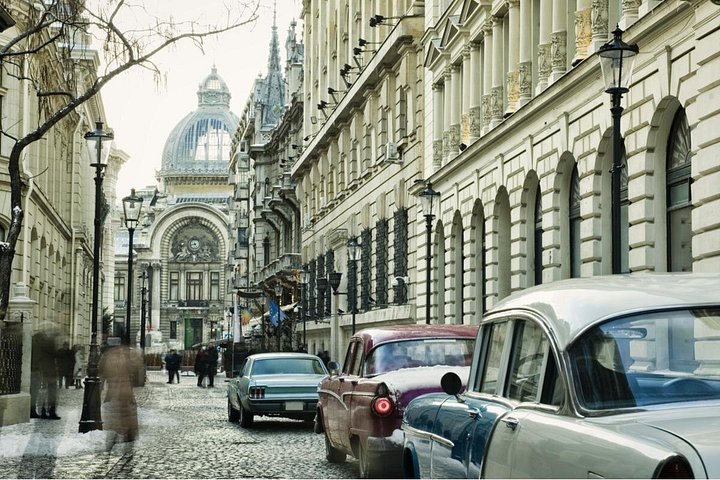
The capital of Romania is an interesting mix of buildings from different periods of history: the period of the Kingdom of Romania, the communist period and the period after 1989. We are proud that the city still retains the imprint of the interwar period when it was called "Little Paris". We look forward to telling you the story of the city.
ما يشمله
ما يشمله السعر
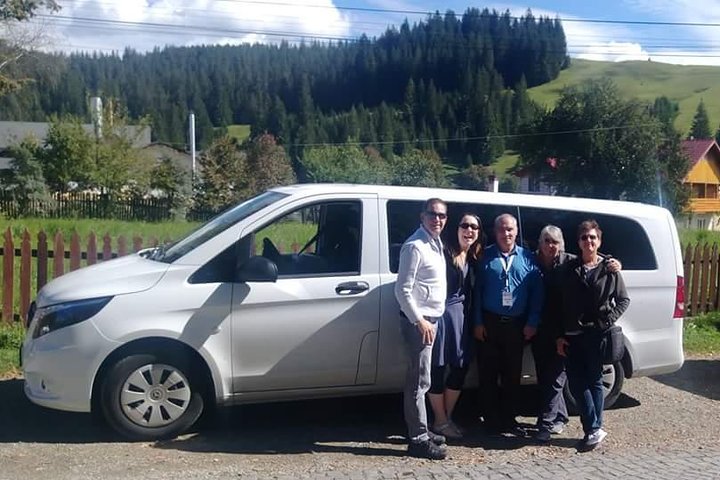
- Private transportation
- Bottled water
- WiFi on board
- Air-conditioned vehicle
ما لا يشمله
- Entrance tickets to Palace of the Parliament and Village Museum
خط السير
Revolution Square is a square in central Bucharest, on Calea Victoriei. Known as Palace Square until 1989, it was later renamed after the Romanian Revolution of December 1989. The former Royal Palace (now the National Museum of Art of Romania), the Athenaeum, the Athénée Palace Hotel, the University of Bucharest Library and the Memorial of Rebirth are located here. The square also houses the building of the former Central Committee of the Romanian Communist Party (from where Nicolae Ceaușescu and his wife fled by helicopter on December 22, 1989). In 1990, the building became the seat of the Senate and since 2006 it houses the Ministry of Interior and Administrative Reform.
Calea Victoriei (Victory Avenue) is a major avenue in central Bucharest. Initially, the road was known as Ulița Mare (Large Street), also known as Drumul Brașovului (Brașov Road), being part of the trade route between Bucharest and the city of Brașov, in Transylvania. In 1692, ruler Constantin Brâncoveanu paved the road with wood and partly regularized it, making it pass through the domains of the Bălăceni, of the Saint John Monastery, Zlătari Monastery and of the Cantacuzenes up to the Sărindari Monastery. Since 1692 it was known as Podul Mogoșoaiei (Mogoșoaia Wood-Paved Road) because it also was connecting the Bucharest's center with Brâncoveanu's Mogoșoaia Palace some km outside the city. Most roads in the Balkans at that time became muddy in the spring and autumn, and the wood prevented this. Consequently, the road was one of the most important construction works of the area and a source of pride to Bucharesters. The area surrounding the road became the most fashionable part of Bucharest: 35 boyar houses were located on the road itself in 1775. Podul Mogoșoaiei was the first street in Bucharest to be illuminated with candles during the night, starting July 1814.
The Old Court, first built on this site in the second part of the 15th-century by Vlad Ţepeş, was considerably extended during the 16th century, by Mircea Ciobanul, and again a century later, this time at the hand of Constantin Brancoveanu, who added a splendid voievodal palace, decorated with marble and icons. The palace was by and large destroyed by a series of fires in the 19th century however, and subsequently neglected. Much of what remains today was uncovered during archaeological digs that took place from 1967-72, when the palace ruins were first opened as a museum. There are fragments of the original 15th century walls, as well as remnants of the voievodal palace throne room, in which most of the relics found on the site are exhibited.
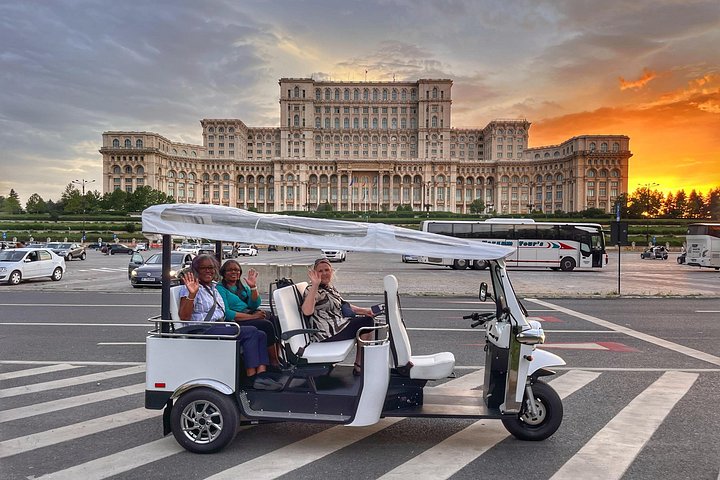
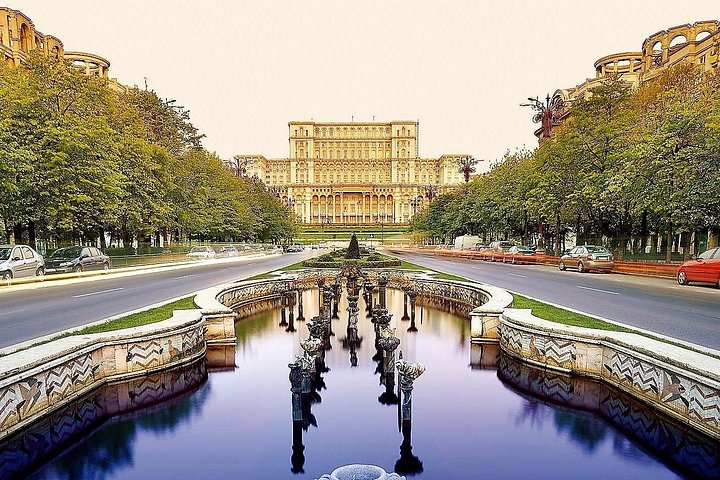
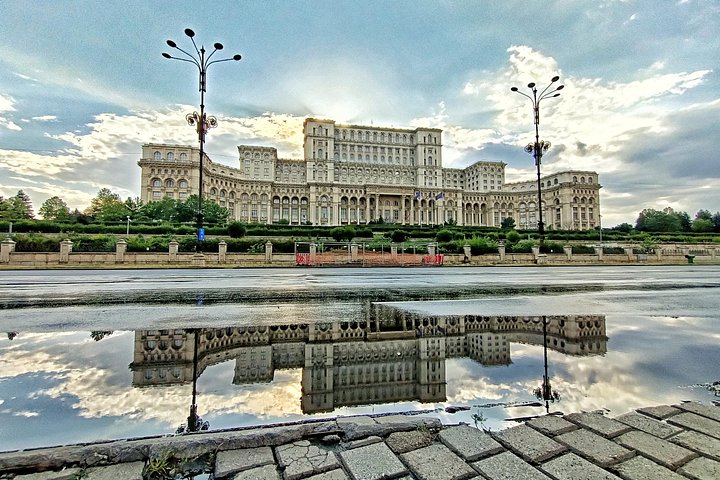
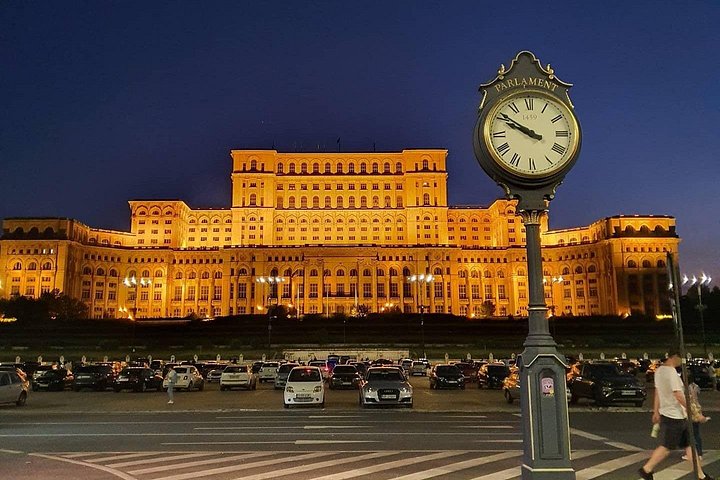
The Palace of the Parliament (Romanian: Palatul Parlamentului) is the seat of the Parliament of Romania, located atop Dealul Spirii in Bucharest, the national capital. The Palace has a height of 84 metres (276 ft), a floor area of 365,000 square metres (3,930,000 sq ft) and a volume of 2,550,000 cubic metres (90,000,000 cu ft). The Palace of the Parliament is the heaviest building in the world, weighing about 4,098,500,000 kilograms (9.0356×10⁹ lb).
The Spring Palace was the former private residence of Nicolae Ceausescu. For those of you who don’t know, Nicolae Ceausescu was Romania’s communist head of state between 1965 and 1989. The palace was built in the ’60s at the command of Gheorghe Gheorghiu-Dej, who wanted to move there when it would be finished. Unfortunately, he died in 1965 and Nicolae Ceausescu took over as the communist leader. Ceausescu lived there along with his wife, Elena and their three kids, Nicu, Zoe and Valentin until he was executed in 1989. At that time, the palace was known as “obiectivul P50” and it didn’t allow access for anyone other than the Ceausescu family. Let’s discover more spicy details about the Spring Palace and why it’s worth visiting.
The Village Museum (Muzeul Satului in Romanian) is an open-air ethnographic museum located in the King Michael I Park (Bucharest, Romania), showcasing traditional Romanian village life. The museum extends to over 100,000 m2, and contains 272 authentic peasant farms and houses from all over Romania. It was created in 1936 by Dimitrie Gusti, Victor Ion Popa, and Henri H. Stahl.
الإلغاء
إلغاء مجاني حتى 24 ساعة قبل بدء التجربة، مع استرداد كامل.
اعرف قبل أن تذهب
- الاصطحاب
- الاصطحاب مشمول للجميع.
- نوع التذكرة
- Mobile or paper ticket accepted
- المشغّل
- Best Private Transport Romania
- Infants and small children can ride in a pram or stroller
- Public transportation options are available nearby
- Specialized infant seats are available
- Suitable for all physical fitness levels
How it compares in Bucharest
- Its from-price is 64% below the median of the 187 جولات في المدينة we list in Bucharest.
- It is shorter than most of them.
- The operator lists free cancellation on it.
About Bucharest
Belle-époque boulevards, Orthodox churches and communist-era monuments meet around a busy old town in Bucharest, Romania's capital.
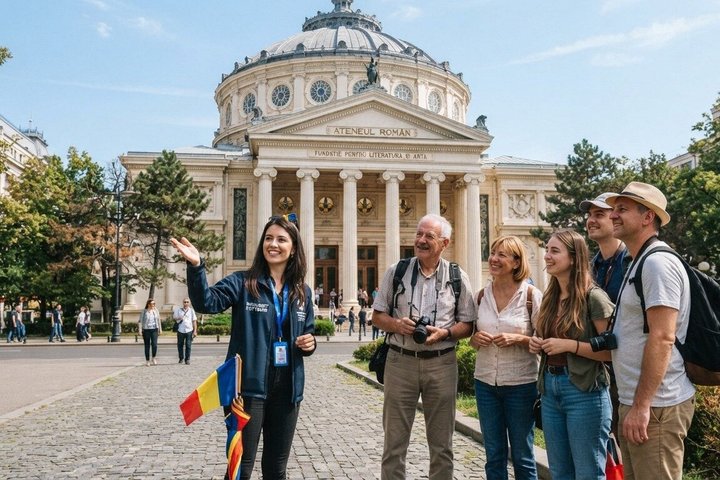
The vast Palace of the Parliament, among the largest administrative buildings in the world, dominates the centre as a striking legacy of the Ceaușescu era. Calea Victoriei, the grand avenue, leads past the domed Romanian Athenaeum concert hall, the former Royal Palace that houses the National Museum of Art, and Revolution Square, where the events of 1989 unfolded.
Top-ranked sights in Bucharest: Palace of Parliament (Palatul Parlamentului), Revolution Square (Piata Revolutiei), Arcul de Triumf (Arch of Triumph).
عروض خاصة في Bucharest
السعر قبل الخصم وبعده من المشغّل، لا منّا.
 خصم 20%إلغاء مجاني
Discover Bucharest: History, Communism & Urban Tales Private Tour
ابتداءً من
69 US$55 US$



تجارب مشابهة
 خصم 15%إلغاء مجاني
Bucharest Food Lovers Tour: Markets, Tastings & Hidden Spots
ابتداءً من
97 US$83 US$