省 10%免费取消
描述以英文显示。
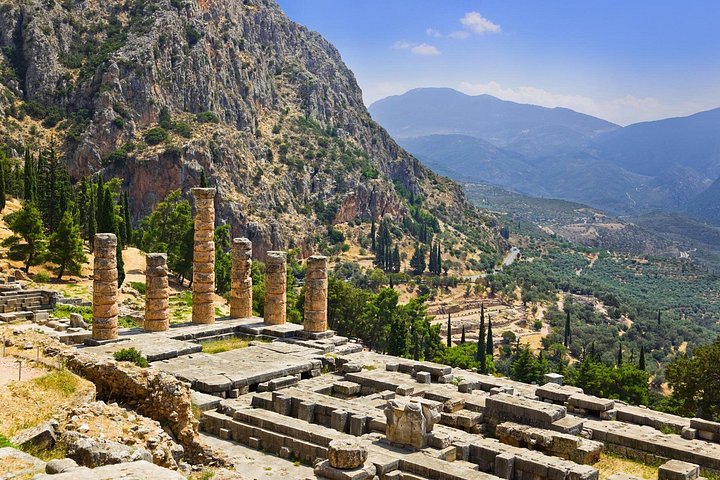
Ancient Corinth is one of the major archeological sites in Greece; therefore, it is an ideal trip for anyone who would like to visit a city with great history, and it is only about 1 hour away from Athens. We will begin our tour from Athens in the morning. Our first stop will be the Corinth Canal, which was constructed in 1892 and connects the Gulf of Corinth with the Saronic Gulf in the Aegean Sea. We will make a stop to see this impressive view and take some photos. Afterwards, we will head to Ancient Corinth and arrive at the archeological site where we will see the ruins of the ancient city. We will also see the Temple of Apollo, built around 560 BC, one of the earliest Doric temples in the Peloponnese area. Inside the archeological site, we will visit the archeological museum of Ancient Corinth, which was built in 1932. In addition, we will visit Acrocorinth, which was the acropolis of Ancient Corinth. Then we will have lunch in the area and return to Athens.
The Corinth Canal connects the Gulf of Corinth with the Saronic Gulf in the Aegean Sea and it cuts through the Isthmus of Corinth, separating the Peloponnese from the Greek mainland. It is 6.4 kilomotres in length and 21.4 meters wide, making the access impossible for modern ships. Currently, it is used mostly as a tourist attraction. The initial idea for constructing the Corinth Canal was tyrant Periander’s in the 7th century BC, who eventually abandoned that project and constructed Diolkos instead, an overland portage road where ships would be able to move overland across the Isthmus of Corinth. The first Governor of Greece, Ioannis Kapodistrias, revived the idea of the construction of the modern Canal after the formal independence of the country in 1830. The construction begaun in 1880, however, due to financial reasons, the construction was completed in 1893.
The site of ancient Corinth was first inhabited in the Neolithic period (6500-3250 B.C.). It is located on the Isthmus of Corinth, the narrow stretch of land which connects the Peloponnese with the mainland of Greece, about halfway between Athens and Sparta. Its fertile soil, but mainly, its strategic location, offered a great potential for communication, growth and prosperity. Since the Mycenaean period, Corinth was called afneios [prosperous], as referred to by Homer in the Iliad, because of its exceptional fertile soil. The great output of the city in agricultural products largely expanded its trade activities mainly towards the Western Mediterranean. In the 8th century BC, the Corinthian colonies were founded, such as Corfu in the Ionian Sea and Syracuse in Sicily, and made an important contribution to the history of the ancient Mediterranean world. The economic prosperity of the city reached its peak in the 7th– 6th centuries BC under the administration of the tyrant Cypselus and his son Periander. The strength of Corinth made its mark with the construction of splendid buildings, such as the Temple of Apollo and the creation of the Isthmian Games, which were held at the Corinthian sanctuary of Poseidon, and this helped increase the fame and influence of the city. The acropolis of Ancient Corinth, called "Acrocorinth", lies 1 km to the southwest, located 575 meters high. It was already fortified in antiquity, but the walls and towers that we see today are mostly of Frankish and Venetian times. It is considered to be the largest, highest, and most spectacular acropolis of Ancient Greece. For Christians, Corinth is well known for the Epistles of St. Paul the Apostle to the Corinthians. He founded the Christian community in Corinth, Greece. The First and the Second Letter of Paul to the Corinthians are now respectively the seventh and eighth books of the New Testament canon. The first letter, probably written about 53–54 CE at Ephesus, Asia Minor, deals with problems that arose in the early years after Paul’s initial missionary visit to Corinth and his establishment of a Christian community. The Second Letter was written in Macedonia in about 55 CE and might have been written by Apostle Paul after an actual visit to Corinth.
The acropolis of Ancient Corinth, called "Acrocorinth", lies 1 km to the southwest, located 575 meters high. It was already fortified in antiquity, but the walls and towers that we see today are mostly of Frankish and Venetian times. It is considered to be the largest, highest, and most spectacular acropolis of Ancient Greece.
体验开始前 24 小时可免费取消,全额退款。
5.0
评分来自我们的预订合作伙伴收集的 2 条评价。这些是旅客自己的话,按写下的先后排列,绝不为了好看而重新排序。
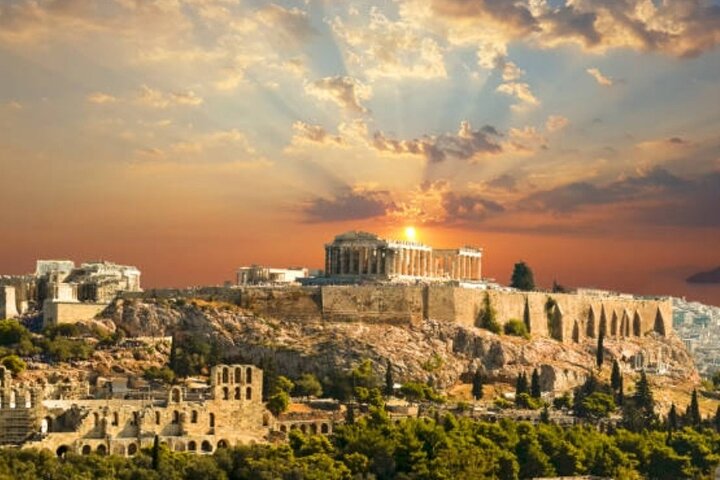
Athens sets the Acropolis above a sprawling modern capital, where ancient ruins, hillside lanes and long taverna evenings sit side by side.
The Parthenon crowns the Acropolis, flanked by the Erechtheion and its porch of caryatids, and the Acropolis Museum at the foot of the hill displays sculpture found on the rock. Around it, the Ancient Agora, the Temple of Olympian Zeus, Hadrian's Arch and the marble Panathenaic Stadium make the classical city easy to walk through.
Top-ranked sights in Athens: Acropolis, Parthenon, Acropolis Museum.
原价与现价来自运营商,不是我们标注的。
低至US$2,277
把Ticket Hall添加到主屏幕
门票和城市指南,一点即开,离线也能看。
Ticket Hall