3 Hours Guided Bucharest Walking Tour
Beskrivelsene vises på engelsk.
- 3–3,3 timer
- Gratis avbestilling inntil 24 t før
- Guiding på engelsk
- Bekreftes med en gang
Høydepunkter
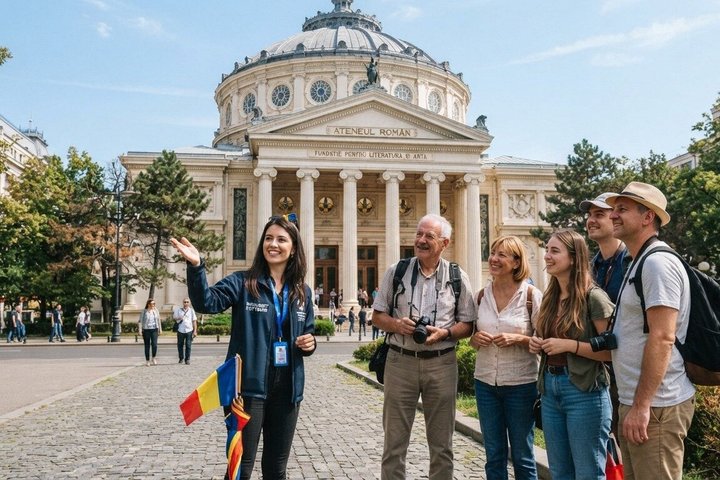
Bucharest, by far the largest metropolis of Romania, with its 600 years of written history gathered a tremendous amount of stories, every inch sweating dramas, hopes, humor and love stories. We have created a short walking tour of only 3 hours in which we try to show a large part of the symbols that give personality and a good understanding of a European capital, divided but also reborn countless times over the centuries. See below, in the expectations section, the complete description of the tour.
Inkludert
Dette er inkludert
- All Fees and Taxes
- A good and knowledgeable guide
Ikke inkludert
- Snacks
- Coffee and/or Tea
Rute
Mitropolia Hill or Patriarch's Hill is an important historical, cultural, architectural, religious, touristic point on the map of the Romanian capital. From a confessional point of view, Mitropoliei Hill is a landmark for Orthodoxy in Romania, where it is currently the headquarters of the Romanian Patriarchate and the residence of the Patriarch. A series of events in the history of Romania are closely related to this place because until 1997, in the Palace of the Patriarchate, was the seat of the Chamber of Deputies, respectively the seat of the Assembly of Deputies. Also here was created the unification that led to the Romanian kingdom.
The largest square in central Bucharest, is a significant transportation hub. While the historic Hanul lui Manuc and the Old Town is on the north side, the centre of the square boasts a park and the fountains which are particularly popular with commuters and passers-by in the torrid summer months, as it is the largest complex of fountains in Europe and one of the most impressive in the world, its spectacle becoming a huge tourist attraction. On the west side, in the distance, you can admire the Palace of Parliament, the most famous landmark of the Romanian capital, the third largest administrative structure in the world and, at the same time, the most impressive achievement of the former dictator Nicolae Ceausescu.
Is the oldest operating inn building in Bucharest, Romania. It also houses a popular restaurant, several bars, a coffee-house, and (facing the street) several stores and an extensive bar. Its massive, multiply balconied courtyard hosted many performances and fairs and was a popular place for Romanian Television crews to shoot folkloric performances. The inn was built in 1808 as a khan, and originally owned by a wealthy and flamboyant Armenian entrepreneur, Emanuel Mârzaian, better known under his Turkish name Manuc Bei. By the middle of the 19th century, it was Bucharest's most important commercial complex, with 15 wholesalers, 23 retail stores, 107 rooms for offices or living, two receiving rooms, and a pub.
Was built as a palace or residence during the rule of Vlad Dracula in 1459. Vlad the Impaler's reign was dominated by conflicts with the Ottoman Empire, hence the necessity to permanently watch over and protect the southern border, the Danube, made him stay in the fortified town on the Dâmbovița banks. He issued a Latin document on 13 June 1458 from the area of current Bucharest. Then, on 20 September 1459, he issued a document in Slavonic, specifically referring to the "fortress" in Bucharest, his "princely residence".
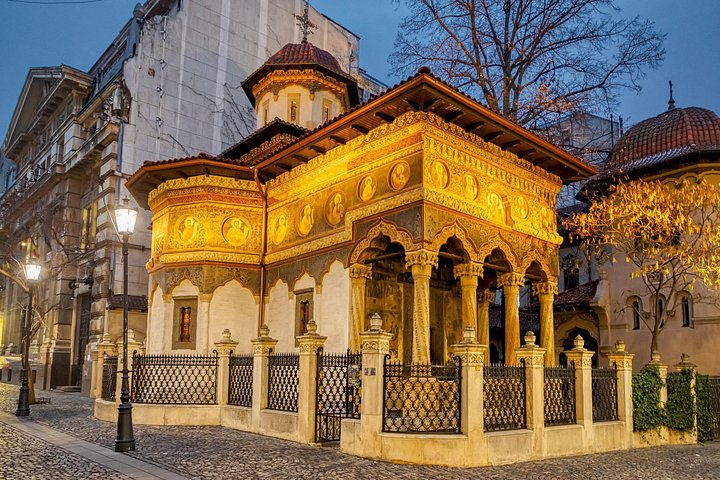
The jewel of Orthodox Christianity, right in the heart of the city and the epitome of the late "Romanian Renaissance". This monastery is and iconic monument which represents very well the features of the Orthodox heritage and architecture.
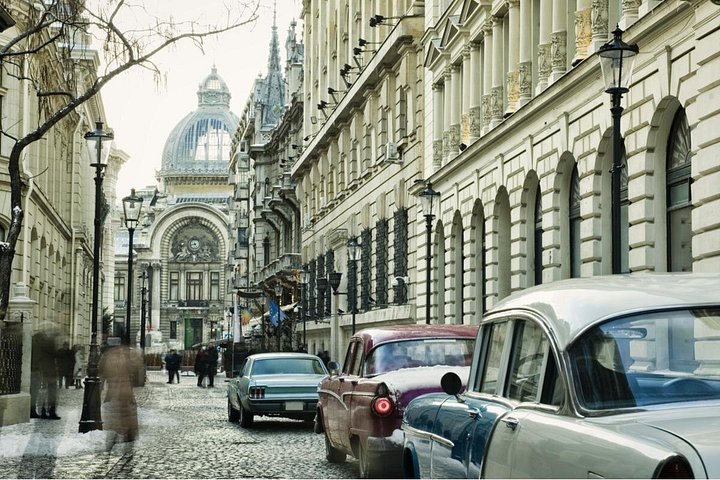
A true landmark of the city, a symbol of "Little Paris"- belle epoque of Bucharest. Note: The site cannot be visited inside. It Belongs to a bank and it's not open for the public but anyway, it's worth seeing and to admire the architecture style. Built in French Renaissance style, it is one of the most beautiful buildings of the city.
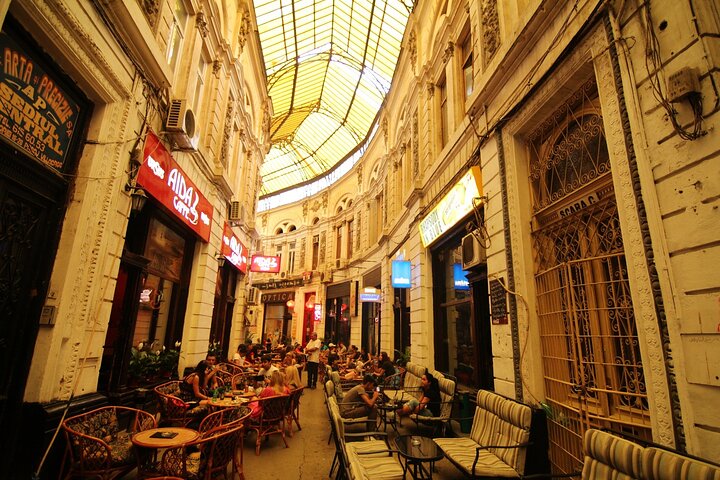
A cute covered arcaded street with an interesting history. You will probably fall in love with it.
Inspired by the optimism and promise of the Belle Époque, The Marmorosch Hotel has reinvented the classic art of fine living with an exciting touch of modernity. Housed in the former building of Romania’s most influential bank during the late 19th century, The Marmorosch Hotel is the perfect venue for reliving history.
Built between 1905-1909, at the urging of the Russian ambassador of the time, and with the consent of Tsar Nicholas II, the Church dedicated to Saint Nicholas initially had a double role: a place of worship for the growing Russian community in Bucharest, as well as an element of diplomatic de-tension in Russian-Romanian relations at the beginning of the 20th century. In 1992, in the context of the strained relations between Romania and Russia, services in Russian were stopped, and the place was transformed into a students' chapel, the church being near the University of Bucharest.
On our way, we'll stop for a Coffee Break, surrounded by historical buildings. And maybe some more stories.
A representative example of the Romanian Army's power and ambitions. Note: The site cannot be visited inside.
A "lucky" place with a twisted history. Next to it is hotel Novotel, linked with the Palace by its history. Note: The site cannot be visited inside.
Avbestilling
Gratis avbestilling inntil 24 timer før opplevelsen starter, med full refusjon.
Greit å vite
- Møtested
- From Piata Unirii (Union Square), leave the Fountains in the back (at your right, at fair distance you'll have the Palace of Parliament) and climb the small hill towards the Patriarchal Palace.
- Henting
- Alle møtes ved startstedet; det er ingen henting.
- Billettype
- Mobile or paper ticket accepted
- Gruppestørrelse
- Inntil 25 reisende
- Arrangeres av
- ETTA Mundo
- Service animals allowed
- Public transportation options are available nearby
- Not recommended for travelers with poor cardiovascular health
- Suitable for all physical fitness levels
How it compares in București
- Its from-price is 77% below the median of the 1326 experiences we list in București.
- It is shorter than most of them.
- The operator lists free cancellation on it.
About București
Belle époque-boulevarder, ortodokse kirker og monumenter fra kommunisttiden møtes rundt en travel gammel bydel i Bucuresti, Romanias hovedstad.
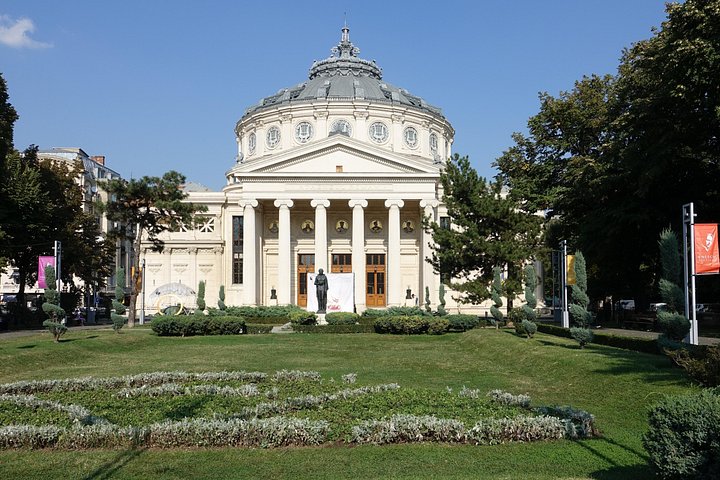
Parlamentspalasset, en av verdens største administrative bygninger, dominerer sentrum som en slående arv fra Ceaușescu-tiden. Calea Victoriei, den store alléen, leder forbi den kuppelformede konserthallen Det rumenske Athenæum, det tidligere kongelige palasset som huser Nasjonalmuseet for kunst, og Revolusjonsplassen, der hendelsene i 1989 utspilte seg.
Top-ranked sights in București: Palace of Parliament (Palatul Parlamentului), Revolution Square (Piata Revolutiei), Arcul de Triumf (Arch of Triumph).
Spesialtilbud i București
Før/nå-priser kommer fra arrangøren, aldri fra oss.
 20% rabattGratis avbestilling
![Sweet Delights History and Desserts Walking Tour in Bucharest]() 10% rabattGratis avbestilling
![Bucharest City Tour: Historie, kommunisme og lokale legender]() 20% rabattGratis avbestilling
Bucharest City Tour: Historie, kommunisme og lokale legender
fra
63 USD50 USD




Lignende opplevelser
![Bucharest Food Lovers Tour: Markeder, smaksprøver og skjulte steder]() 15% rabattGratis avbestilling
![Draculas slott, Brasov og Peles heldagstur fra Bucuresti]() Blir trolig utsolgtGratis avbestilling