Zagreb - Rijeka - Opatija
설명은 영어로 표시됩니다.
- 8–12시간
- 시작 24시간 전까지 무료 취소
- 영어 가이드
- 즉시 확정
하이라이트
Do you have a day off from work or do you want a weekend break somewhere? No problem, Opatija is the best choice for a weekend this spring or for a short break this year. The beautiful city of Opatija is a summer resort and romantic city located near Rijeka. Opatija is a picturesque destination that offers a beautiful sunset, romantic atmosphere and some of the best wellness and spa hotels in Croatia. Attractions in Opatija: Church of St. James promenade The girl with the seagull Swiss house Gervais Center Also nearby is Ucka Nature Park Why visit Opatija? Beautiful promenade Architecture Parks Air conditioning, sea holidays A romantic sunset Great hotels that offer spa and wellness Good gastronomic offer You can get to Opatija cheaply and easily from all parts of HR
포함 사항
포함되는 것
- Private transportation
- All Fees and Taxes
- Dress code is smart casual
- WiFi on board
- Bottled water
- Air-conditioned vehicle
- Local licensed guide for Diocletian Palace and Split downtown
- Infant seats available
- Stroller accessible
일정
Located at the foot of Ucka Mountain and Nature Park, Opatija provides a great choice for summer and winter vacations. Beautiful nature, parks, old Austro-Hungarian villas, promenades and beaches have been attracting tourists from Europe and the world for 160 years. Opatija is the leading tourist resort in the Republic of Croatia for the organization of congresses, seminars and consultations. Festivals, concerts, exhibitions and other cultural and sporting events Opatija offers culturally entertaining events throughout the year. [1] The abbey is located on the eastern coast of the Istrian peninsula, and lies at the foot of Učka Mountain. It is the largest city and center of the Liburnian area, which extends from Plomin, along the coast and through the mountain range of Učka and Ćićarija to Rupa and Kastav. Opatija is a tourist town, picturesque in appearance. With its tradition and appearance it stands out from other tourist cities because its, although short-lived history is very colorful. Opatija's climate is sub-Mediterranean, which means that it is not like in Dalmatia, but the temperatures are slightly lower, and there are more rainfall and cloudy days in the year than in the southern Adriatic.
Historically, Rijeka was also called Tharsatica, Vitopolis (lit. City of [Saint] Vito), or Flumen (lit. River) in Latin. The city is called Rijeka in Croatian, Reka in Slovene, and Reka or Rika in the local dialects of the Chakavian language. It is called Fiume ([ˈfjuːme]) in Italian. All these names mean "river" in their respective languages.[6][7] Meanwhile, Hungarian has adopted the Italian name while in German the city has been called Sankt Veit am Flaum—St Vito on the river Flaum—or Pflaum ([pflaʊm]).Though traces of Neolithic settlements can be found in the region, the earliest modern settlements on the site were Celtic Tharsatica (modern Trsat, now part of Rijeka) on the hill, and the tribe of mariners, the Liburni, in the natural harbour below. The city long retained its dual character. Rijeka was first mentioned in the 1st century AD by Pliny the Elder as Tarsatica in his Natural History (iii.140).[8] In the time of Augustus, the Romans rebuilt Tharsatica as a municipium Flumen (MacMullen 2000), situated on the right bank of small river Rječina (whose name means "the big river"). It became a city within the Roman Province of Dalmatia until the 6th century.After the 4th century Rijeka was rededicated to St. Vitus, the city's patron saint, as Terra Fluminis sancti Sancti Viti or in German Sankt Veit am Pflaum. From the 5th century onwards, the town was ruled successively by the Ostrogoths, the Byzantines, the Lombards, and the Avars. Croats settled the city starting in the 7th century giving it the Croatian name, Rika svetoga Vida ("the river of St. Vitus"). At the time, Rijeka was a feudal stronghold surrounded by a wall. At the center of the city, its highest point, was a fortress. In 799 Rijeka was attacked by the Frankish troops of Charlemagne. Their Siege of Trsat was at first repulsed, during which the Frankish commander Duke Eric of Friuli was killed. However, the Frankish forces finally occupied and devastated the castle, while the Duchy of Croatia passed under the overlordship of the Carolingian Empire. From about 925, the town was part of the Kingdom of Croatia, from 1102 in personal union with Hungary. Trsat Castle and the town was rebuilt under the rule of the House of Frankopan. In 1288 the Rijeka citizens signed the Law codex of Vinodol, one of the oldest codes of law in Europe. Rijeka even rivalled with Venice when it was purchased by the Habsburg emperor Frederick III, Archduke of Austria in 1466. It would remain under Habsburg overlordship for over 450 years, except for French rule between 1805 and 1813, until its occupation by Croatian and subsequently Italian irregulars at the end of World War I
취소 규정
체험 시작 24시간 전까지 무료로 취소하고 전액 환불받을 수 있습니다.
후기
5.0
- 54
- 40
- 30
- 20
- 10
평점은 저희 예약 파트너가 모은 후기 4개를 바탕으로 합니다. 여행자가 직접 쓴 글을 쓰인 순서 그대로 보여주며, 체험을 좋아 보이게 하려고 순서를 바꾸지 않습니다.
출발 전 알아둘 점
- 픽업
- 픽업을 제공하며, 출발 장소에서 직접 만나도 됩니다.
- 티켓 종류
- Mobile or paper ticket accepted
- 운영사
- Nalu-Sava Transfers
- Specialized infant seats are available
- Public transportation options are available nearby
- Infants and small children can ride in a pram or stroller
- Travelers should have at least a moderate level of physical fitness
How it compares in Zagreb
- Its from-price is 279% above the median of the 66 시티 투어 we list in Zagreb.
- It is longer than most of them.
- By number of reviews it ranks 25 of 66.
- The operator lists free cancellation on it.
About Zagreb
Zagreb is Croatia's capital, a city of two historic towns, cathedral spires, café-lined streets and green parks beneath Mount Medvednica.
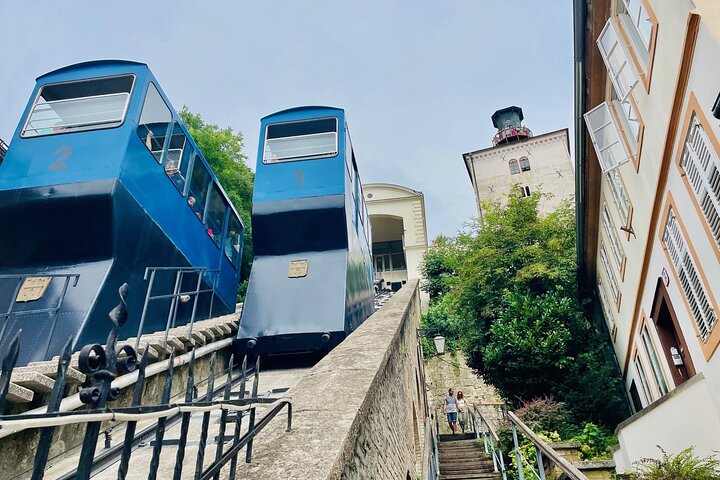
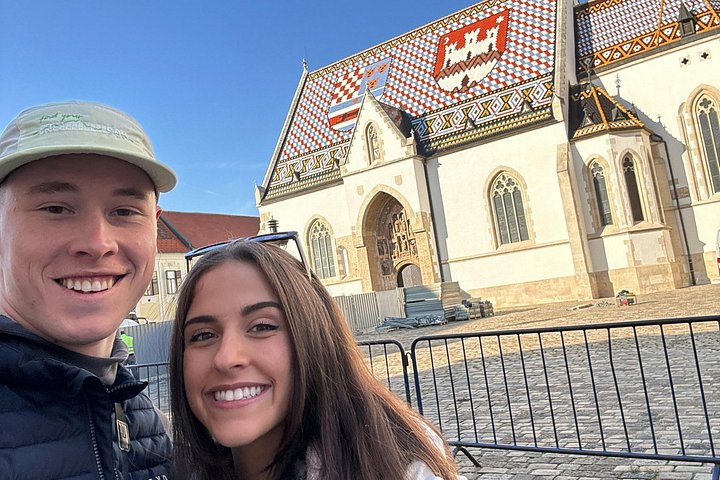
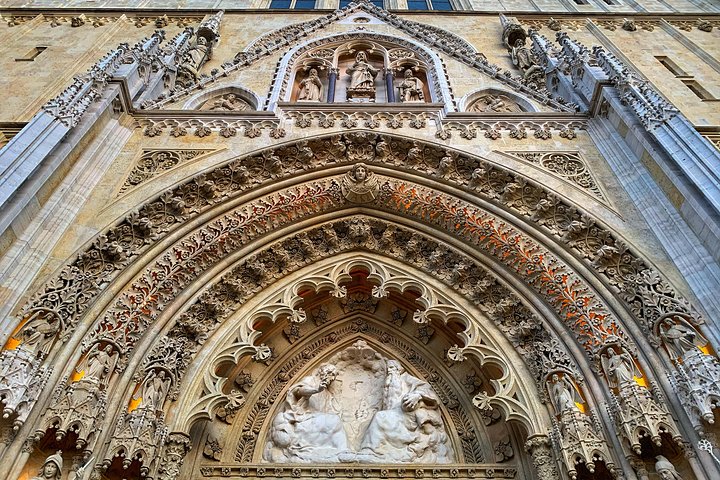
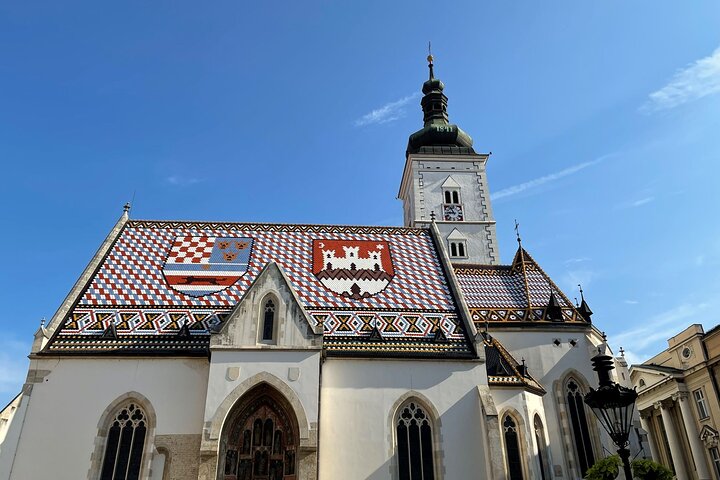
Zagreb has two historic halves. The Upper Town, Gornji Grad, sits on a hill with cobbled lanes, the tiled-roof church of St Mark and the Lotrščak Tower, from which a cannon is fired at noon each day. Below, the Lower Town has Austro-Hungarian squares, theatres and museums around Ban Jelačić Square, with the twin neo-Gothic spires of the cathedral just east and a short funicular linking the two parts.
Top-ranked sights in Zagreb: Ban Jelačić Square (Trg Bana Jelačića), Gric Tunnel (Tunel Gric), Dolac Market.
Zagreb 특가
할인 전후 가격은 운영사가 정한 것이며, 저희가 붙인 것이 아닙니다.