South Valley (Half Day Tour)
설명은 영어로 표시됩니다.
- 5시간
- 2개 언어
- 즉시 확정
- 모바일 티켓
하이라이트
When visiting the South Valley, we will appreciate the beautiful landscapes of the Andean Serrania. During the trip we will be able to explore the magnificent hydraulic architecture of Tipón, the pre-Inca architecture of Pikillaqta and the excellent works of art of the Cusqueña School that are in the Andahuaylillas Temple, not forgetting the variety of restaurants that Saylla has. Come and enjoy with us this wonderful excursion!
포함 사항
포함되는 것
- Transport
- Guided tour
- Bi-lingual Guide
포함되지 않는 것
- Entrance Ticket: Partial 70 Soles (2 Days Validity) | Complete 130 Soles (10 Days Validity)
- Entrance to Andahuaylilas Church - 15 Soles
일정
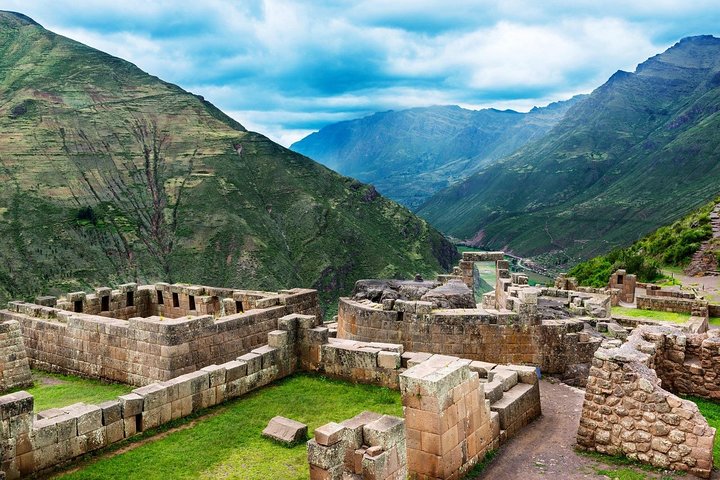
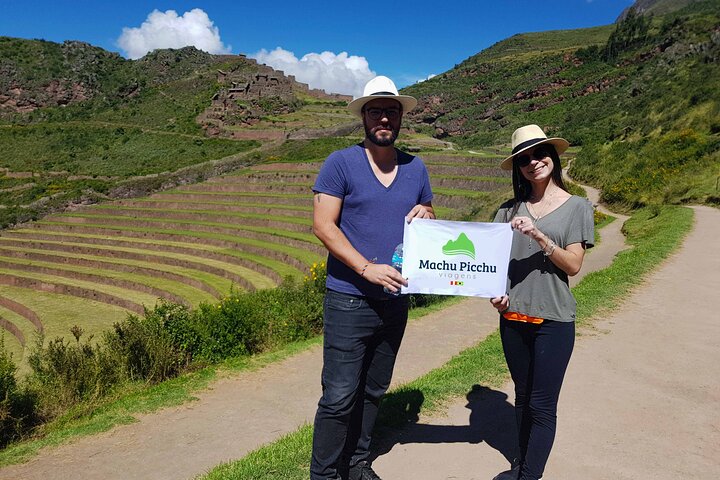
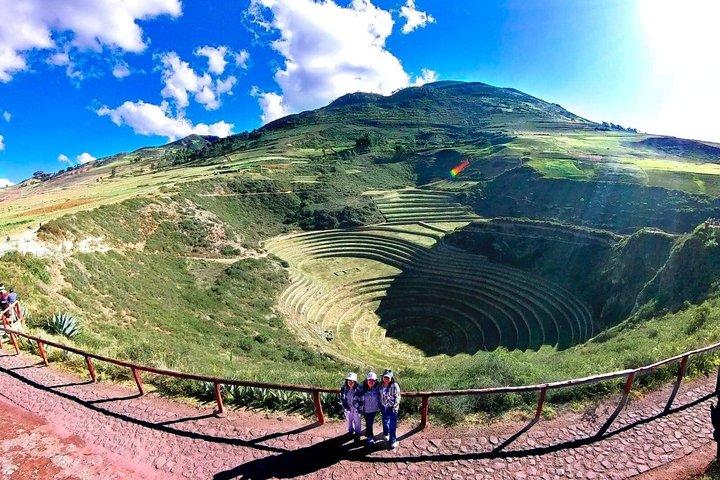
Tipon is a 500-acre site near Cusco that is built around a spring. Although in many Peruvian ruins there is evidence of irrigation channels and constructions, Tipon is one of the only places where the irrigation system is still fully functional, with water flowing all year round (even in the dry season). In fact, Tipon has been touted as a masterpiece of water management, and the American Society of Civil Engineers has put Tipon on its list of International Historic Civil Engineering Landmarks. The actual reason and historical use for Tipon is (as with many Peruvian ruins) not entirely known; it is surmised that it was constructed as part of a country estate for Inca nobility. Some of the finely cut stones and trapezoidal doors and windows imply an imperial air that was reserved for royalty. Others suggest that Tipon was an agricultural lab (similar to Moray), since the many terraces of Tipon contain different micro-climates that would have been useful for testing various crops. Others yet suggest that Tipon was a ritual garden, with the terraces constructed in a way that actually channels not only water, but also spirit and energy, from the surrounding mountains and springs into the crops that were likely grown on the terraces.
Pikillaqta, the flea town. Located on the Quispicanchis Province, with an altitude of 3350 meters above the sea level, is an archaeological site with many structures that were used for almost 2000 years The name of the city comes from 2 Quechua words, Piki, which means flea, and llaqta, which means town, although this is not the first and original name of the town, even nobody knows how was called by the Incas. According to the XVth century, said that they heard names like Muyuna or Mohina, which means bend. The first people who inhabited this site was the Wari culture, an empire that last around 400 years, until the Incas came and destroyed his city and reorganized to the benefit of the Tahuantinsuyo Empire. Presents over 600 buildings, between canchas (which are fields open wide) and Tambos (storages), and many places where the people lived on the Inca times. Like is traditional in Wari and the Incas, cultures that were influenced each other, the design of the entire complex is geometric, containing over 10thousand persons living there. Many sites were designated to function as a religious, administrative and political and even defensive against intruders. The walls that surround the complex were painting with plaster, and because of that, the whole complex could be a white town. One of the most important discoveries on this site is that in the year of 1927, Justo Román Aparicio, a native of the town, made excavations on the complex, and found 40 little sculptures made of turquoise, and these pieces are exhibited on the Archaeological Museum of Cusco. The town has no water; the only source of water is a 1km away from the city, the Wakarpay Lagoon. One folklorist woman called Alfonsina Barrionuevo mentioned that around the lack of water, there’s a Myth that involved a beautiful princess called Qori Tika ( golden flower) who decided help his people by said that the one who can bring water to his town, is going to marry her. One brave prince appears, Paukar, who live in the heights, carry the aqueduct over the mountain, but couldn’t bring the water. The other man, Tuyasta, who lived on the low side of the mountain, also couldn’t bring the liquid element; and the third one, Sunqo Rumi he was successful, because he could bring water by built 2 aqueducts, and married with the beautiful Qori Tika. Until these days you can see 2 lines that represent the mentioned aqueducts.
This place is a demonstration of the engineering skills of the incas; it’s located at 9.5 km from Andahuaylillas. It’s made up by 12 terraces surrounded by walls, channels and waterfalls. San Pedro Apóstol Andahuaylillas Chapel is considered as the Sistine Chapel of America. The actual chapel started to building in 1610; nevertheless it’s a general belief that there was a little church built above an ancient Inca temple in the end of the XVI century. The chapel harbours artistic walls and valuable colonial paintings. Still we can observe some remains of the Inca architecture. In the main altarpiece stands the Saint of the village: La Virgen del Rosario. Among the walls you can find the portrait of the only women that has ruled the Catholic Church between the years 855 – 857; the Pope Joan. Besides of many walls with evangelizing purposes, even images showing the paradise and hell, and texts in 5 languages such latin, quechua, aymara and puquina, native languages from the surrounding regions. On many walls you will see several painting layers, painted in different eras; as a valuable testimony from the history and religiousness of the modern Andean and South American culture. Andahuaylillas organs are the oldest of Latin America. Both are situated in the high choir, one in each side. They were made in the XVII century and were restored recently; they are used for Sunday masses. This chapel features one of the best and varied decorations in the world, for its artistic value as well as its cultural value. A few minutes from the village is located the wetlands of Lucre-Huacarpay, one the most important ecosystem types in Cusco, it harbours up to 120 bird species (between local and migratory), they can be spotted for the most of the year. Also you might visit other places like crafts workshops, the Q’ewar Project, a cooperative that makes distinctive dolls in traditional costumes, the main products stores of the community and the eclectic Museo Ritos Andinos, as well the Qoriorcco’s cow house if you want to get some fresh milk; and finally get some delicious wheat tiny breads and sweets. The cuisine of the village has as main dishes the roasted Guinea Pig, the Fried Trout and the traditional Tarpuy Uchu, made with quinoa, guinea pig, pumpkin toast among other local products.
취소 규정
All sales are final. No refund is available for cancellations.
후기
3.0
- 51
- 40
- 30
- 20
- 11
평점은 저희 예약 파트너가 모은 후기 2개를 바탕으로 합니다. 여행자가 직접 쓴 글을 쓰인 순서 그대로 보여주며, 체험을 좋아 보이게 하려고 순서를 바꾸지 않습니다.
출발 전 알아둘 점
- 픽업
- 모든 인원 픽업이 포함됩니다.
- 티켓 종류
- Mobile or paper ticket accepted
- 그룹 규모
- 최대 15명
- 운영사
- Kinty Travel Cusco
- Suitable for all physical fitness levels
How it compares in Cusco
- Its from-price is 72% below the median of the 1358 당일치기 여행 we list in Cusco.
- It is shorter than most of them.
- By number of reviews it ranks 703 of 1358.
About Cusco
Cusco, the old Inca capital high in the Peruvian Andes, blends massive stone walls with colonial churches and is the gateway to Machu Picchu.
The Plaza de Armas is the heart of the city, framed by the cathedral and the Jesuit church of La Compañía. Inca stonework survives throughout the centre, most famously at the Qorikancha, the sun temple on which the Spanish built a monastery, and in the twelve-angled stone on Hatun Rumiyoc street. San Blas, the artisans' quarter, climbs steeply with workshops and cafés.
Top-ranked sights in Cusco: Aguas Calientes, Machu Picchu, Ollantaytambo Ruins.
Cusco 특가
할인 전후 가격은 운영사가 정한 것이며, 저희가 붙인 것이 아닙니다.