Skip the Line: Medieval Tuida Fortress tours
설명은 영어로 표시됩니다.
- 24시간
- 빠른 입장
- 시작 24시간 전까지 무료 취소
- 7개 언어
하이라이트
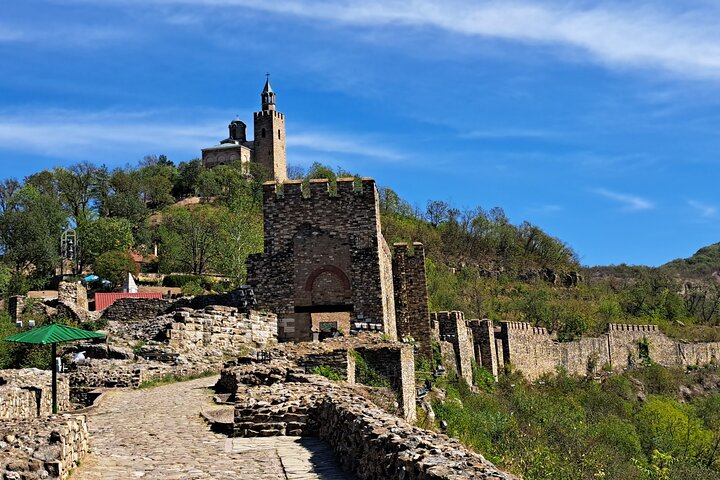
Тhe Tuida Fortress is a Late Roman, Early Byzantine and medieval Bulgarian fortress located on the Hisarlaka Hill in the eastern Bulgarian city of Sliven. It's a must see attraction offering plenty of activities inside. We welcome you!
포함 사항
포함되는 것
- guiding (if this option is booked)
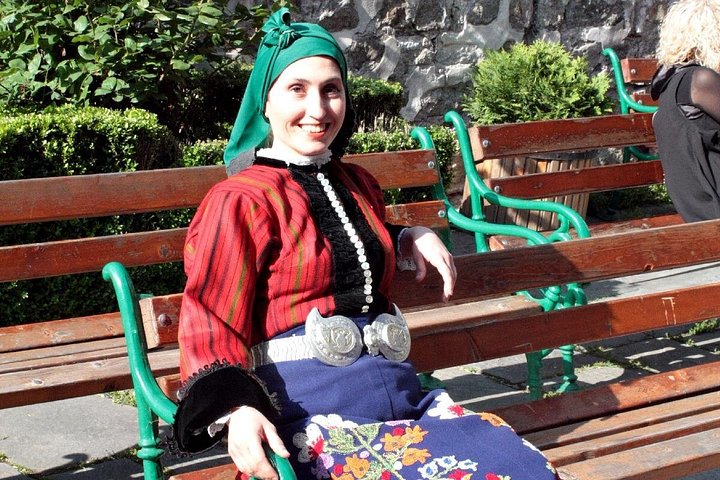
- archery & medieval dresses (if this option is booked)
- E-guide
- taking photos
포함되지 않는 것
- Food, drinks and personal expenses
일정
The Tuida Fortress avoided destruction during the invasion of the Goths in 378 AD but was destroyed in the invasions of the Huns in the 5th century AD. It was rebuilt during the reign of Roman Emperor Anastasius I (r. 491-518 AD), preserving but also enhancing the original architecture of the fortress. The Tuida Fortress was ultimately destroyed around 598-599 AD, most probably during an invasion of Avars and Slavs. The territory around today’s Bulgarian city of Sliven was made part of Bulgaria, i.e. of the First Bulgarian Empire (632/680-1018 AD), around 705 AD when Bulgarian Khan (or Kanas) Tervel gained the Zagore Region south of the Balkan Mountains after he helped Byzantine Emperor Justinian II the Slit-nosed (Rhinotmetos or Rhinotmetus) (r. 685-695 and 705-711 AD) regain his throne in Constantinople. Thus, a Bulgarian settlement, whose name remains unknown, was built on the place of the Tuida Fortress. A lead seal of Bulgarian Knyaz Boris I Mihail (r. 852-889 AD) has been found there. The Bulgarians rebuilt the fortress walls and the aquaduct of Tuida, and erected new buildings inside the fortress that were covered with marble slabs produced by stone cutters in the then Bulgarian capital Veliki Preslav (“Great Preslav”). Several bricks with an Ancient Bulgar sign (resembling “|Y|") have been found there. Written sources indicated that Tuida was the seat of a bishop from the 4th century AD onwards. After the original excavations of the Tuida Fortress first started in 1982, they were resumed in 2004. The archaeological finds there include, in addition to Knyaz Boris I’s lead seal, a number of iron tools, ceramic vessels, ornaments, coins, and bones from 14 species of wild and domesticated birds including Bonelli’s eagle (Aquila fasciata), western capercaillie (Tetrao urogallus), great bustard (Otis tarda), and common pheasant (Phasianus colchicus). The archaeological excavations have revealed the fortress walls of Tuida, fortress towers and gates, remains of buildings, two marble pedestals dedicated to gods Apollo and Zeus which contain the name of the fortress as Tuida or Suida (known in written sources as Tsoida), a 3rd century AD inscription describing the settlement as a market place, a cult complex used between the 4th and the 13th century consisting of a three-nave one-apse Early Christian basilica and a unique baptistery decorated with murals and mosaics. The ruins of a larger basilica have been found outside the fortress walls (which encompassed an area of about 40 decares (app. 10 acres)) which is taken to mean that the settlement was not confined by the fortified area but spanned outside of it.
취소 규정
체험 시작 24시간 전까지 무료로 취소하고 전액 환불받을 수 있습니다.
후기
4.3
- 55
- 40
- 30
- 20
- 11
평점은 저희 예약 파트너가 모은 후기 6개를 바탕으로 합니다. 여행자가 직접 쓴 글을 쓰인 순서 그대로 보여주며, 체험을 좋아 보이게 하려고 순서를 바꾸지 않습니다.
출발 전 알아둘 점
- 픽업
- 모두 출발 장소에서 모이며, 픽업은 없습니다.
- 티켓 종류
- Mobile or paper ticket accepted
- 그룹 규모
- 최대 50명
- 운영사
- VisitBulgariaOn Bespoke Experiences
- Wheelchair accessible
- Service animals allowed
- Transportation options are wheelchair accessible
- Suitable for all physical fitness levels
- Please, wear comfortable shoes.
How it compares in Sliven
- Its from-price is 73% below the median of the 45 experiences we list in Sliven.
- It is longer than most of them.
- By number of reviews it ranks 5 of 45.
- The operator lists free cancellation on it.
About Sliven
Sliven is a town in eastern Bulgaria at the foot of the Sinite Kamani, the Blue Rocks of the Balkan Range, once a centre of wool weaving.
Sliven stands where the eastern Balkan Range, called Stara Planina in Bulgarian, rises above the plains of Thrace. Steep cliffs known as the Blue Rocks overlook the town, and a nature park protects the forests and ridges above. In the nineteenth century Sliven became one of Bulgaria's first industrial towns, with wool and cloth mills, and it was the birthplace of the revolutionary Hadzhi Dimitar.
Top-ranked sights in Sliven: Tsarevets Fortress, Konstantsalieva House.