Seville Walking Tour with Audio Guide on Your Smartphone
설명은 영어로 표시됩니다.
- 4시간 30분
- 시작 24시간 전까지 무료 취소
- 3개 언어
- 즉시 확정
하이라이트
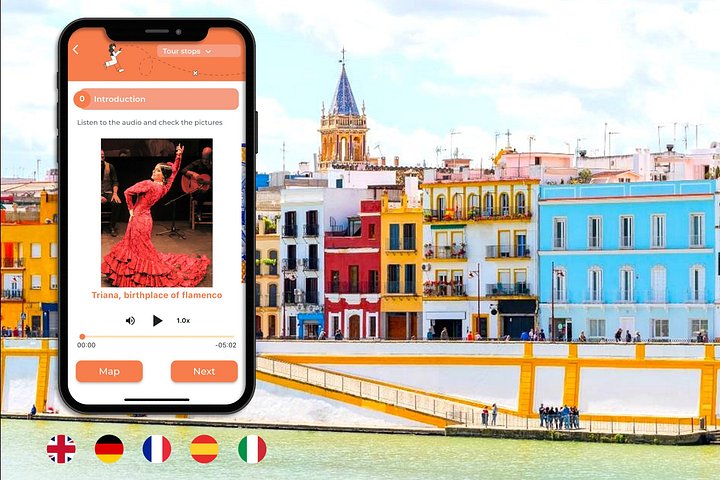
The audio guide is your convenient mobile companion for a self-guided tour of Seville. Simply download the app and the tour, and you're ready to explore, no internet connection required. The tour is designed to help you discover the city in just 2-3 hours. Follow the route on the app's map, and the GPS navigator will guide you with ease. You'll walk from Plaza de España to the famous Mushrooms, passing by the city's main attractions. During the tour, you'll see: The palace at Plaza de España, Torre del Oro, Seville Cathedral and Giralda tower, Alcázar, The Jewish Quarter, Medieval walls, The city's most beautiful mansions. The tour features 31 points of interest. All stories are crafted by professional journalists and historians, with a touch of humor and a passion for travel. Once you've downloaded the tour, the app works offline. The audio guide is always clear in your headphones. Enjoy fascinating stories and legends at your own pace.
포함 사항
포함되는 것
- Offline map with a route for easy GPS navigation
- 1-year access to the tour in your preferred language
- 31 audio recordings narrated by a professional historian
- Audio guide app for iPhone and Android
- Illustrations to help you identify landmarks
포함되지 않는 것
- Smartphone and headphones
- In-person tour guide
- Transportation
- Food and drinks
일정
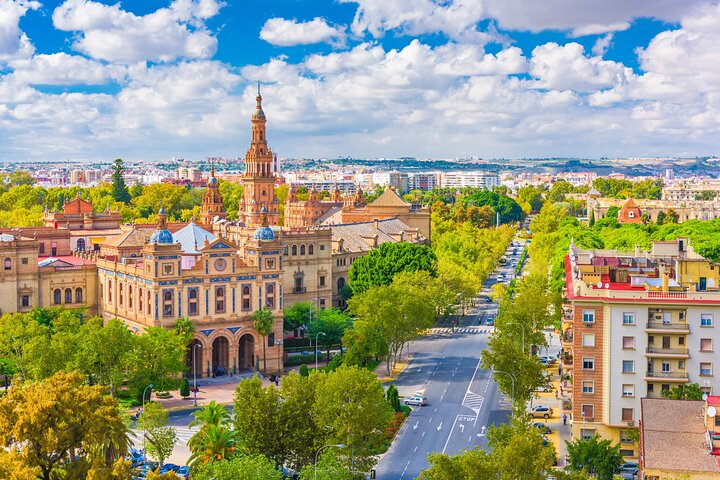
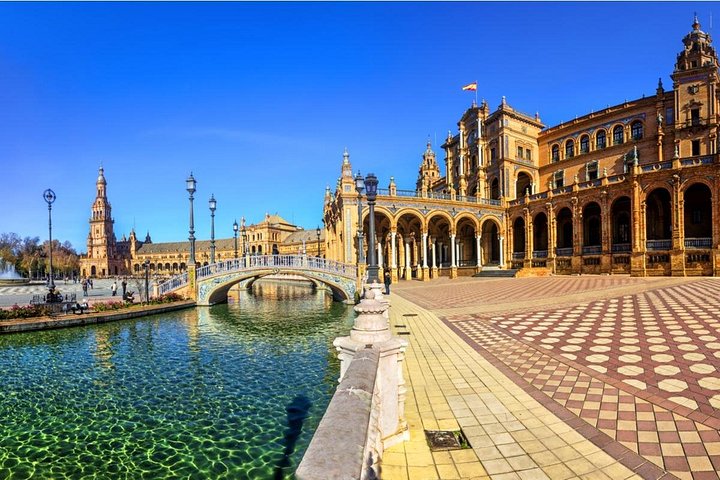
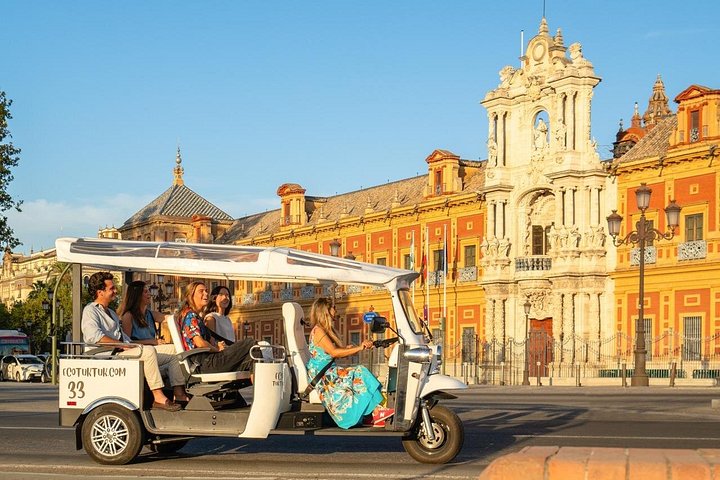
Plaza de España is Seville’s grand architectural showpiece — a vast semicircular plaza built for the Ibero-American Exposition of 1929. Designed by Aníbal González, it blends Renaissance Revival and Moorish styles, with bridges crossing a canal, ornate towers, and colorful ceramic benches representing every province of Spain. Featured in films from Lawrence of Arabia to Star Wars, it feels both monumental and graceful. More than a square, it’s a celebration of Spanish history, art, and ambition.
Teatro Lope de Vega is one of Seville’s most elegant theaters, built for the 1929 Ibero-American Exposition and named after Spain’s great Golden Age playwright, Lope de Vega. Its graceful Baroque Revival façade and richly decorated interior reflect the grandeur of the era. Today, it hosts opera, theater, concerts, and dance performances, remaining a vibrant cultural landmark beside María Luisa Park and Plaza de España. Elegant, historic, and very much alive, it continues to be one of Seville’s premier stages.
The Real Fábrica de Tabacos (Royal Tobacco Factory) is one of Seville’s most impressive historic buildings and the former center of Spain’s tobacco industry. Built in the 18th century, it was one of the largest industrial complexes in Europe, employing thousands of workers—including the cigar makers who inspired Bizet’s opera Carmen. Today, the vast Baroque building houses the University of Seville. With its grand façade, courtyards, and moat-like canal, it stands as a monument to both industry and culture.
Puerta de Jerez is one of Seville’s most important and lively squares, marking the gateway between the historic center and the riverfront. Once the site of a city gate leading toward the town of Jerez de la Frontera, today it is a bustling hub surrounded by palm trees, historic buildings, and elegant hotels. At its center stands a decorative fountain, while nearby landmarks include the Alcázar, Hotel Alfonso XIII, and the University of Seville. A crossroads of history and modern life, it’s where many visitors begin their exploration of the city.
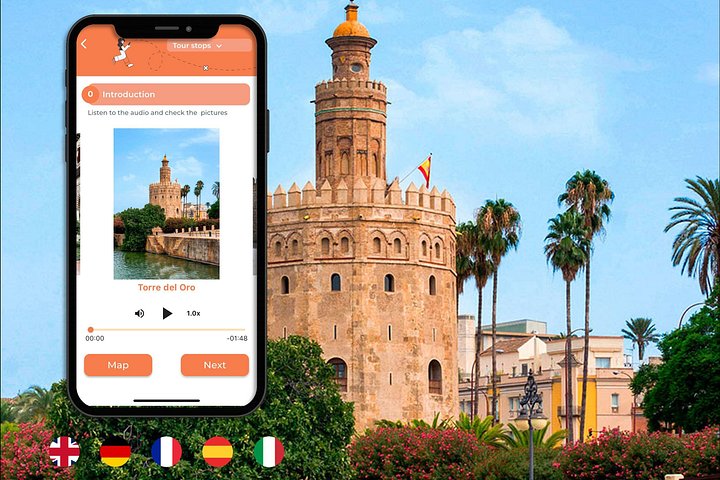
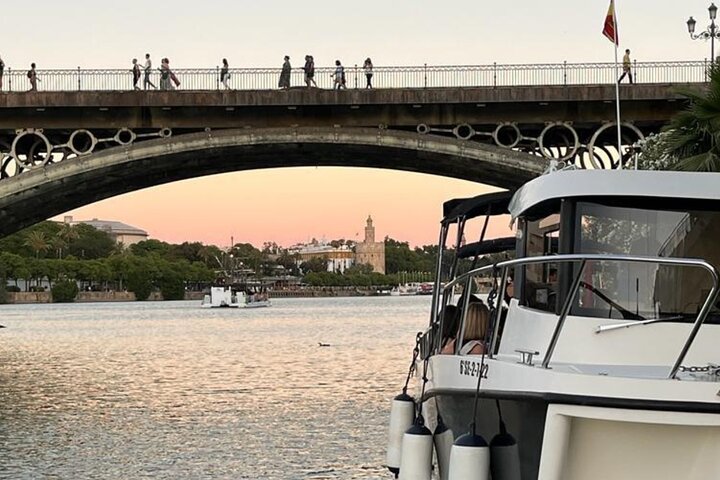
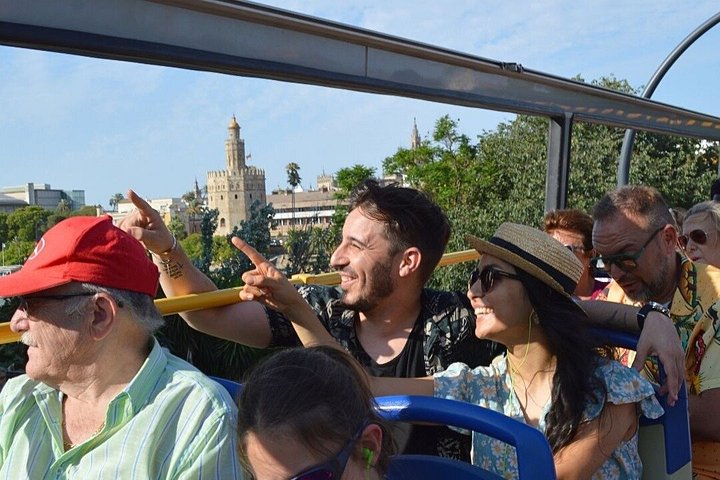
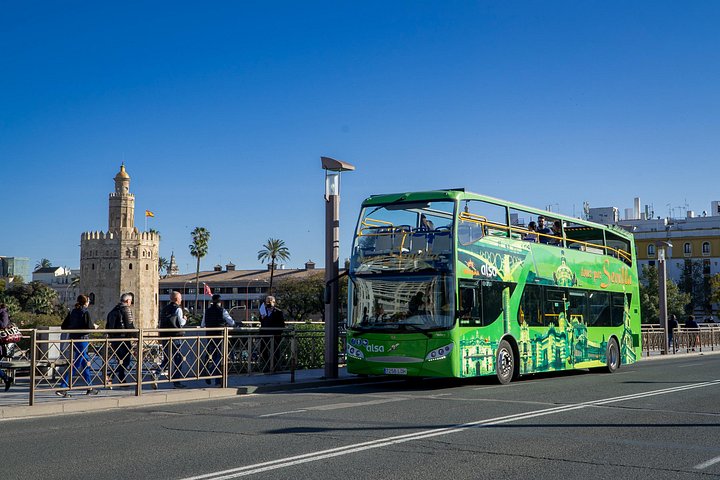
Torre del Oro (“Tower of Gold”) is one of Seville’s most recognizable landmarks, standing on the banks of the Guadalquivir River. Built in the 13th century by the Almohads, it formed part of the city’s defensive walls and helped control access to the river with a massive chain stretched across the water. Its name may come from the golden glow reflected by its original tiled coating. Today, the tower houses a small maritime museum and remains a symbol of Seville’s age of exploration and trade.
Nao Victoria is a full-scale replica of the ship that completed the first voyage around the world. The original Victoria was one of five ships that left Seville with Magellan in 1519, and the only one to return in 1522 under Juan Sebastián Elcano. Moored on the Guadalquivir River, the replica offers a glimpse into the harsh conditions faced by the crew during their historic journey. Small, crowded, and vulnerable to the elements, it makes the achievement of the first circumnavigation feel all the more extraordinary.
Plaza de Toros de la Real Maestranza de Caballería de Sevilla is Spain’s most famous bullring and one of the oldest still in use. Built between the 18th and 19th centuries, its distinctive white-and-yellow façade and elegant Baroque details make it an architectural landmark as well as a sporting venue. For many, it is the spiritual home of bullfighting, deeply tied to Andalusian tradition and culture. Whether admired for its history or debated for its purpose, the Maestranza remains one of Seville’s most iconic and influential monuments.
Reales Atarazanas de Sevilla (Royal Shipyards of Seville) were built in the 13th century under King Alfonso X to construct and repair ships for the Crown of Castile. Stretching along the Guadalquivir River, they once formed one of the largest shipbuilding complexes in medieval Europe. Their vast Gothic arches and cavernous brick halls reflect Seville’s importance as a naval and trading power. Though no longer used for shipbuilding, the shipyards remain a remarkable reminder of the city's maritime past and its connection to exploration and empire.
Seville Cathedral (Catedral de Santa María de la Sede) is the largest Gothic cathedral in the world and one of Spain’s most extraordinary landmarks. Built on the site of a former mosque between the 15th and 16th centuries, it was designed to showcase Seville’s wealth and power after the Reconquista. Inside, soaring vaults, elaborate chapels, and the magnificent main altarpiece create an overwhelming sense of grandeur. The cathedral is also home to the tomb traditionally attributed to Christopher Columbus. Towering above it all is La Giralda, the former mosque minaret turned bell tower, now the enduring symbol of Seville.
The Archivo General de Indias is one of the most important historical archives in the world. Founded in 1785 by King Charles III, it was created to gather documents relating to Spain’s vast empire in the Americas and Asia. Housed in a magnificent Renaissance building beside the Cathedral and Alcázar, the archive preserves millions of pages of records, maps, and letters — including documents linked to Christopher Columbus, Magellan, and the conquest of the New World. Today, it is a UNESCO World Heritage Site and a treasure trove of global history.
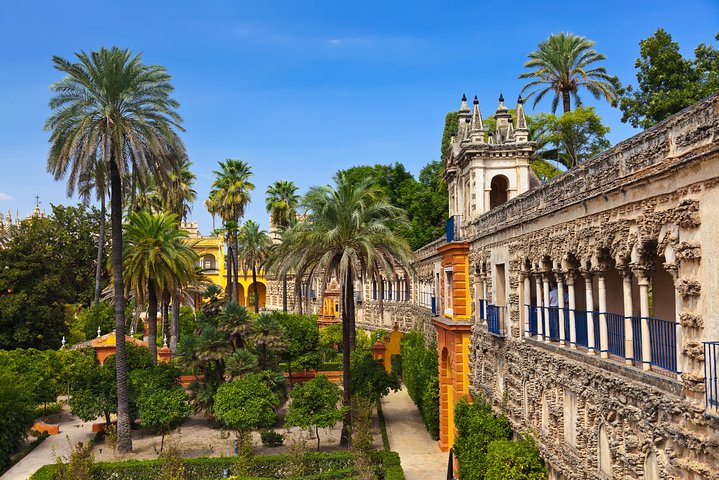
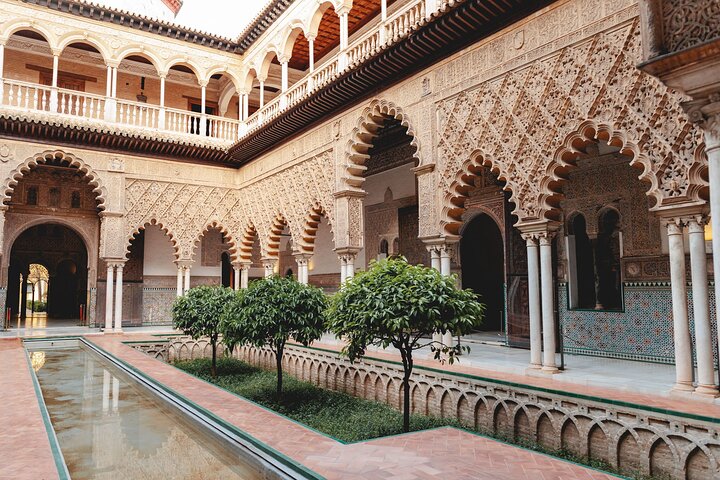
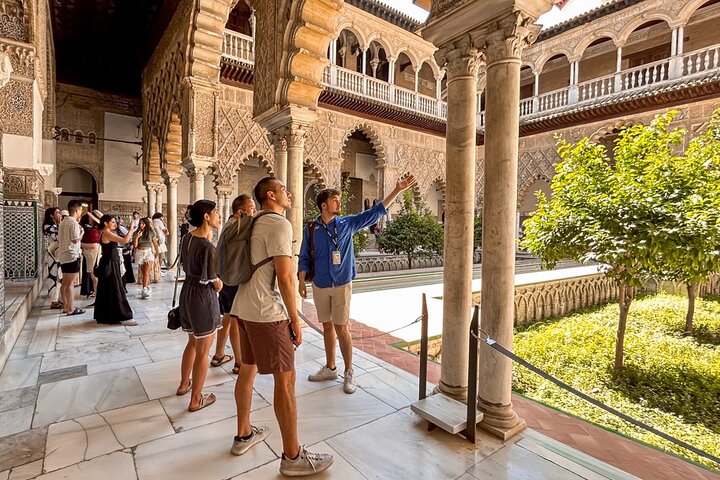
The Royal Alcázar of Seville is Europe’s oldest royal palace still in use and one of the finest examples of Mudéjar architecture in the world. Originally built as a Muslim fortress in the 10th century, it was transformed by Christian kings into a lavish palace of courtyards, gardens, fountains, and intricately carved halls. Delicate stucco work, colorful tiles, and tranquil patios blend Islamic, Gothic, Renaissance, and Baroque influences into a uniquely Andalusian masterpiece. Still used by the Spanish royal family during official visits to Seville, the Alcázar feels less like a monument and more like a living palace from a fairy tale.
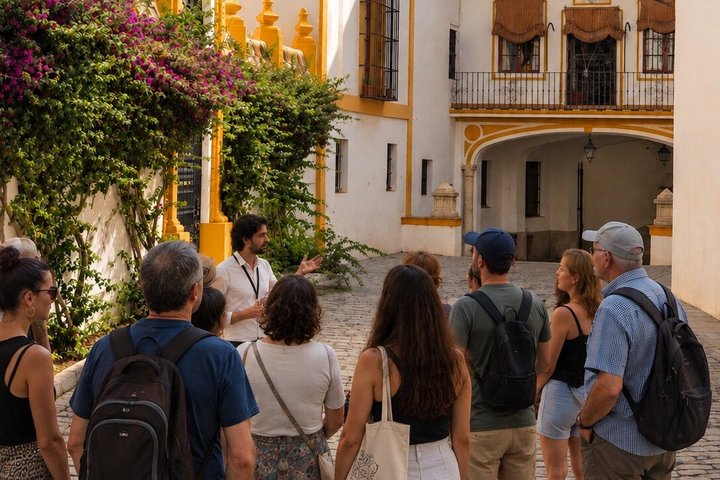
Street of Death (Calle Susona) is one of Seville’s most legendary streets, hidden in the winding lanes of the Santa Cruz quarter. Once known as Calle de la Muerte, it is linked to the tragic story of Susona, a young woman whose betrayal led to the execution of her father. Quiet and atmospheric, the street remains a place where history, legend, and memory intertwine.
취소 규정
체험 시작 24시간 전까지 무료로 취소하고 전액 환불받을 수 있습니다.
후기
5.0
- 52
- 40
- 30
- 20
- 10
평점은 저희 예약 파트너가 모은 후기 2개를 바탕으로 합니다. 여행자가 직접 쓴 글을 쓰인 순서 그대로 보여주며, 체험을 좋아 보이게 하려고 순서를 바꾸지 않습니다.
출발 전 알아둘 점
- 미팅 장소
- - The tour starts at Plaza de España. - This is a self-guided tour. There will be no human guide at the meeting point. - Launch the TouringBee app, start the "Seville walking tour," and follow the designated route.
- 픽업
- 모두 출발 장소에서 모이며, 픽업은 없습니다.
- 티켓 종류
- Mobile or paper ticket accepted
- 그룹 규모
- 최대 20명
- 운영사
- TouringBee
- Public transportation options are available nearby
- Suitable for all physical fitness levels
- The audio guide is available through a dedicated mobile app for iOS and Android
- Entry tickets to museums and attractions are not included. Please purchase them separately in advance
- The tour does not cover all sights in Seville
- This is a self-guided tour. You will need to download the audio guide app, activate your purchase, and follow the route on the app's map. No human guide is provided
- The audio guide is available at any time. The date and time provided at checkout are approximate
How it compares in Seville
- Its from-price is 93% below the median of the 155 시티 투어 we list in Seville.
- It is longer than most of them.
- By number of reviews it ranks 86 of 155.
- The operator lists free cancellation on it.
About Seville
Seville is the passionate capital of Andalusia, a city of Moorish palaces, a vast Gothic cathedral, orange-scented plazas and flamenco.
Seville Cathedral, one of the largest Gothic churches in the world, holds the tomb of Christopher Columbus, and its bell tower, the Giralda, was once the minaret of a great mosque. Next door, the Real Alcázar is a royal palace of Mudéjar courtyards, tilework and gardens, still used by the Spanish royal family.
Top-ranked sights in Seville: Royal Alcázar of Seville (Real Alcázar de Sevilla), Seville Cathedral (Catedral de Santa María de la Sede), The Giralda (El Giraldillo).
Seville 특가
할인 전후 가격은 운영사가 정한 것이며, 저희가 붙인 것이 아닙니다.