Security, Unification and DMZ Tour in the East Coast
설명은 영어로 표시됩니다.
- 4–5시간
- 시작 24시간 전까지 무료 취소
- 영어 가이드
- 즉시 확정
하이라이트
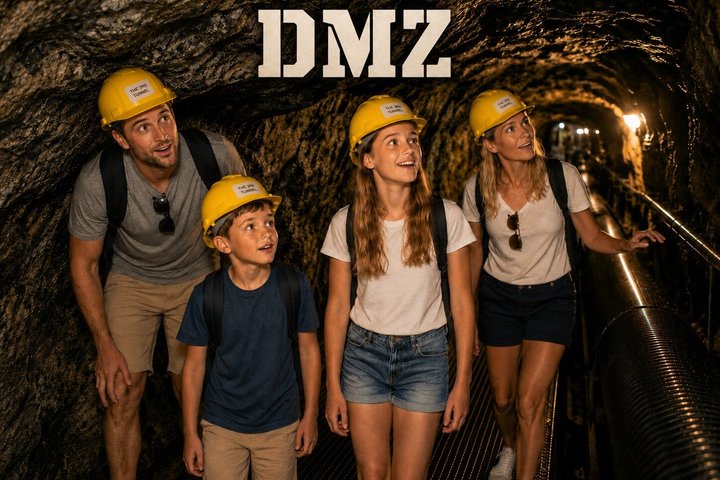
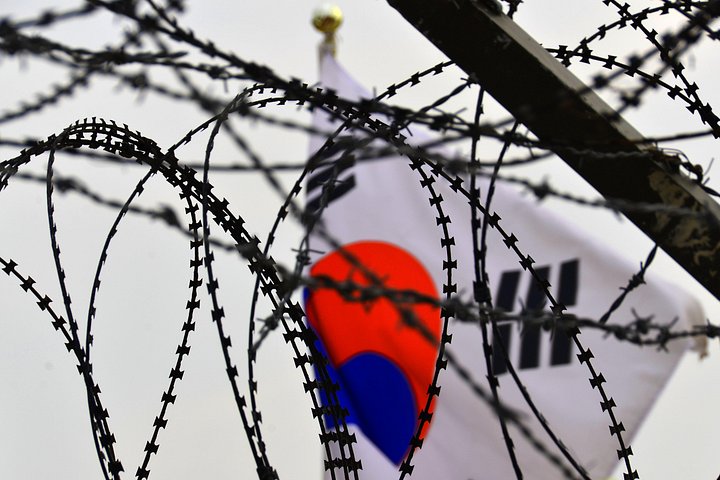
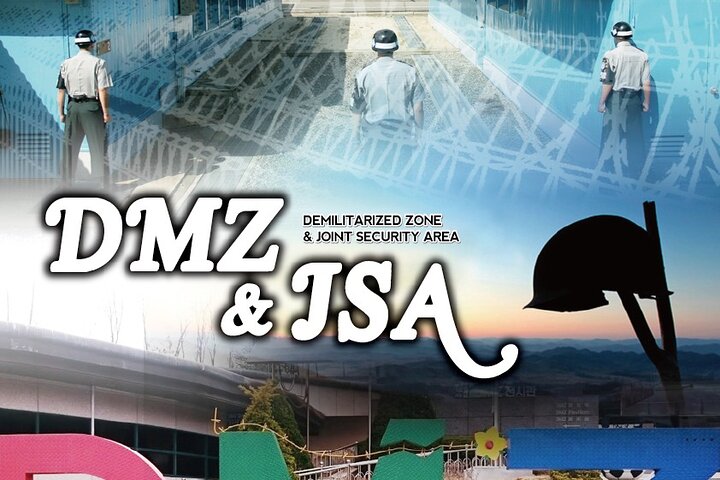
- Visit the northest DMZ and CCZ in the East coast - Understand the sorrow of 6.25 Korea War and longing of displaced people - See the beautiful Geumgansan mountain and Haegeumgang of North Korea from Unification Observatory - Watch the Korea War experience exhibit hall - Recognize the 38th parallel line and DMZ in the DMZ Museum - Visit the holiday house of former leader of North Korea, Kim Ilseong - See the beautiful pine forest and brilliant beach near the Kim ilseong' Holiday house
포함 사항
포함되는 것
- Admission fee
- Public transportation
- toll
- Parking Fees
포함되지 않는 것
- Meals
- Bottled water
- Gratuities
- insurance
일정
Located in the northernmost part of Korea, the Unification Observatory opened in 1984 and began construction in 1983 as the fastest observation deck to look at North Korean land to soothe the sadness and the pain of longing and strengthen the will for unification. It is a natural tourist destination visited by more than 600,000 domestic and foreign tourists annually, and is an experience center for unification and security education that directly sees and feels the reality of division. From the observation deck, the scenic view of the blue East Sea and the white sand beaches, such as Geumgangsan Mountain 12,000 Peak, Haegeumgang called Geumgangsan Mountain on the Sea, Gamho River with legends of woodcutters and fairies, and Songdo wrapped in white foam, feel like looking at a wave of watercolors. This is the site of division that soothes the sadness and sorrow of displaced people who cannot even leave their hometown a distance away while looking at North Korean land.
The DMZ Museum was opened in 2009 on the northernmost civilian control line on the east coast overlooking Geumgan Mountain. Under the theme of the DMZ, a legacy of the Cold War, the Korean War, the historical significance of the military demarcation line and DMZ caused by the Armistice Agreement, the military conflict that has continued since then, and the unique ecological environment that has not been touched by civilians have been reconstructed into exhibits and videos and captured in the DMZ Museum. The purpose of this place is to become a world attraction to pray for human peace, focusing on research, collection, preservation, exhibition, education, and research of data so that it can become a place of harmony to restore cultural homogeneity and prepare for unification between the two Koreas.
It was built by German H. Weber in 1938 and was used by Kim Il-seong as a summer resort with his wife Kim Jeong-sook, son Kim Jeong-il, and daughter Kim Kyung-hee from 1948 to 1950, and is said to have been used by Communist Party officials as well. There are still photos taken in 1948 at the entrance of the site by then-six-year-old Kim Jeong-il. It is a two-story stone building with one basement level and was demolished and reconstructed in 1964 to be used as a recreational facility for South Korean soldiers, before being repaired in 1995 to serve as an exhibition hall related to the Korean War and North Korea. It is used as a historical and security tourist destination
취소 규정
체험 시작 24시간 전까지 무료로 취소하고 전액 환불받을 수 있습니다.
출발 전 알아둘 점
- 픽업
- 모든 인원 픽업이 포함됩니다.
- 티켓 종류
- Mobile or paper ticket accepted
- 운영사
- MYK Tour
- Infants and small children can ride in a pram or stroller
- Infants are required to sit on an adult’s lap
- Travelers should have at least a moderate level of physical fitness
How it compares in Seoul
- Its from-price is 150% above the median of the 451 당일치기 여행 we list in Seoul.
- It is shorter than most of them.
- The operator lists free cancellation on it.
About Seoul
Royal palaces and hanok villages sit among glass towers, buzzing markets and late-night food streets in Seoul, South Korea's capital.
Five grand palaces from the Joseon dynasty grace the city, led by Gyeongbokgung, with its colourful changing of the guard, and Changdeokgung, whose Secret Garden is a serene escape. Between them, Bukchon Hanok Village preserves traditional tiled-roof houses on sloping lanes, and Insadong is known for tea houses, galleries and crafts.
Top-ranked sights in Seoul: Third Tunnel of Aggression, DMZ, Gyeongbokgung Palace.
Seoul 특가
할인 전후 가격은 운영사가 정한 것이며, 저희가 붙인 것이 아닙니다.