Private Tour Queluz, Mafra E Ericeira
설명은 영어로 표시됩니다.
- 8–9시간
- 시작 24시간 전까지 무료 취소
- 4개 언어
- 즉시 확정
하이라이트
We start this romantic tour through the Queluz Palace and continue to Mafra where we will visit the Convent / Palace of Mafra, pass through the miniature village of José Franco and end in the wonderful village of Ericeira.
포함 사항
포함되는 것
- Hotel pickup and drop-off
- Private tour
- All taxes, fees and handling charges
- WiFi on board
- Bottled water
- Air-conditioned vehicle
포함되지 않는 것
- TICKETS NOT INCLUDED
- Meals
일정
Palácio Nacional de Queluz Museums and Palaces The Palace of Queluz and its gardens, represents one of the finest examples of late 18th-century Portuguese architecture. Built at the orders of Pedro III, the husband of D. Maria I (1734-1816), and used as a royal residence, this palace is one of the finest examples of Portuguese architecture in the late 18C. It has been further enriched by an important museum of decorative art, whose collections mostly belonged to the royal family and are exhibited in an appropriate setting. Many of the rooms are decorated in the rocaille style, such as the superb Throne Room, its walls lined with mirrors and magnificent carved gilded woodwork. The surrounding gardens are embellished with fountains and ornamental ponds, where sparkling water spouts forth from mythological figures. Particularly impressive is the group of sculptures around the Neptune Basin.
Palácio Nacional e Convento de Mafra Museums and Palaces The sheer magnificence of the monumental architectural design of the palace, convent and basilica of Mafra bears witness to the opulence of the court of king João V (1707-1750). It was king João V who ordered the building of what proved to be the defining landmark of the Portuguese Baroque era. The design was by Frederico Ludovice who incorporated an architectural language and style Italian in inspiration. The summer residence of the royal family, the Palace includes various collections featuring works by mainly Portuguese, Italian and French artists working to royal order including Baroque painting and sculpture, religious vestments and ornaments and mural paintings by leading Portuguese artists including Cirilo Volkmar Machado and Domingos Sequeira. The Basilica houses a set of six organs, unique worldwide and they come in addition to two carillons totalling 114 bells - 57 in each tower. Made in Antwerp in the 18th century, they are also the largest of their kind worldwide. The Rocaille Library must be seen. On the eastern wing of the Convent of Mafra, the library is housed in an 83-metre main room, the longest in the complex. It is by far the most important monastic-royal library of the 18th century in Portugal. The Monks from the Convent of Arrábida organised the some 40,000 18th and 19th century volumes into a system that has survived to this day. They drew up a catalogue featuring the titles of all books acquired through to 1819. This valuable collection includes, 16th, 17th and 18th century books, many of them highly rare, such as the 22 foreign incunabula and 41 maps.
The José Franco Museum Village, José Franco Typical Village, Typical Village of the Sobreiro region or simply Saloia Village. All of these names point to the small region of Sobreiro, between Ericeira and Mafra, home to one of the country’s best-known museum villages. The history of the small village dates back to the birth of the potter José Franco, in 1920. His father was a shoemaker and his mother, a vendor of chinaware, who would sell clayware from door to door, as well as at many fairs and local markets. As Sobreiro was an important centre for pottery, José Franco was familiar with the trade from an early age, and while still a child, he left primary school, learnt the trade with two local master potters, before working independently at 17 years of age. At the time, he restored the pottery studio that belonged to his grandfather, which had fallen into disuse. At the start of the 1960s, José Franco gave wings to a dream, that of recreating an ethnographic village, in which his childhood memories would crystallise, in witness to the lifestyle of the locals, as a homage to his native land. His village would have two components: it would be a replica of the ancient workshops and stores, the lived spaces, adorned and fitted with real objects, where the customs and work activities that were an intrinsic part of his childhood and the country life of the Mafra region would be reproduced. Simultaneously, the village would include a play area, aimed at children, full of miniature houses and inhabitants which would portray the activities carried out at that time: farm work, carpentry, windmills, chapels, grocery stores, wineries, peasantry and even a reproduction of the fishing village of Ericeira and the trades connected to the sea. In later years, the Village Museum was improved by the construction of a third area, walled like a castle, with a children’s park, incorporating some agricultural implements, which the children could move freely. Today, this little world, moulded by José Franco’s hands (he passed away in 2009), is visited by thousands of people every year. And, in addition to the exhibition of the figures in the museum that was dedicated to him, visitors can find life-size replicas of castle walls, windmills, a children’s park, a small winery in which one can try the region’s wines and even a bakery, where one can buy the famous bread with chouriço, and other products. The José Franco Village is the fruit of a lifetime dedication to the refined traditional activity of pottery, further demonstrating the rich artisanal culture of Mafra Municipality.
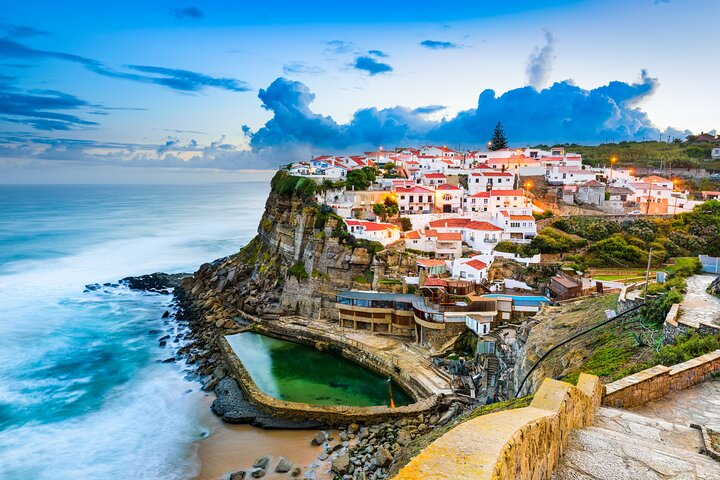
Ericeira Towns and Villages A traditional fishing village, Ericeira has developed enormously during the 20th century due to the growing interest in it as a summer resort. It has, however, maintained its original characteristics and its own individual atmosphere. Fifty kilometres from Lisbon, in an easily accessible area, its beaches are very crowded during the summer, and are considered among the best in Europe for surfing. Ribeira d`Ilhas Beach, where one of the World Surfing Championship contests is held every year, is worth a special mention. A visit to Ericeira is also an excellent opportunity to try the shellfish and fresh fish dishes, the speciality of the regional cuisine.
취소 규정
체험 시작 24시간 전까지 무료로 취소하고 전액 환불받을 수 있습니다.
후기
4.5
- 51
- 41
- 30
- 20
- 10
평점은 저희 예약 파트너가 모은 후기 2개를 바탕으로 합니다. 여행자가 직접 쓴 글을 쓰인 순서 그대로 보여주며, 체험을 좋아 보이게 하려고 순서를 바꾸지 않습니다.
출발 전 알아둘 점
- 픽업
- 모든 인원 픽업이 포함됩니다.
- 티켓 종류
- Mobile or paper ticket accepted
- 운영사
- Fantastic Ride
- Public transportation options are available nearby
- Specialized infant seats are available
- Not recommended for travelers with poor cardiovascular health
- Suitable for all physical fitness levels
How it compares in Sintra
- Its from-price is 21% below the median of the 139 당일치기 여행 we list in Sintra.
- Its length is typical for the group.
- By number of reviews it ranks 84 of 139.
- The operator lists free cancellation on it.
About Sintra
Sintra is a hill town west of Lisbon, wrapped in misty forest and crowned by a Moorish castle, a colourful Romantic palace and mysterious gardens.
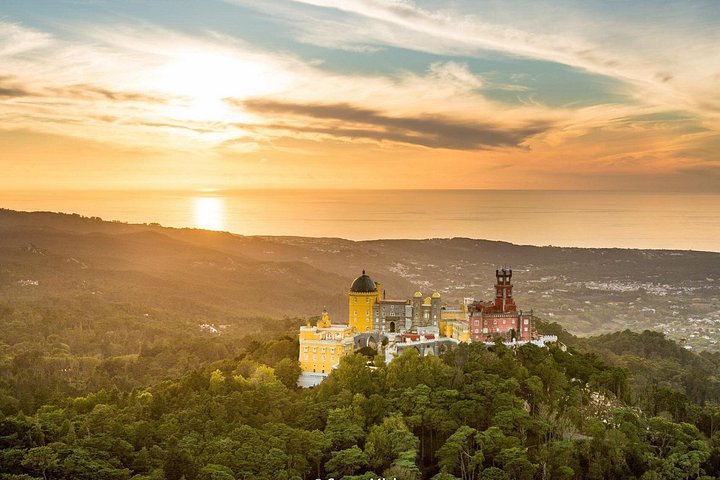
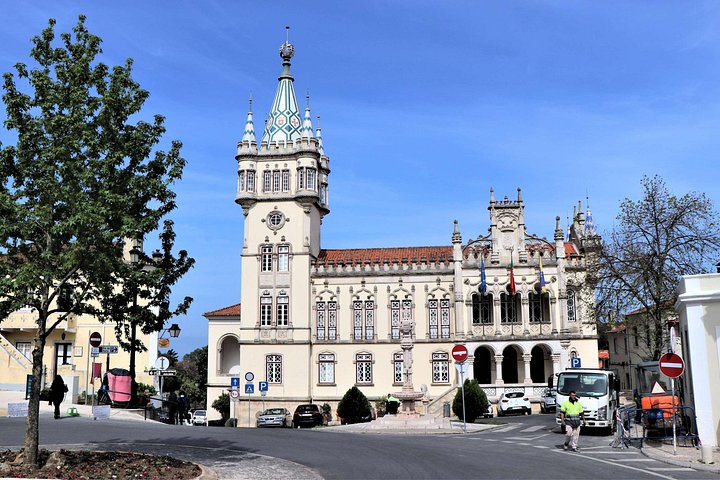
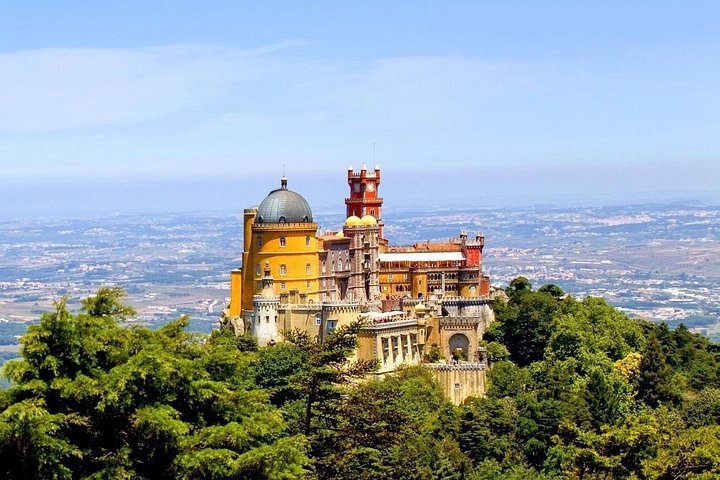
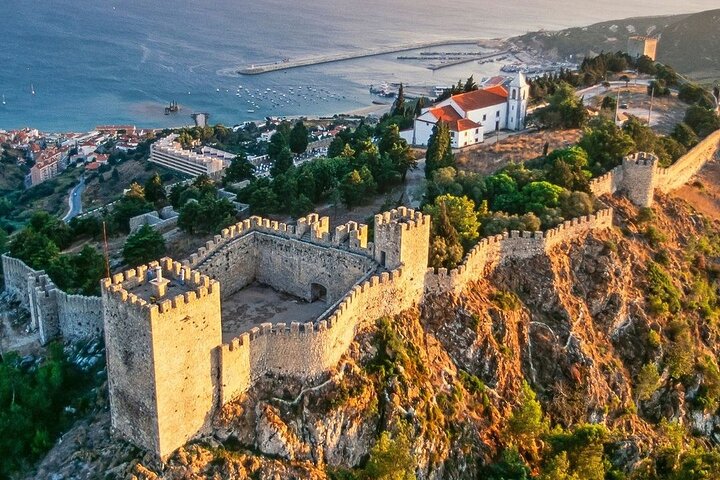
Sintra is a UNESCO-listed cultural landscape on the Serra de Sintra, a granite ridge that catches Atlantic mist and keeps the hills green and cool. Portuguese kings and nobles built summer palaces here. The Pena Palace, a painted fantasy of yellow and red towers, sits on the highest hill, while the Moorish Castle's walls climb the ridge nearby, and the old centre has the Sintra National Palace, recognisable by its two conical chimneys.
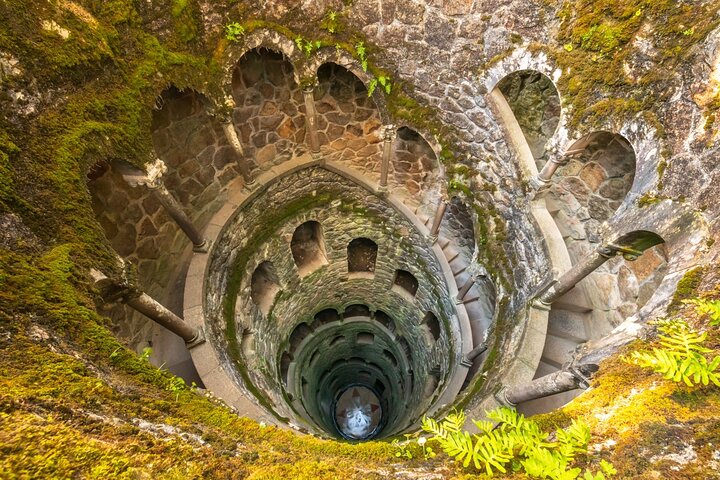
Top-ranked sights in Sintra: Quinta da Regaleira, Convent of the Capuchos.
Sintra 특가
할인 전후 가격은 운영사가 정한 것이며, 저희가 붙인 것이 아닙니다.