Private Former Concentration Camp Terezin Tour from Prague
설명은 영어로 표시됩니다.
- 6시간
- 시작 24시간 전까지 무료 취소
- 2개 언어
- 즉시 확정
하이라이트
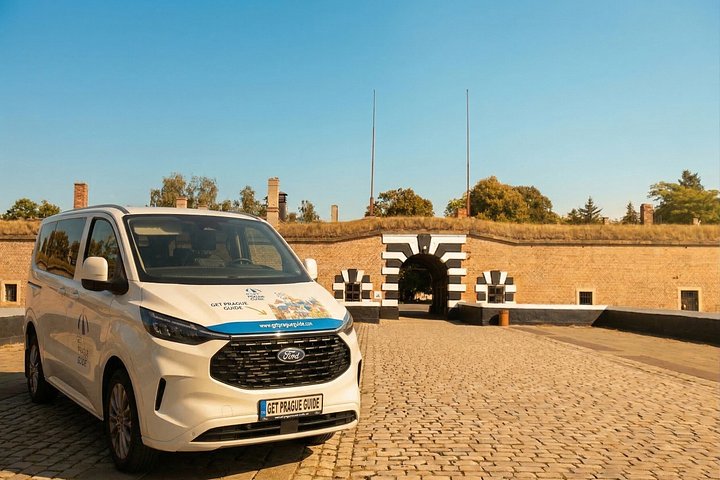
Theresienstadt, the concentration camp, also referred to as Theresienstadt Ghetto, was established by the SS during World War II in the fortress and garrison city of Terezín. During World War II it served as a Nazi concentration camp staffed by German Nazi guards. Tons of thousands of people died there, some killed outright and others dying from malnutrition and disease. More than 150,000 other persons (including tons of thousands of children) were held there for months or years, before being sent by rail transports to their deaths at Treblinka and Auschwitz extermination camps in occupied Poland, as well as to smaller camps elsewhere. I will pick you up with a professional driver at 9am in a lobby of the hotel you are located in. It takes approximately an hour to get there. Entrance fees are included in this tour. After the tour we will have delicious Czech meal in a local small Terezín restaurant you enjoy.
포함 사항
포함되는 것
- Hotel pickup and drop-off
- Bottled water
- Professional guide
- Air-conditioned vehicle
- Admission Fee - Entrance fees to all the sites
포함되지 않는 것
- Food and drinks
일정
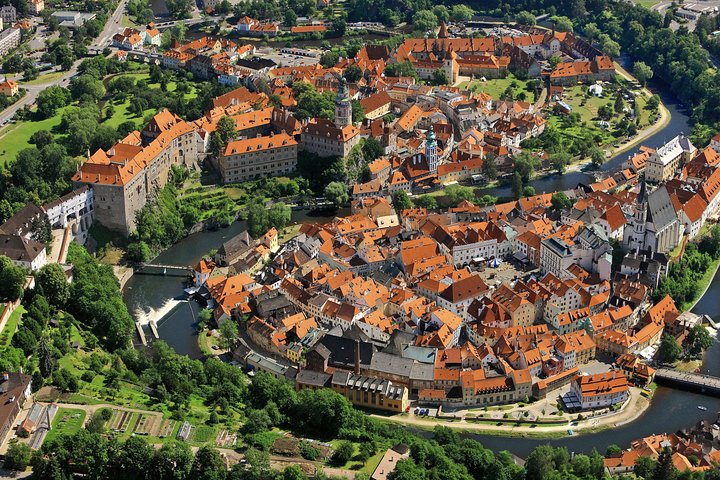
It was originally built to become a proud and impregnable fortress surrounded by walls and protected by a sophisticated system of flood trenches. Built in 11 years at the end of the 18th century this fortress, whose first cornerstone was laid by Emperor Joseph II, and the city carrying the name of his mother Empress Maria Theresa,never protected anything from anyone in the end.Terezín was determined to become a huge jail. It first became a jail as early as in the mid-19th century. Its most famous prisoner was Gavrilo Princip, who fired the first shot in Sarajevo and started the First World War before being brought here in 1914. However, the fate of this town was fulfilled during the Second World War. In 1940 the Small Fortress of Terezín became a prison of the Prague Gestapo, to which especially political prisoners were sent. Only one year later the whole town was turned into a collective and pass-through camp for Jews.
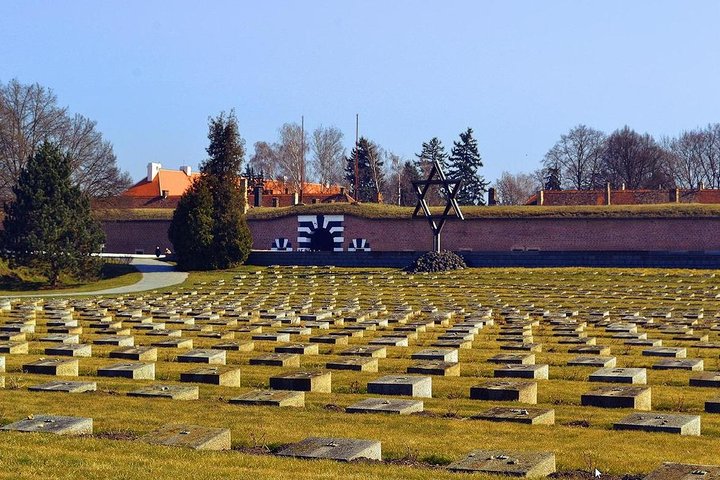
The National Cemetery was created artificially after liberation in 1945. The stimulus for its creation came from among former prisoners and the heirs of those who died, at whose request physical remains were exhumed from six mass graves in the ramparts of the Small Fortress which had been in use from March 1st to May 7th 1945. Among those who were exhumed were prisoners from the death march that in May 1945 arrived at the Small Fortress.
Terezín Ghetto was opened in the former municipal school in 1991. In this way, efforts for a dignified commemoration of the Ghetto victims and correct explanation of its history, tasks facing not only the employees of the Terezín Memorial together with the former inmates but also other representatives of the country’s public life, finally come to fruition after more than forty years. The Museum’s newly conceived permanent exhibition entitled ”Terezín in the 'Final Solution of the Jewish Question '1941 – 1945“ was inaugurated in 2001. We can also find here a Memorial Hall of the Terezín Ghetto’s Children, devoted to its youngest victims, plus a selection from the world-famous drawings made by children from the Ghetto, a scale model of the Ghetto with an electronic orientation system showing its individual thematic units and with relevant information for visitors, for the local reading room and the cinema where documentary films are screened.
The small Jewish prayer hall was founded during the Ghetto period and served spiritual needs of the prisoners who were accomodated in the neighbouring houses. Owned by František Bubák, the space served as part of a funeral parlor before World War II. Though forced to leave Terezín during 1942, Bubák reclaimed the property after the war. Because his family feared repercussions from the Communist regime, they kept the prayer room’s existence a secret while using it as a storage facility. Bubák’s descendants did not notify the authorities about it until after the 1989 Velvet Revolution that brought democracy to what was then Czechoslovakia. Visitors have been allowed to see the room since the late 1990s.
The Jewish ghetto’s local government was headquartered in the former Magdeburg Barracks building. It officially took care of the internal affairs of the ghetto, though all important issues were fully under the control of camp SS command. Opened in 1997 following renovations, the Magdeburg Barracks today features a replica of prison barracks from the ghetto period and other items, though its main function is as the venue for an exhibition on the ghetto’s artistic and cultural life. This includes artefacts relating to music, the visual arts, literature and theatre that attest to the huge desire of the forced inhabitants for a little humanity and hope in concentration camp conditions. Alongside the exhibition the building houses an educational Meeting Centre.
The crematorium at the Terezín Jewish Cemetery was built by ghetto prisoners by order of the SS commanders. Its operation was launched at the beginning of October 1942. The central part of the facility comprised four oil-powered incinerators supplied by Ignis Hüttenbau from Teplice-Šanov. The front section served as a space for unloading the corpses from coffins. On one side it bordered with the autopsy room, on the other there was an annex that housed the guards made up of Czech police officers and prisoners working at the crematorium. At the time of the highest mortality rate, there were up to eighteen prisoner workers who rotated in permanent shifts. Whenever the mortality rate dropped, the number of workers decreased to four. The crematorium was supervised by SS-Scharführer Heindl, one of the camp's feared top officers, yet routine checks were carried out by the camp commanders as well.
취소 규정
체험 시작 24시간 전까지 무료로 취소하고 전액 환불받을 수 있습니다.
후기
5.0
- 58
- 40
- 30
- 20
- 10
평점은 저희 예약 파트너가 모은 후기 8개를 바탕으로 합니다. 여행자가 직접 쓴 글을 쓰인 순서 그대로 보여주며, 체험을 좋아 보이게 하려고 순서를 바꾸지 않습니다.
출발 전 알아둘 점
- 미팅 장소
- In front of the hotel
- 픽업
- 픽업을 제공하며, 출발 장소에서 직접 만나도 됩니다.
- 티켓 종류
- Mobile or paper ticket accepted
- 운영사
- Eva Prague Tours
- Public transportation options are available nearby
- Suitable for all physical fitness levels
- Children must be accompanied by an adult
- Dress code is smart casual
How it compares in Prague
- Its from-price is 10% above the median of the 306 당일치기 여행 we list in Prague.
- It is shorter than most of them.
- By number of reviews it ranks 80 of 306.
- The operator lists free cancellation on it.
About Prague
Prague's skyline of spires rises over the Vltava, with a hilltop castle, statue-lined bridge and a medieval old town that survived largely intact.
Prague Castle, one of the largest castle complexes anywhere, crowns the hill of Hradčany, with St Vitus Cathedral at its centre and the tiny houses of Golden Lane tucked behind. Below, the Lesser Town's Baroque palaces and terraced gardens lead down to the Charles Bridge, lined with statues of saints and busy from dawn.
Top-ranked sights in Prague: Charles Bridge (Karluv Most), Prague Castle (Pražský Hrad), Prague Old Town Square (Staromestské Námestí).
Prague 특가
할인 전후 가격은 운영사가 정한 것이며, 저희가 붙인 것이 아닙니다.