Luxor in a Day: Explore the East & West Banks of the Nile
설명은 영어로 표시됩니다.
- 8시간
- 빠른 입장
- 시작 24시간 전까지 무료 취소
- 4개 언어
하이라이트
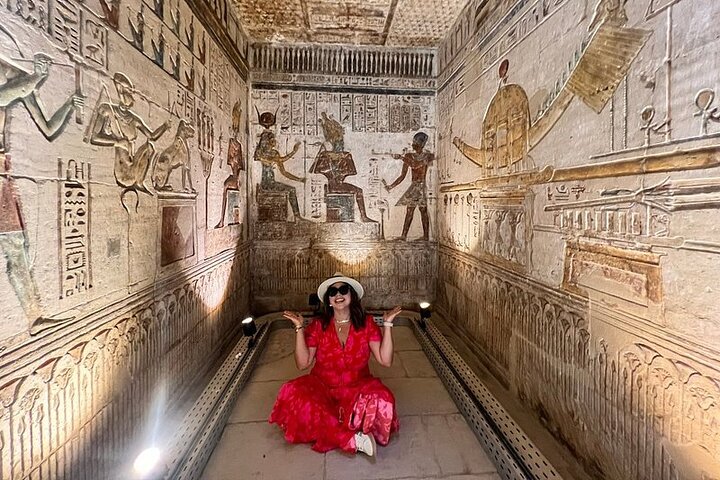
Uncover the hidden treasures of Luxor on our Best Luxor Day Tour exploring the East and West Nile Banks. Marvel at the colossal statues of Memnon, the intricately decorated temples of Medinet Habu, and the majestic colossi of Amenhotep III. With our expert guides leading the way, you will delve into the mysteries of Egypt's past and gain a deeper appreciation for this timeless civilization.
포함 사항
포함되는 것
- Private transportation
- Entry fees
- Air-conditioned vehicle
- Tour Guide
- Bottle of water
포함되지 않는 것
- Lunch
일정
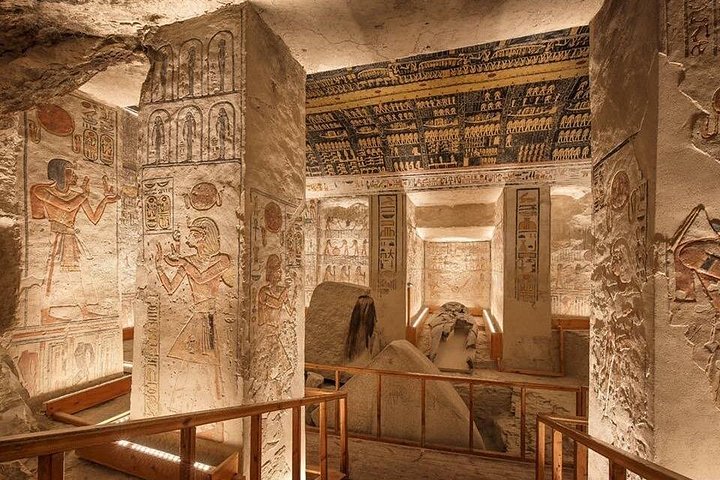
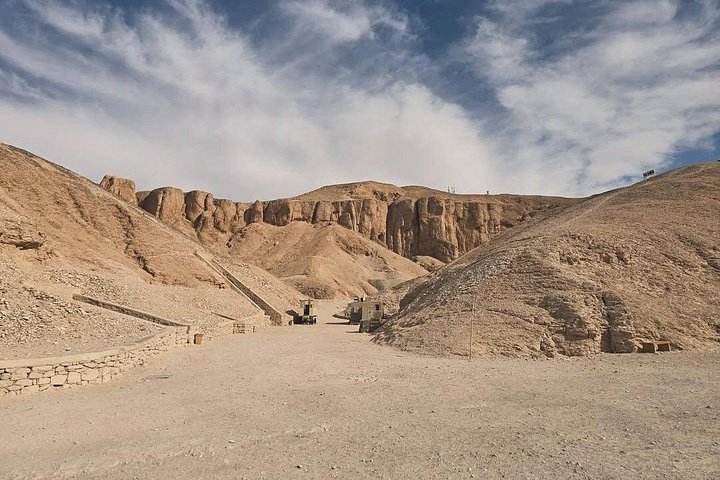
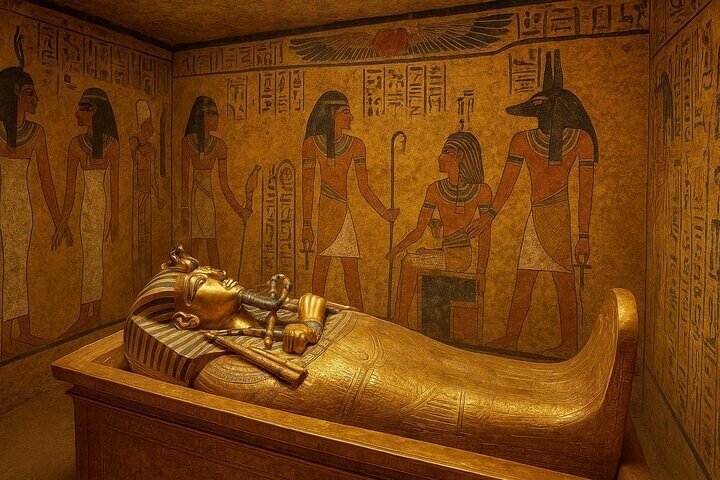
Skip the line and book online Valley Of The Kings Entry Tickets in a few finger steps and explore the amazing place at your own pace.
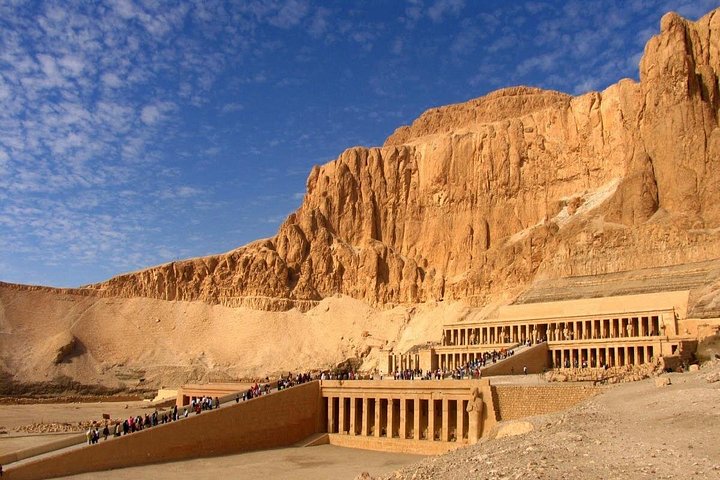
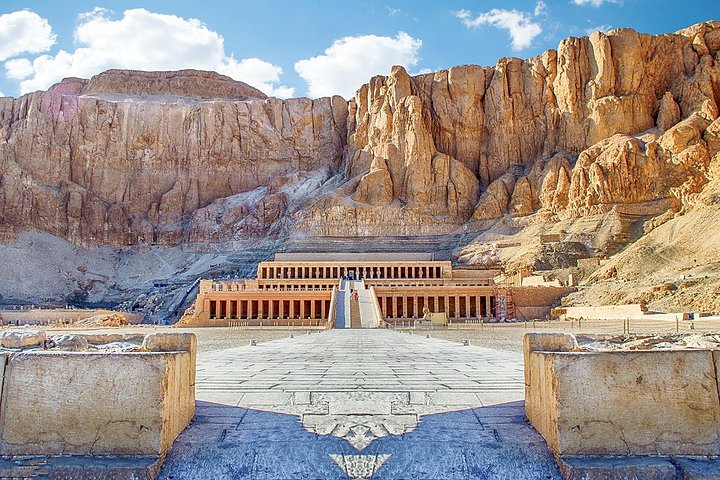
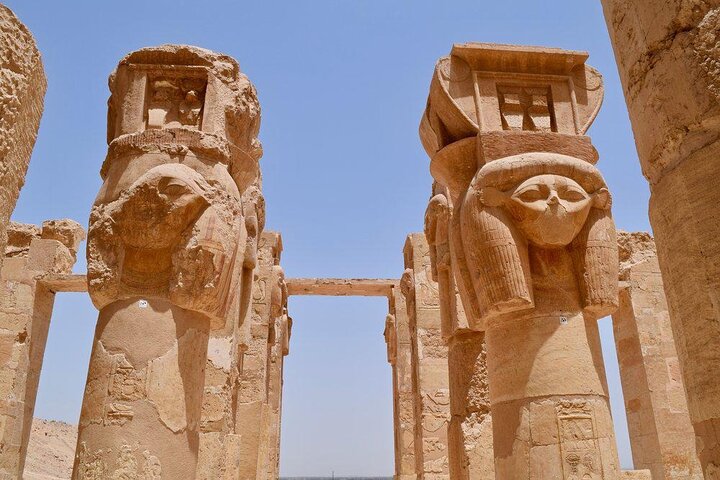
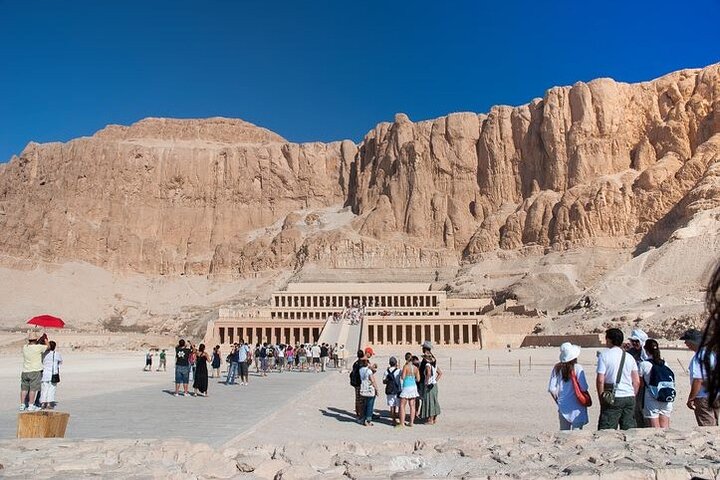
The mortuary temple of Hatshepsut (Egyptian: Ḏsr-ḏsrw meaning "Holy of Holies") is a mortuary temple built during the reign of Pharaoh Hatshepsut of the Eighteenth Dynasty of Egypt.[b] Located opposite the city of Luxor, it is considered to be a masterpiece of ancient architecture.[c] Its three massive terraces rise above the desert floor and into the cliffs of Deir el-Bahari. Hatshepsut's tomb, KV20, lies inside the same massif capped by El Qurn, a pyramid for her mortuary complex. At the edge of the desert, 1 km (0.62 mi) east, connected to the complex by a causeway, lies the accompanying valley temple. Across the river Nile, the whole structure points towards the monumental Eighth Pylon, Hatshepsut's most recognizable addition to the Temple of Karnak and the site from which the procession of the Beautiful Festival of the Valley departed. Its axes identify the temple's twin functions:
The Colossi of Memnon (Arabic: el-Colossat or es-Salamat) are two massive stone statues of the Pharaoh Amenhotep III, which stand at the front of the ruined Mortuary Temple of Amenhotep III, the largest temple in the Theban Necropolis. They have stood since 1350 BC, and were well known to ancient Greeks and Romans, as well as early modern travelers and Egyptologists.[1][2] The statues contain 107 Roman-era inscriptions in Greek and Latin, dated to between AD 20 and 250; many of these inscriptions on the northernmost statue make reference to the Greek mythological king Memnon, whom the statue was then – erroneously – thought to represent.[3]
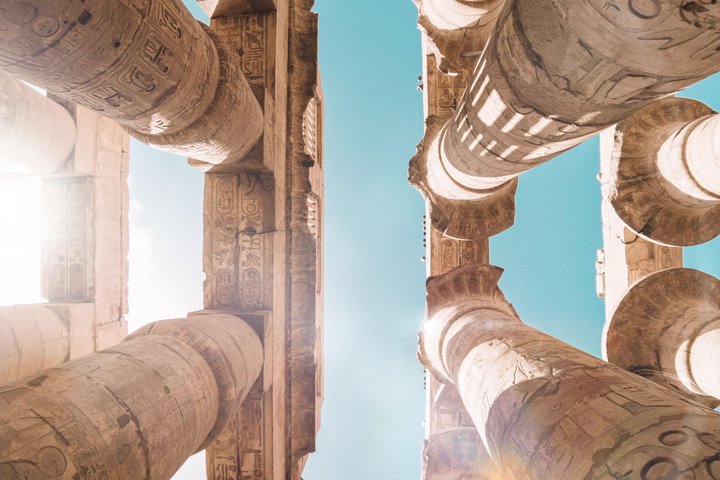
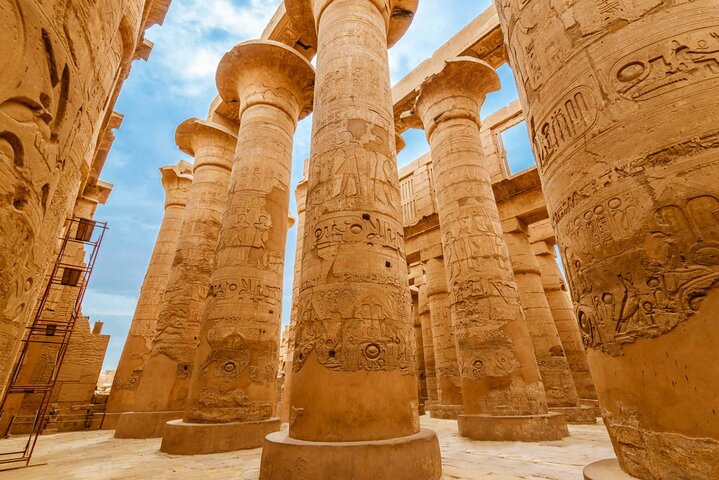
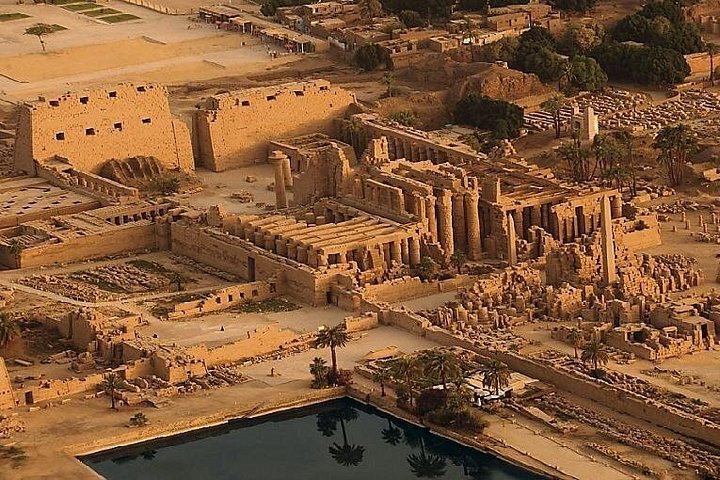
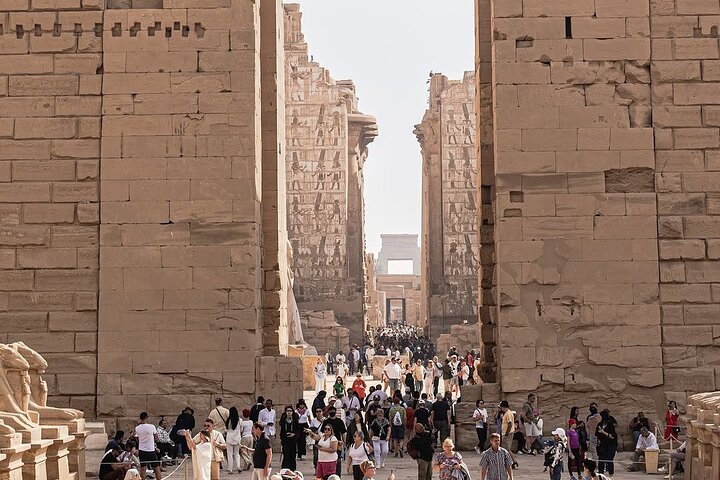
The Karnak Temple Complex, commonly known as Karnak (/ˈkɑːr.næk/),[1] comprises a vast mix of temples, pylons, chapels, and other buildings near Luxor, Egypt. Construction at the complex began during the reign of Senusret I (reigned 1971–1926 BC) in the Middle Kingdom (c. 2000–1700 BC) and continued into the Ptolemaic Kingdom (305–30 BC), although most of the extant buildings date from the New Kingdom. The area around Karnak was the ancient Egyptian Ipet-isut ("The Most Selected of Places") and the main place of worship of the 18th Dynastic Theban Triad, with the god Amun as its head. It is part of the monumental city of Thebes, and in 1979 it was added to the UNESCO World Heritage List along with the rest of the city.[2] Karnak gets its name from the nearby, and partly surrounded, modern village of El-Karnak, 2.5 kilometres (1.6 miles) north of Luxor.
취소 규정
체험 시작 24시간 전까지 무료로 취소하고 전액 환불받을 수 있습니다.
출발 전 알아둘 점
- 픽업
- 픽업을 제공하며, 출발 장소에서 직접 만나도 됩니다.
- 티켓 종류
- Mobile or paper ticket accepted
- 운영사
- Egyptian Daily Tours
- Public transportation options are available nearby
- Specialized infant seats are available
- Not recommended for travelers with spinal injuries
- Not recommended for pregnant travelers
- Not recommended for travelers with poor cardiovascular health
- Suitable for all physical fitness levels
How it compares in Luxor
- Its from-price is 50% above the median of the 109 관광명소 & 박물관 we list in Luxor.
- It is longer than most of them.
- The operator lists free cancellation on it.
About Luxor
Luxor stands on the site of ancient Thebes, with vast temples on the Nile's east bank and the royal tombs of the Valley of the Kings across the river.
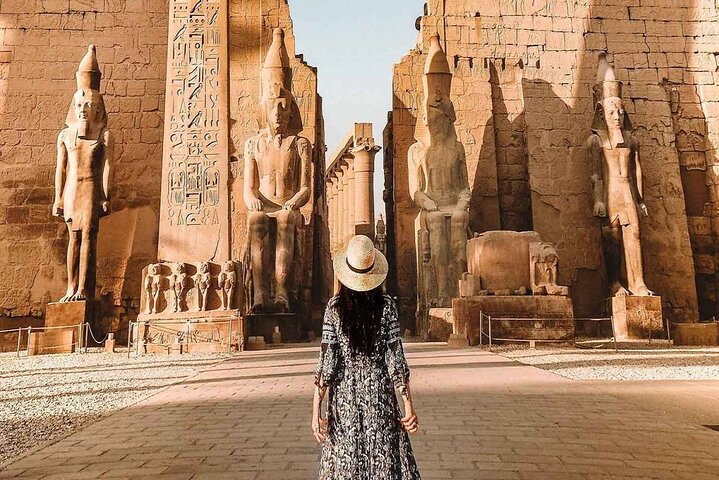
On the east bank, the Karnak temple complex spreads across acres of pylons, obelisks and the forest of columns in its Great Hypostyle Hall. An avenue of sphinxes links it to Luxor Temple in the town centre, which is especially atmospheric when lit up in the evening. The Luxor Museum and the Mummification Museum sit along the riverside corniche.
Top-ranked sights in Luxor: Valley of the Kings, Temple of Hatshepsut (at Deir el-Bahari), Colossi of Memnon.
Luxor 특가
할인 전후 가격은 운영사가 정한 것이며, 저희가 붙인 것이 아닙니다.