Hirosaki Customized Half-Day Tour with Licensed Local Guide
설명은 영어로 표시됩니다.
- 4시간
- 시작 24시간 전까지 무료 취소
- 2개 언어
- 즉시 확정
하이라이트
This value-packed trip with a government-licensed and experienced English-speaking tour guide is a fantastic and efficient way to explore Hirosaki! Set in the shadow of the impressive Mt. Iwaki, the historic town of Hirosaki is said to be the cultural capital of the prefecture. Its semi-rural setting is complemented by beautiful parks and temples, while the various boutique fashion stores, one-room bars, and stylish cafes create an impression of hip culture. You can see 2 to 3 sites on your four-hour tour that's best for you! Please see our list of sites on itinerary/what to expect list to see what you can chose to visit. Please inform your guide post reservation of the sites you wish to see.
포함 사항
포함되는 것
- Licensed Local English Speaking Guide
- Meet up with guide on foot within designated area of Hirosaki
- Customizable Tour of your choice of 2-3 sites from 'What to expect' list
포함되지 않는 것
- Transportation fees, Entrance fees, Lunch, and Other personal expenses
- Private Vehicle
- You cannot combine multiple tour groups.
- Guide Entry fees are only covered for sights listed under What to Expect.
일정
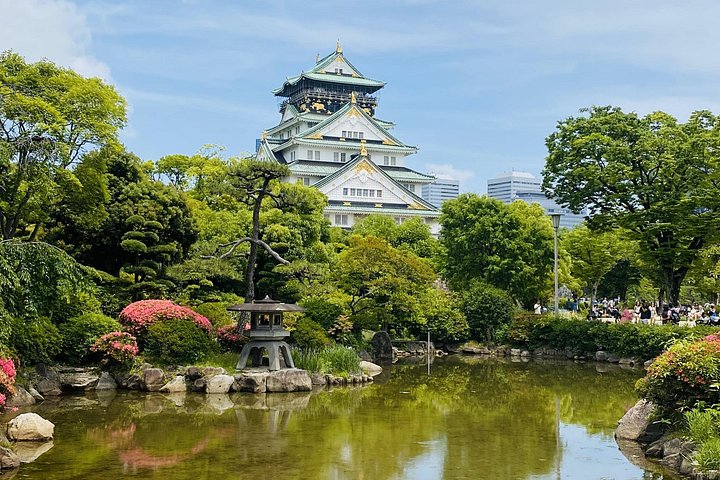
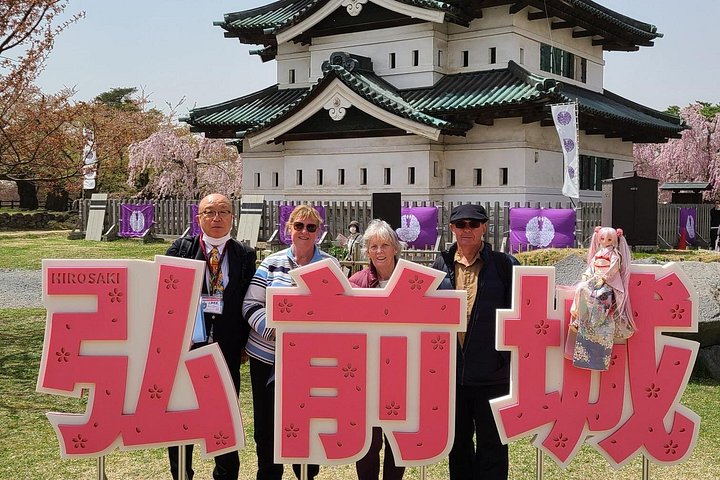
Hirosaki Castle (弘前城, Hirosakijō) was built in 1611 by the Tsugaru Clan. A three-story castle tower, fortified moats, castle gates and some corner turrets (yagura) survive or were reconstructed. The castle is located in Hirosaki Park, a spacious public park of about 0.6 square kilometers. The castle's original five-story keep burnt down in 1627 after being struck by lightning. Rebuilt in 1810, the present three-story keep is the only one in the Tohoku Region that was not rebuilt in the modern era, amongst only a handful in all of Japan.
The Neputa Mura (ねぷた村) or "Neputa Village" is a museum about Hirosaki's famous festival, the Neputa Matsuri, and also introduces the city's other cultural specialties. The Neputa Matsuri takes place annually from August 1 to 7 around the same time when Neputa and Nebuta festivals are held all over Aomori Prefecture. It features floats with large painted screens that depict beautiful women, mythological warriors and other themes, and are illuminated from within when paraded through the streets. Several such floats and screens are on display in the Neputa Mura. Although the main focus of the Neputa Mura is on the Neputa Festival, quite a few of Hirosaki's other specialties are put on display, as well. There are areas devoted to the local shamisen instrument, to popular local handicrafts and to old-fashioned toys. There is also a Japanese garden and a teahouse from the 19th century.
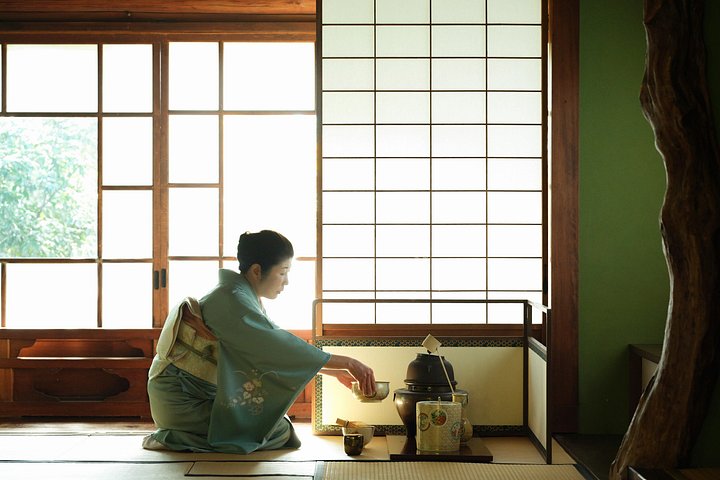
The Fujita Memorial Japanese Garden (藤田記念庭園, Fujita Kinen Teien) was built in 1919 in the style of a traditional Japanese landscape garden. The spacious garden is separated into two main parts, an upper section and a lower section. It is named after its first owner, a local business man named Fujita Kenichi. A few buildings of interest stand around the garden, including a traditional Japanese house in the upper section and a tea ceremony house in the lower section, both designed to afford views onto the surrounding landscape. Near the garden's entrance gate stand a small archeology museum and a Western house with tearoom from the Taisho era (1912-1926).
When the Tsugaru Clan sided with Tokugawa Ieyasu at the battle of Sekigahara in 1600, they ensured their authority as the feudal lords of Hirosaki for the 250 years of the Edo Period. Hirosaki Castle was to be the base from which they would rule, and around which a typical castle town developed. Like in all castle towns, the samurai, who served the Tsugaru Clan, lived in residences surrounding the castle of their feudal lord. Today, a section north of Hirosaki Castle remains preserved as a former samurai district. Although much of the area looks like an ordinary modern Japanese residential area today, three samurai houses and one merchant house have been preserved and are open to the public:
When the Tsugaru Clan sided with Tokugawa Ieyasu at the battle of Sekigahara in 1600, they ensured their authority as the feudal lords of Hirosaki for the 250 years of the Edo Period. Hirosaki Castle was to be the base from which they would rule, and around which a typical castle town developed. Like in all castle towns, the samurai, who served the Tsugaru Clan, lived in residences surrounding the castle of their feudal lord. Today, a section north of Hirosaki Castle remains preserved as a former samurai district. Although much of the area looks like an ordinary modern Japanese residential area today, three samurai houses and one merchant house have been preserved and are open to the public:
When the Tsugaru Clan sided with Tokugawa Ieyasu at the battle of Sekigahara in 1600, they ensured their authority as the feudal lords of Hirosaki for the 250 years of the Edo Period. Hirosaki Castle was to be the base from which they would rule, and around which a typical castle town developed. Like in all castle towns, the samurai, who served the Tsugaru Clan, lived in residences surrounding the castle of their feudal lord. Today, a section north of Hirosaki Castle remains preserved as a former samurai district. Although much of the area looks like an ordinary modern Japanese residential area today, three samurai houses and one merchant house have been preserved and are open to the public:
When the Tsugaru Clan sided with Tokugawa Ieyasu at the battle of Sekigahara in 1600, they ensured their authority as the feudal lords of Hirosaki for the 250 years of the Edo Period. Hirosaki Castle was to be the base from which they would rule, and around which a typical castle town developed. Like in all castle towns, the samurai, who served the Tsugaru Clan, lived in residences surrounding the castle of their feudal lord. Today, a section north of Hirosaki Castle remains preserved as a former samurai district. Although much of the area looks like an ordinary modern Japanese residential area today, three samurai houses and one merchant house have been preserved and are open to the public:
The Otemon Square (追手門広場, Ōtemon Hiroba), named after and standing across from the main entrance gate of Hirosaki Castle, is designed as a stepping off point for visitors to Hirosaki. It has an extensive Sightseeing Information Center where travelers can get maps, pamphlets and advice about the city's sightseeing spots. There is also a souvenir shop, a few restaurants and a small exhibition about local handicrafts and the Neputa Festival. Around Otemon Square stand a few of Hirosaki's early Western style buildings, including the Former City Library, which was constructed in 1907. The library is no longer in use, but is open to the public.
취소 규정
체험 시작 24시간 전까지 무료로 취소하고 전액 환불받을 수 있습니다.
후기
5.0
- 51
- 40
- 30
- 20
- 10
평점은 저희 예약 파트너가 모은 후기 1개를 바탕으로 합니다. 여행자가 직접 쓴 글을 쓰인 순서 그대로 보여주며, 체험을 좋아 보이게 하려고 순서를 바꾸지 않습니다.
출발 전 알아둘 점
- 픽업
- 모든 인원 픽업이 포함됩니다.
- 티켓 종류
- Mobile or paper ticket accepted
- 운영사
- Japan Guide Agency
- Service animals allowed
- Public transportation options are available nearby
- Infants and small children can ride in a pram or stroller
- All areas and surfaces are wheelchair accessible
- Transportation options are wheelchair accessible
- Wheelchair accessible
- Suitable for all physical fitness levels
- This is a walking tour. Pick up is on foot.
How it compares in Japan, outside the cities
- Its from-price is 38% below the median of the 106 시티 투어 we list in Japan, outside the cities.
- It is shorter than most of them.
- By number of reviews it ranks 49 of 106.
- The operator lists free cancellation on it.
Japan, outside the cities 특가
할인 전후 가격은 운영사가 정한 것이며, 저희가 붙인 것이 아닙니다.