Hidden Rome - Private Tour with Driver
설명은 영어로 표시됩니다.
- 6시간
- 시작 24시간 전까지 무료 취소
- 영어 가이드
- 즉시 확정
하이라이트
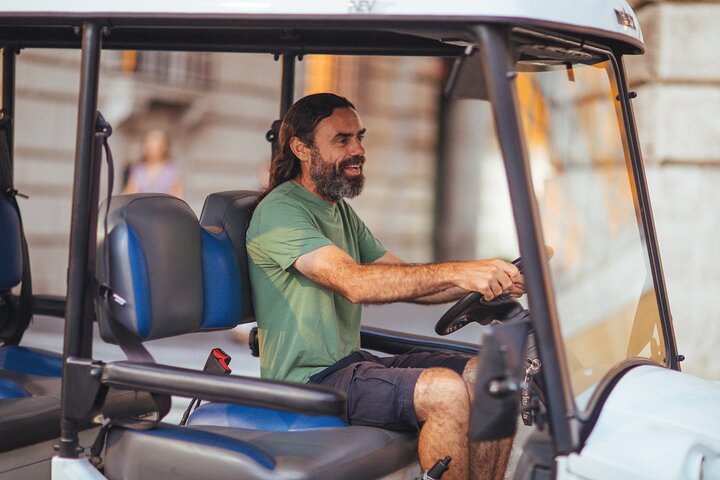
This tour is designed for those who wish to enjoy a different Rome, away from the more touristic places, but still filled with wonders.Your English speaking driver will meet you at your hotel in the morning and you will start with a little drive outside the city.
포함 사항
포함되는 것
- Hotel pickup and drop-off
- Local guide
- Private tour
- Catacombs admission fee
- Driver/guide
- Transport by private vehicle
포함되지 않는 것
- Food and drinks
- Gratuities
일정
The Appian Way was a crucial road for the Roman Empire. It connected Rome to some of its most distant settlements. Originally built by Appius Claudius Caecus, the then-censor of Rome, the road connected Rome to Capua near Naples. Eventually, it extended more than 300 miles to Brindisi, Puglia on the Adriatic Coast, making it the widest and longest road in existence at the time. Called the “Queen of Roads,” it’s construction was truly momentous, especially considering it was built in 312 BC! Even compared to many of the other best attractions in Rome, The Appian Way is incredibly well-preserved. It’s made of large, flat stones, which have been firmly set in place by thousands of years of rain, wheels, and feet passing over them.
This cemetery, named after the martyr St. Sebastian, who is buried here, was originally called "ad catacumbas". According to the widely acknowledged explanation, the name signifies "near the hollows", because of the mines of tuff located in this area. The name was later used generally to indicate all subterranean Christian cemeteries. Another ancient name of the cemetery was "Apostolic Memorial" (Memoria Apostolorum). The name derives from the liturgical celebrations, dedicated to the Apostles Peter and Paul, which took place here for a limited period in the first centuries. From the first century, the site had been intensely exploited and constructed upon. The caves and the tunnels of the mines were used for pagan and Christian rectangular wall tombs (loculi), as well smaller tombs (colombari) used to house urns. At least two residential buildings were constructed above ground, especially noted for their interior wall painting decorations.
Located on the outskirts of Rome, Parco degli Acquedotti is one of Rome’s most interesting parks. One of Rome’s must underexplored outdoor spaces, Parco degli Acquedotti offers a taste of the grandeur of the ancient empire’s famous aqueducts. The structures were built to bring fresh water from the mountains and countrysides into the city. That they still stand today is a testament to this incredible feat of engineering. Virtually tourist free, locals know that this section of Parco dell’Appia Antica is perfect for enjoying Rome’s near-perfect weather. Just a few miles from the center of Rome, the park contains long stretches of the Aqua Felix, as well as portions of the aqueduct known as Aqua Claudia. The wide expanses of meadows, dotted with umbrella pines and crisscrossed with the massive ancient ruins feels other worldly. The large grassy areas under the aqueducts are filled with picnicking families on the weekends, but you can also rent a bike to explore the park. Most simple of all is to visit Parco degli Acquedotti with plenty of time to stroll. Exploring the park on foot is one of the best free things to do in Rome throughout the year.
Built between the years 212 and 216 under the direction of Marcus Aurelius Antoninus Augustus, more commonly known as Emperor Caracalla, the Baths of Caracalla were one of the greatest and most spectacular thermal complexes in ancient times. In spite of the fact that today only the brick walls and large collapsed vaults remain, the remnant of the splendour of the Baths of Caracalla is still preserved.
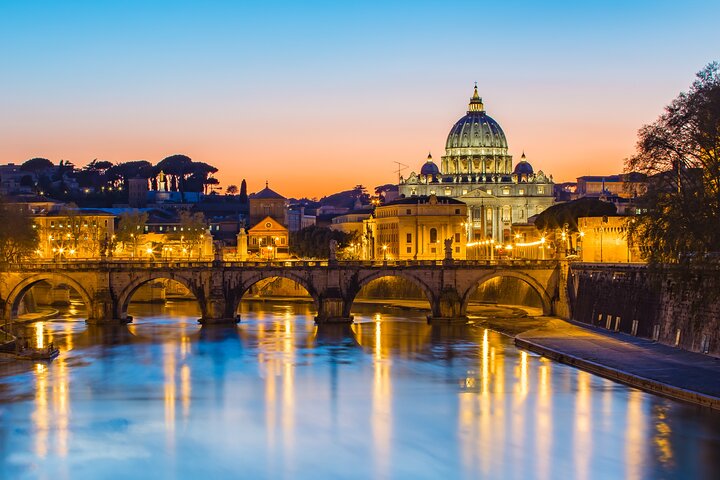
The Tiber is one of longest rivers in Italy, the second longest river after the Po. The Tiber is about 250 miles long and varies between 7 and 20 feet deep. It flows from the Apennines at Mount Fumaiolo through Rome and into the Tyrrhenian Sea at Ostia. Most of the city of Rome is to the east of the Tiber River. The area to the west, including the island in the Tiber, Insula Tiberina or Insula Sacra, was included in Region XIV of Caesar Augustus's administrative areas of the city of Rome.
Trastevere, sitting just down the Tiber from the Vatican, is a city within a city; an enclave with its own identity where the locals have generally greeted creeping commercialisation and ongoing attempts at gentrification with a wonderfully Roman disdain, flatly refusing to let such shenanigans impede on the richness of their daily lives. A strong sense of civic pride resides among the Medieval maze of piazzas and cobbled vicoli (alleyways). An old friend of mine, native born to the area, has even turned his back on following the capital’s beloved AS Roma football club and instead spends his weekends rooting for the Trastevere Calcio team (you can find them, should you look hard enough, down in the murky depths of the Italian game’s fourth tier). Not that this is an unwelcoming place. Far from it. Joining in the fun, becoming a part of Trastevere’s great bustling backdrop is easy to do, whether you’re simply sitting on the steps of the Piazza Trilussa or ordering a coffee at the counter of one of the area’s many bars.
The recent restoration of one of Rome’s oldest churches has given new life to the 12th-century Pietro Cavallini mosaics (including his celebrated Vita della Vergine) and frescoes and marbles of more recent vintage. Domenichino’s gloriously Baroque 16th-century octagonal gold ceiling also houses one of his greatest paintings, L’Assunzione della Vergine (1616-1617). Dating back to the third century at least, the church has a decent claim to being the first official Christian place of worship in the city.
The Janiculum is one of the best locations in Rome for a scenic view of central Rome with its domes and bell towers. Other sights on the Janiculum include the church of San Pietro in Montorio, on what was formerly thought to be the site of St Peter's crucifixion; a small shrine known as the Tempietto, designed by Donato Bramante, marks the supposed site of Peter's death. The Janiculum also houses a Baroque fountain built by Pope Paul V in the late 17th century, the Fontana dell'Acqua Paola, and several foreign research institutions, including the American Academy in Rome and the Spanish Academy in Rome. The Hill is also the location of The American University of Rome, Pontifical Urban University, and Pontifical North American College, as well as the Orto Botanico dell'Università di Roma "La Sapienza" and the Palazzo Montorio, residence of the Ambassadors of Spain.
취소 규정
체험 시작 24시간 전까지 무료로 취소하고 전액 환불받을 수 있습니다.
후기
4.9
- 543
- 41
- 30
- 21
- 10
평점은 저희 예약 파트너가 모은 후기 45개를 바탕으로 합니다. 여행자가 직접 쓴 글을 쓰인 순서 그대로 보여주며, 체험을 좋아 보이게 하려고 순서를 바꾸지 않습니다.
출발 전 알아둘 점
- 픽업
- 모든 인원 픽업이 포함됩니다.
- 티켓 종류
- Mobile or paper ticket accepted
- 운영사
- Rome in Limo Tours Excursions
- Infants and small children can ride in a pram or stroller
- Service animals allowed
- Specialized infant seats are available
- Travelers should have at least a moderate level of physical fitness
- Due to the Jubilee, some monuments may be under restoration. Please pay attention to any messages we may send regarding potential changes.
How it compares in Rome
- Its from-price is 41% above the median of the 610 시티 투어 we list in Rome.
- It is longer than most of them.
- By number of reviews it ranks 93 of 610.
- The operator lists free cancellation on it.
About Rome
Rome layers nearly three thousand years of history into one walkable city, from the Colosseum and Forum to Baroque piazzas and Vatican art.
Ancient Rome is still in plain sight. The Colosseum, the Roman Forum and the Palatine Hill sit together at the city's heart, the Pantheon still stands with its open oculus, and fragments of temples and aqueducts turn up between apartment blocks. Across the Tiber, Vatican City holds St Peter's Basilica, the Vatican Museums and Michelangelo's Sistine Chapel ceiling.
Top-ranked sights in Rome: Colosseum, Vatican Museums, Sistine Chapel.
Rome 특가
할인 전후 가격은 운영사가 정한 것이며, 저희가 붙인 것이 아닙니다.