Dancing under the olive trees: typical Pizzica and Taranta Dances
설명은 영어로 표시됩니다.
- 2시간 30분
- 시작 24시간 전까지 무료 취소
- 2개 언어
- 즉시 확정
하이라이트
Pizzica and Tarantella are a unique expression of the Puglia popular culture. This experience is not only the opportunity to learn the Puglia typical dance, in a charming setting to recreate the same atmosphere of distant and times: the trulli, the centuries-old olive trees and the countryside of the Murgia. Be and feel a "tarantata" for a day!
포함 사항
포함되는 것
- Bottled water
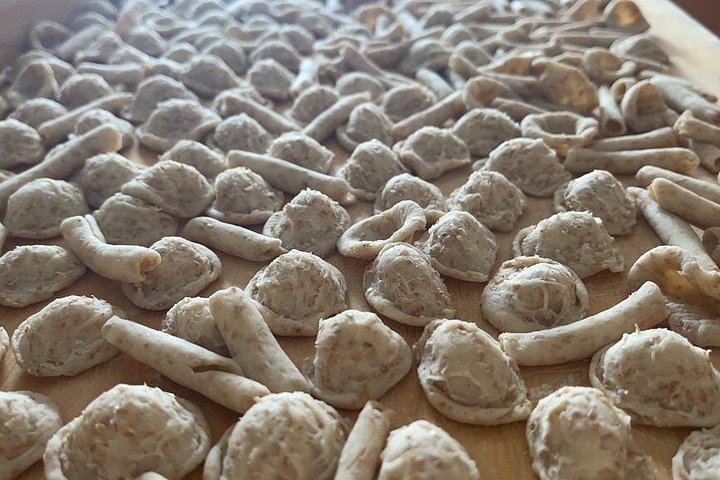
- A tasting with local food, wine and water
- scarf and tambourines
- Coffee and/or Tea
취소 규정
체험 시작 24시간 전까지 무료로 취소하고 전액 환불받을 수 있습니다.
출발 전 알아둘 점
- 미팅 장소
- Reach Ceglie Messapica city and follow indications towards Martina Franca. Just outisde Ceglie Messapica and a gas station on the left, then there's the cemetry. Turn the first street on the right (via Padula del cimitero) just before it. Follow the road till number 3. Enter in and turn to left.
- 픽업
- 모두 출발 장소에서 모이며, 픽업은 없습니다.
- 티켓 종류
- Mobile or paper ticket accepted
- 그룹 규모
- 최대 8명
- 운영사
- Simona Ciccarese
- Wheelchair accessible
- Infants and small children can ride in a pram or stroller
- Service animals allowed
- Public transportation options are available nearby
- Transportation options are wheelchair accessible
- All areas and surfaces are wheelchair accessible
- Suitable for all physical fitness levels
How it compares in Taranto
- Its from-price is 48% below the median of the 57 experiences we list in Taranto.
- Its length is typical for the group.
- The operator lists free cancellation on it.
About Taranto
Taranto is a naval port in Puglia on the Ionian Sea, with an old town on an island, a Spartan-founded past, a rich archaeology museum and a mussel coast.
Taranto was founded as Taras by Spartan settlers around 706 BC and became one of the richest cities of Magna Graecia. The old town sits on a small island between two seas, the open Mar Grande and the enclosed Mar Piccolo, linked to the mainland by a swing bridge. Its Aragonese castle, built in the fifteenth century, guards the channel, and the Cathedral of San Cataldo stands among narrow lanes.