Christmas Walking Tour in Rome
설명은 영어로 표시됩니다.
- 3시간
- 시작 24시간 전까지 무료 취소
- 2개 언어
- 즉시 확정
하이라이트
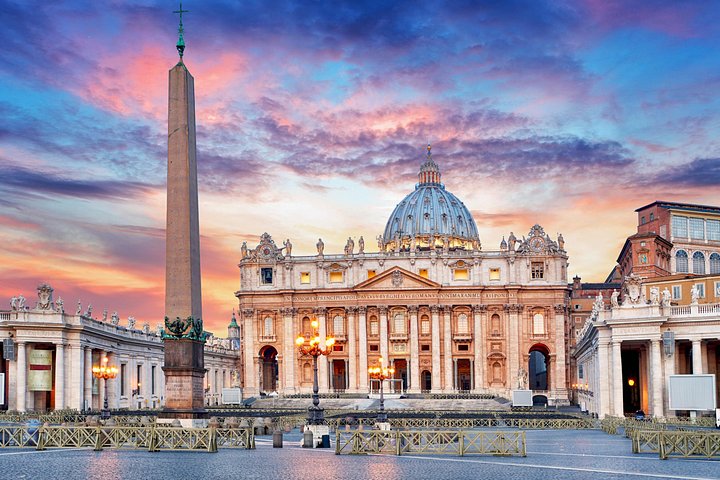
Take this holiday tour of Rome during the Christmas season, and catch sight of some of the city’s best holiday displays. Stroll through Rome by foot with your guide, and pass by the Spanish Steps, Navona Square, and Via del Corso. Along your tour, stop at Pincio Gardens (Monte Pincio) and in St. Peter’s Square to see the Christmas tree near the Vatican. Let your tour guide take you to the streets of the Eternal city, enjoy the Christmas atmosphere and listen about the history of Rome and anectodes known only to locals!
포함 사항
포함되는 것
- Small group limited to a maximum of 14 people
- Local guide
포함되지 않는 것
- Gratuities
- Hotel pickup and drop-off
일정
Navona Square has been defined during the fifteenth century, the Baroque-style Piazza Navona is one of the most charming and popular squares in Rome. The square is built on the former ‘’Stadium of Domitian’’, a horseshoe-shaped arena for foot races built in the 1st century AD. In the square there are three magnificent fountains - Fontana dei Quattro Fiumi, the Fontana del Moro, and the Fontana del Nettuno.
Fontana dei Quattro Fiumi (Fountain of the Four Rivers) is a fountain in the Piazza Navona in Rome. It was designed in 1651 by Gian Lorenzo Bernini for Pope Innocent X whose family palace, the Palazzo Pamphili, faced onto the piazza as did the church of Sant'Agnese in Agone of which Innocent was the sponsor. The base of the fountain is a basin from the centre of which travertine rocks rise to support four river gods and above them, a copy of an Egyptian obelisk surmounted with the Pamphili family emblem of a dove with an olive twig. Collectively, they represent four major rivers of the four continents through which papal authority had spread: the Nile representing Africa, the Danube representing Europe, the Ganges representing Asia, and the Río de la Plata representing the Americas.
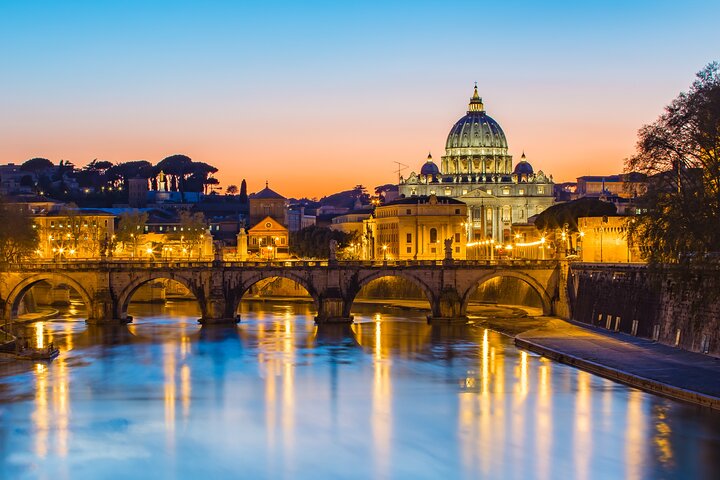
St. Peter's Square is a large plaza located directly in front of St. Peter's Basilica in the Vatican City, the papal enclave inside Rome. At the centre of the square is an ancient Egyptian obelisk, erected at the current site in 1586. Gian Lorenzo Bernini designed the square almost 100 years later, including the massive Doric colonnades,four columns deep, which embrace visitors in "the maternal arms of Mother Church". A granite fountain constructed by Bernini in 1675 matches another fountain designed by Carlo Maderno in 1613.
Via Condotti is a busy and fashionable street of Rome. It begins at the foot of the Spanish steps and is named after conduits or channels which carried water to the Baths of Agrippa. In Roman times it was one of the streets that crossed the ancient Via Flaminia and enabled people who transversed the Tiber to reach the Pincio hill.
The Pincian Hill is one of the most romantic and picturesque places in the Capital. It is part of the Villa Borghese and is within the Aurelian Walls. The balcony overlooks the Piazza del Popolo and the Villa Medici. Ancient Romans built villas and gardens (horti) here.
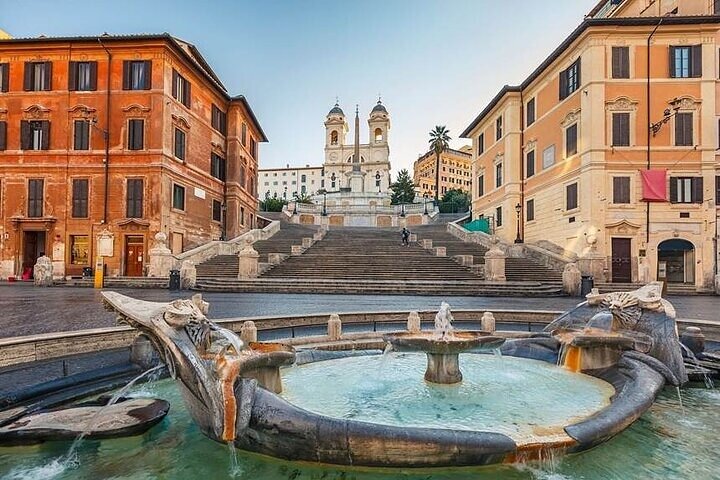
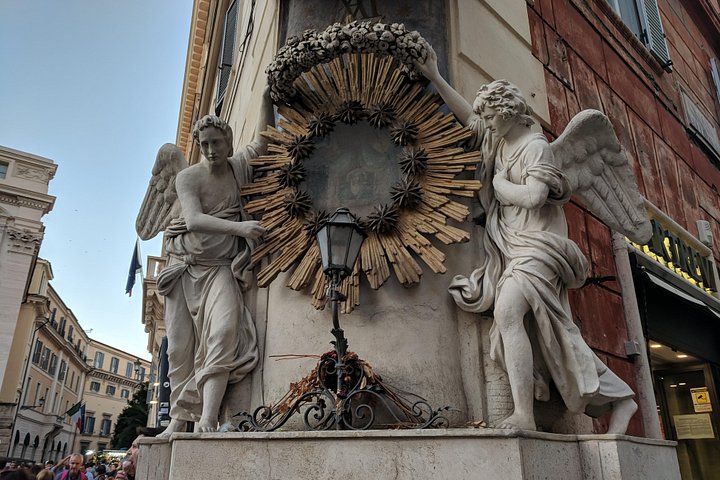
Piazza di Spagna, at the bottom of the Spanish Steps, is one of the most famous squares in Rome. It owes its name to the Palazzo di Spagna, seat of the Embassy of Spain to the Holy See. Nearby is the famed Column of the Immaculate Conception of the Blessed Virgin Mary. In the middle of the square is the famous Fontana della Barcaccia, dating to the beginning of the baroque period, sculpted by Pietro Bernini and his son, the more famous Gian Lorenzo Bernini.
The church of the Santissima Trinità dei Monti, often called merely the Trinità dei Monti, is a Roman Catholic late Renaissance titular church in Rome. It is known for its commanding position above the Spanish Steps which lead down to the Piazza di Spagna. The church and its surrounding area (including the Villa Medici) are a French State property.
Piazza del Popolo is a large urban square in Rome designed in neoclassical style between 1811 and 1822 by the architect Giuseppe Valadier. The name in modern Italian literally means "People's Square". In the northeast corner of the piazza there is the church of Santa Maria del Popolo. For centuries, the Piazza del Popolo was a place for public executions, the last of which took place in 1826.
The square faces the Pantheon and the monument characterises it in such a way that many Romans don’t even know its name: they simply call it “the square of the Pantheon”. During the 19th century, the piazza was especially noted for its market of bird-sellers, who brought their cages with live parrots, nightingales, owls, and other birds into the piazza.
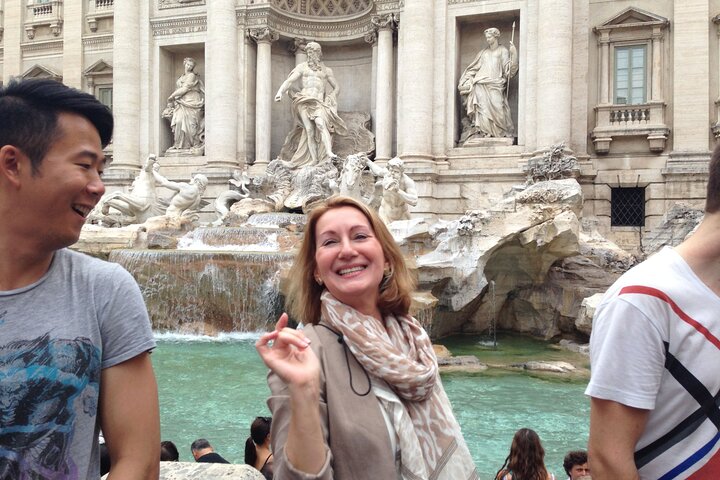
The Palazzo Poli is a palace forming the backdrop to the famous Trevi Fountain. The XVI century palace, built in the Baroque style and constitute a single ensemble with the Trevi Fountain. Nowadays, in the Palace is the National Museum of graphics and design, where the exhibition of graphic works by famous contemporary artists.
The Pantheon is without any doubt one of the best preserved ancient monuments in Rome. It is a wonderful example of the reutilization from a Christian perspective of a sacred building consecrated to all Gods. It stands in the heart of the ancient Campus Martius, in one of the lowest parts of Rome, and its imposing facade dominates the southern side of Piazza della Rotonda. In 1870 the Pantheon became the shrine of the kings of Italy and hosts the mortal remains of Victor Emanuel the Second, Humbert the First and Margaret of Savoy and also Raffaello Sanzio, the supreme artist of the Renaissance, is buried in the Pantheon.
In the center of the piazza there is a fountain, the Fontana del Pantheon, surmounted by an Egyptian obelisk. The Fountain was commissioned by Pope Gregory XIII and is located in the Piazza della Rotonda, Rome, in front of the Roman Pantheon. It was designed by Giacomo Della Porta in 1575 and sculpted out of marble by Leonardo Sormani.The Fontana del Pantheon was commissioned by Pope Gregory XIII and is located in the Piazza della Rotonda, Rome, in front of the Roman Pantheon. It was designed by Giacomo Della Porta in 1575 and sculpted out of marble by Leonardo Sormani.
취소 규정
체험 시작 24시간 전까지 무료로 취소하고 전액 환불받을 수 있습니다.
후기
5.0
- 53
- 40
- 30
- 20
- 10
평점은 저희 예약 파트너가 모은 후기 3개를 바탕으로 합니다. 여행자가 직접 쓴 글을 쓰인 순서 그대로 보여주며, 체험을 좋아 보이게 하려고 순서를 바꾸지 않습니다.
출발 전 알아둘 점
- 미팅 장소
- Meeting point is in front of the Basilica
- 픽업
- 모두 출발 장소에서 모이며, 픽업은 없습니다.
- 티켓 종류
- Mobile or paper ticket accepted
- 그룹 규모
- 최대 14명
- 운영사
- ROMAETRAVEL
- Infants and small children can ride in a pram or stroller
- Service animals allowed
- Specialized infant seats are available
- Suitable for all physical fitness levels
- It is recommended to wear comfortable shoes
How it compares in Rome
- Its from-price is 55% below the median of the 8352 experiences we list in Rome.
- Its length is typical for the group.
- By number of reviews it ranks 3486 of 8352.
- The operator lists free cancellation on it.
About Rome
Rome layers nearly three thousand years of history into one walkable city, from the Colosseum and Forum to Baroque piazzas and Vatican art.
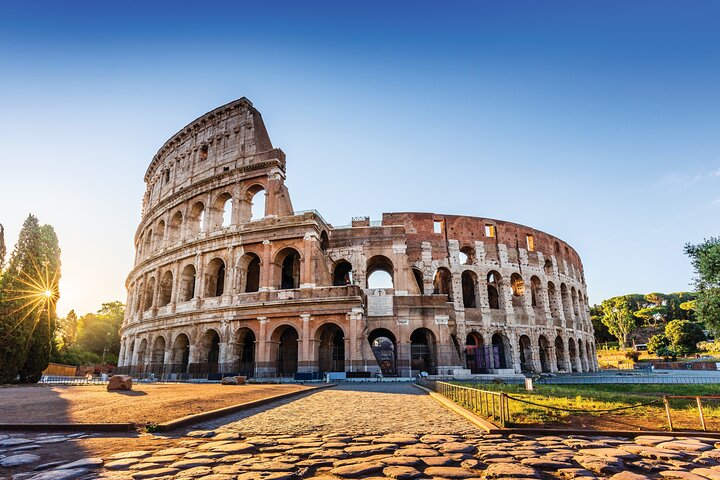
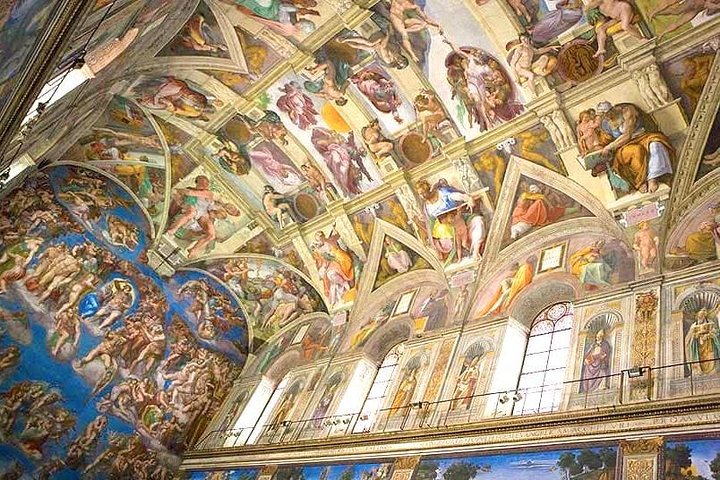
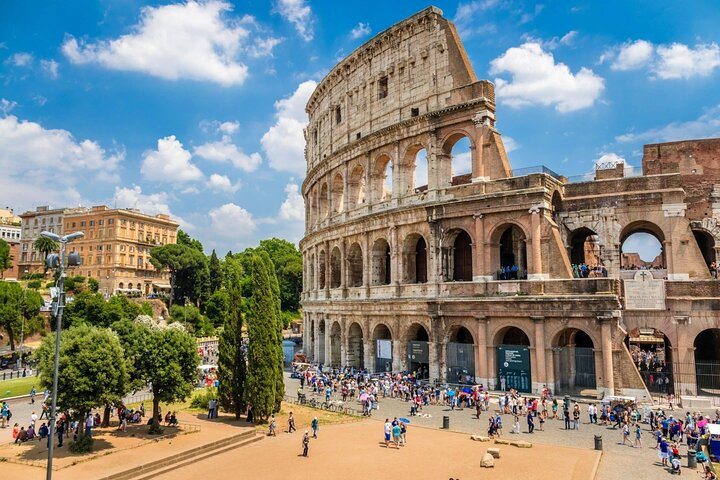
Ancient Rome is still in plain sight. The Colosseum, the Roman Forum and the Palatine Hill sit together at the city's heart, the Pantheon still stands with its open oculus, and fragments of temples and aqueducts turn up between apartment blocks. Across the Tiber, Vatican City holds St Peter's Basilica, the Vatican Museums and Michelangelo's Sistine Chapel ceiling.
Top-ranked sights in Rome: Colosseum, Vatican Museums, Sistine Chapel.
Rome 특가
할인 전후 가격은 운영사가 정한 것이며, 저희가 붙인 것이 아닙니다.