Beijing Walking Tour With Smartphone Audioguide
설명은 영어로 표시됩니다.
- 7시간
- 시작 24시간 전까지 무료 취소
- 2개 언어
- 즉시 확정
하이라이트
The audio guide is a convenient mobile companion for a self-guided walk around Beijing. The tour is designed specifically for getting to know the city in a short time (5-6 hours). Follow the route on the in-app map to walk from Qianmen Gate to Wanning Bridge, passing the city’s main attractions. You will definitely see: Tiananmen Square, The Drum Tower and Bell Tower, St. Joseph’s Church, Chairman Mao Memorial Hall, Prince Gong’s Mansion, Fire God Temple. The tour includes 35 fascinating stops. All stories are written by professional journalists and historians, with a touch of humor and a love of travel. After you download the tour, the app works offline. You can always hear the audio guide clearly through your headphones. Enjoy engaging stories and legends as you move at your own pace, without needing to follow a tour group. You can stop at any time to rest in a café or walk down a picturesque alley, then continue your walk around the city.
포함 사항
포함되는 것
- Illustrations to identify landmarks
- Offline map with a route for easy GPS navigation
- Audio Guide App for iPhone and Android
- 1 year access to the tour in your preferred language
- 35 audio recordings narrated by a professional historian
포함되지 않는 것
- Smartphone and headphones
- In-person tour guide
- Transportation
- Food and drinks
일정
Qianmen Gate is one of Beijing’s historic city gates. Built during the Ming dynasty, it once guarded the southern entrance to the Inner City on the central axis leading toward the imperial palace. Its gatehouse, arrow tower, and position near Tiananmen Square reflect Beijing’s fortified past and ceremonial urban planning.
Chairman Mao Memorial Hall stands at the southern end of Tiananmen Square in Beijing. Built after Mao Zedong’s death in 1976 and opened to the public in 1977, it serves as his mausoleum and a major national memorial. Its monumental form and central position reflect the political symbolism of Tiananmen Square in modern Chinese history.
The Great Hall of the People stands on the western side of Tiananmen Square in Beijing. Completed in 1959, it was built as one of the major public buildings of the early People’s Republic of China. Its vast halls, monumental façade, and role in national meetings and state ceremonies reflect the political centre of modern China.
The National Museum of China stands on the eastern side of Tiananmen Square in Beijing. Formed from earlier museums of Chinese history and revolution, it presents the country’s past from ancient civilization to modern state history. Its vast galleries, monumental façade, and national collections reflect China’s cultural memory and political symbolism.
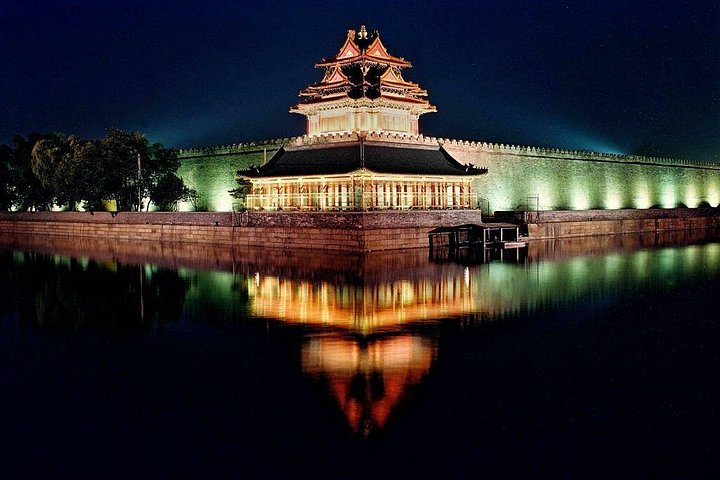
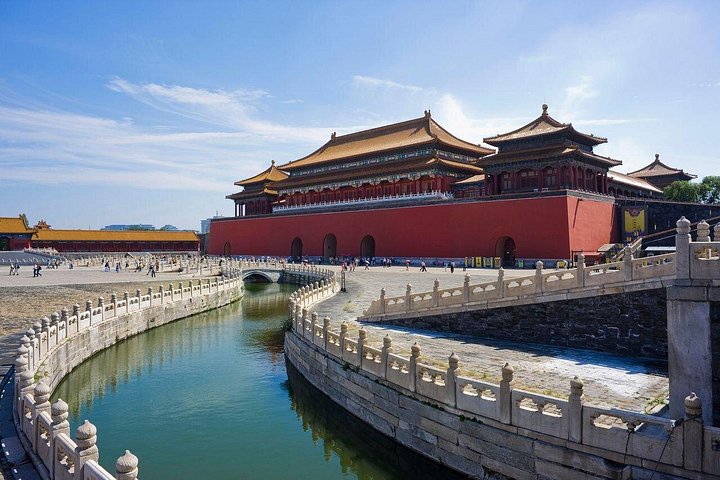
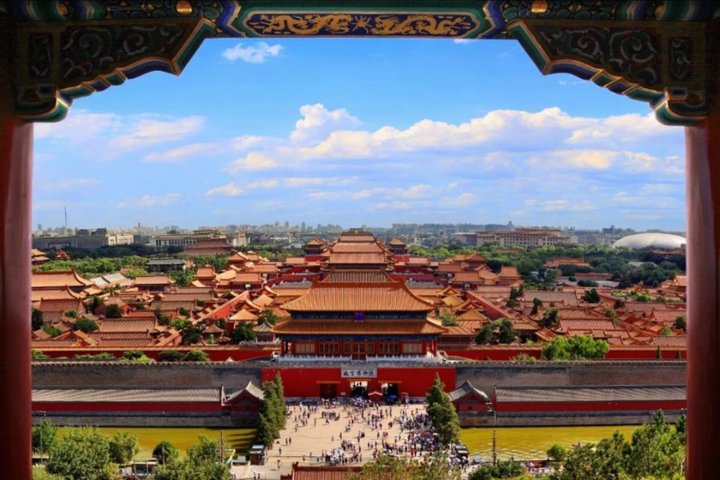
The Forbidden City is the former imperial palace at the heart of Beijing. Built in the early 15th century during the Ming dynasty, it served as the residence and political centre of Chinese emperors for nearly five centuries. Its gates, courtyards, ceremonial halls, and red walls reflect imperial power and classical Chinese palace planning.
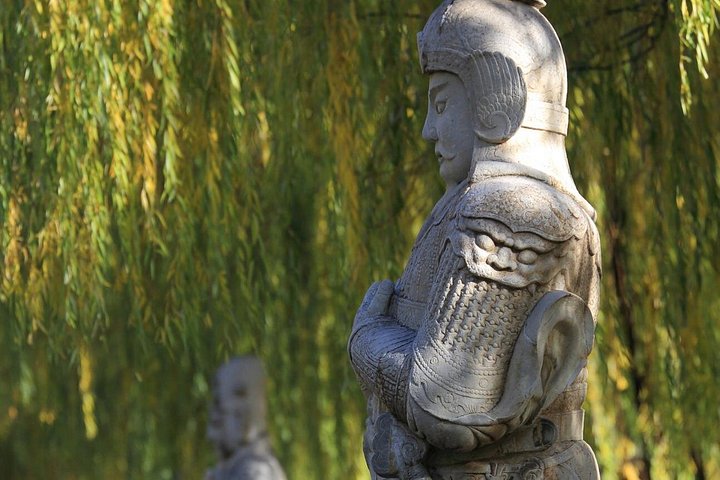
Huabiao are ceremonial stone columns associated with imperial architecture. The best-known Beijing examples stand beside Tiananmen, with carved dragons, cloud-shaped crossbars, and mythical beasts on top. Their form, symbolism, and position on the imperial axis reflect the ceremonial order and political imagery of historic Beijing.
Pudu Temple is a historic Buddhist temple near the Forbidden City in Beijing. Its site belonged to the Ming imperial precinct and later became associated with Prince Rui Dorgon before being converted into a Qing-era temple. Its raised platform, surviving halls, and quiet courtyard setting preserve a rare fragment of imperial Beijing outside the palace walls.
Huangchenggen Ruins Park is a linear park along the former eastern wall of Beijing’s Imperial City. Created on the site of historic wall remains, it follows the edge of the old palace precinct near the Forbidden City. Its preserved fragments, trees, pathways, and sculptures reflect the memory of imperial Beijing within the modern city.
Wangfujing Street is one of Beijing’s best-known shopping streets. Its name refers to princely mansions and an old well once associated with the area. Department stores, pedestrian zones, snack streets, and historic storefronts reflect Beijing’s mix of traditional commercial life, modern retail, and everyday urban energy.
St. Joseph’s Church is one of Beijing’s historic Catholic churches. First founded by Jesuit missionaries in the 17th century and later rebuilt after periods of damage, it stands near Wangfujing Street. Its Romanesque Revival façade, open square, and long religious history reflect Beijing’s encounter with European Christianity and modern urban life.
Lao She Memorial Hall is the former Beijing residence of the writer Lao She. He lived in this courtyard house after returning to China in 1949, and many of its rooms preserve the atmosphere of his later life and work. Its exhibitions, manuscripts, personal objects, and hutong setting connect modern Chinese literature with everyday old Beijing.
Beijing People’s Art Theatre is one of China’s leading spoken-drama institutions. Founded in 1952, it became closely linked with modern Chinese theatre and works by playwrights such as Lao She and Cao Yu. Its repertory tradition, stages, and location near Wangfujing reflect Beijing’s role in literature, performance, and cultural life.
취소 규정
체험 시작 24시간 전까지 무료로 취소하고 전액 환불받을 수 있습니다.
후기
5.0
- 51
- 40
- 30
- 20
- 10
평점은 저희 예약 파트너가 모은 후기 1개를 바탕으로 합니다. 여행자가 직접 쓴 글을 쓰인 순서 그대로 보여주며, 체험을 좋아 보이게 하려고 순서를 바꾸지 않습니다.
출발 전 알아둘 점
- 미팅 장소
- The tour begins near Qianmen and is designed as a self-guided experience, so there will be no live guide at the meeting point. To start the tour, simply open the TouringBee app, select the Beijing Walking Tour, and follow the route provided in the app at your own pace.
- 픽업
- 모두 출발 장소에서 모이며, 픽업은 없습니다.
- 티켓 종류
- Mobile or paper ticket accepted
- 그룹 규모
- 최대 20명
- 운영사
- TouringBee
- Public transportation options are available nearby
- Suitable for all physical fitness levels
- The audio guide is available through a special mobile app for iOS and Android
- Entry tickets to the museums are not included. Please buy them separately in advance
- The tour doesn’t cover all Beijing sights
- This is a self-guided tour. You will need to download the audio guide mobile app, activate your purchase, and follow the route on the app's map. There is no human guide provided
- The audio guide is available anytime. The date and time provided for checkout are approximate
How it compares in Beijing
- Its from-price is 93% below the median of the 521 시티 투어 we list in Beijing.
- Its length is typical for the group.
- By number of reviews it ranks 230 of 521.
- The operator lists free cancellation on it.
About Beijing
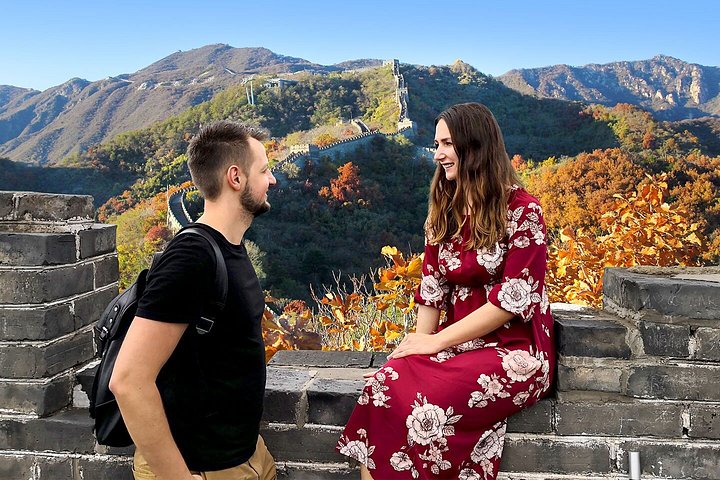
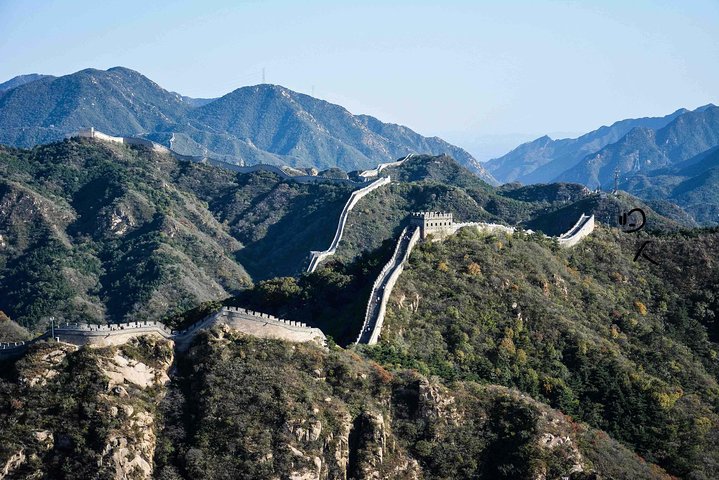
Beijing, China's capital for centuries, holds imperial palaces, sacred temples and stretches of the Great Wall within reach of its modern boulevards.
At the city's heart, the Forbidden City spreads behind vermilion walls, a labyrinth of halls and courtyards that housed the emperors of the Ming and Qing dynasties. Tiananmen Square lies to its south, and the hill of Jingshan Park to its north gives the finest view over its golden roofs. The Temple of Heaven, set in a park where locals practise tai chi and dance, is a masterpiece of imperial design.
Top-ranked sights in Beijing: Mutianyu Great Wall, Forbidden City (Palace Museum), Tiananmen Square (Tiananmen Guangchang).
Beijing 특가
할인 전후 가격은 운영사가 정한 것이며, 저희가 붙인 것이 아닙니다.