The Royal Route - Private Tour
説明は英語で表示されます。
- 8時間
- 24時間前まで無料キャンセル
- 4言語
- 即時確定
見どころ
Do you love history, culture and architecture? If yes, this is your tour! We'll present you the Royal Palaces in Lisbon and it's surroundings, which are filled with stories, myths and legends. Allowd us to introduce you this wonderful monuments were you can spend an amazing day!
含まれるもの
料金に含まれるもの
- Hotel pickup and drop-off
- All taxes, fees and handling charges
- Bottled water
- Private tour
- Tour escort/host
- Transport by private vehicle
含まれないもの
- Gratuities
- Food and drinks
- Lunch
行程
The Palace of Queluz and its gardens, represents one of the finest examples of late 18th-century Portuguese architecture. Built at the orders of Pedro III, the husband of D. Maria I (1734-1816), and used as a royal residence, this palace is one of the finest examples of Portuguese architecture in the late 18C. It has been further enriched by an important museum of decorative art, whose collections mostly belonged to the royal family and are exhibited in an appropriate setting. Many of the rooms are decorated in the rocaille style, such as the superb Throne Room, its walls lined with mirrors and magnificent carved gilded woodwork. The surrounding gardens are embellished with fountains and ornamental ponds, where sparkling water spouts forth from mythological figures. Particularly impressive is the group of sculptures around the Neptune Basin.
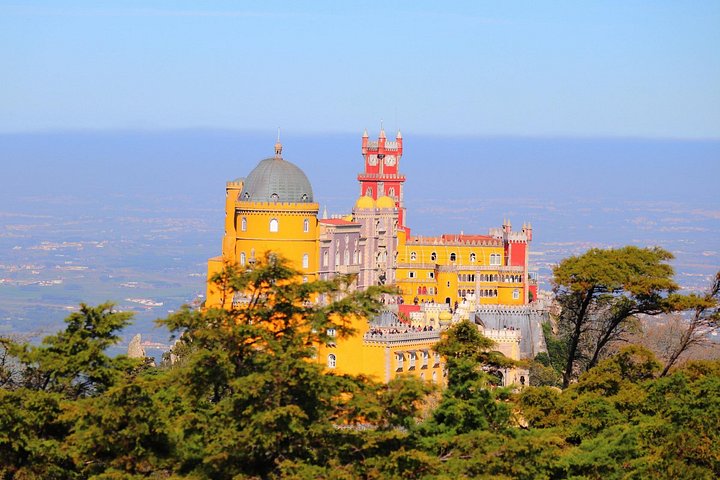
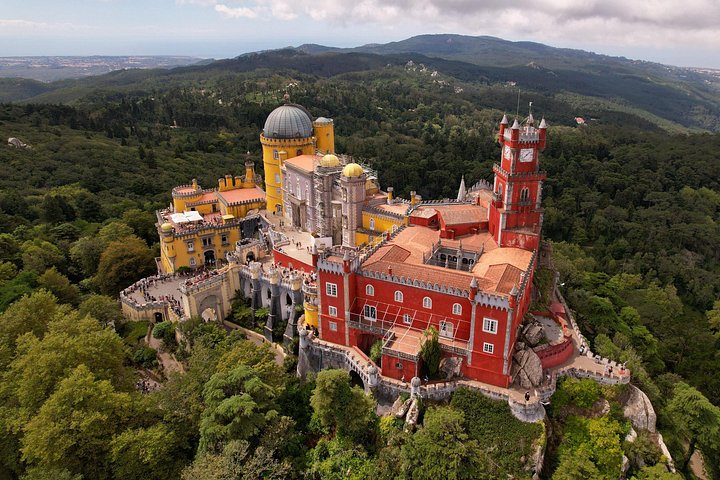
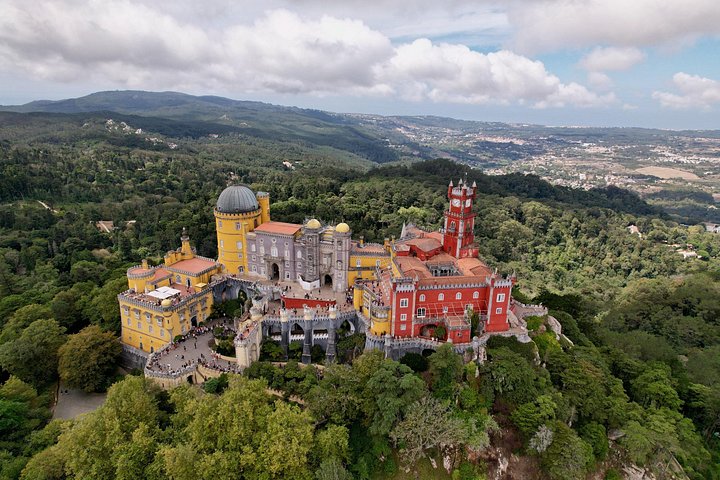
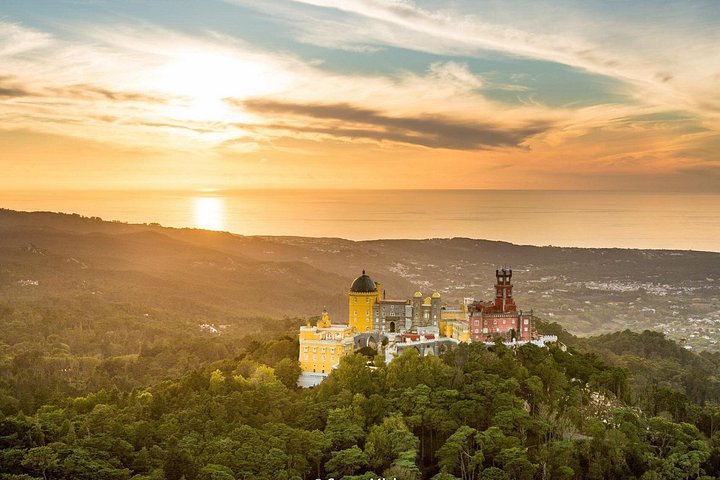
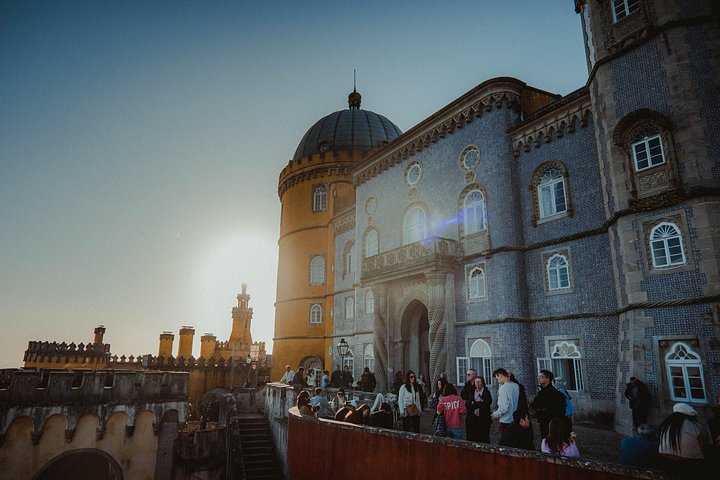
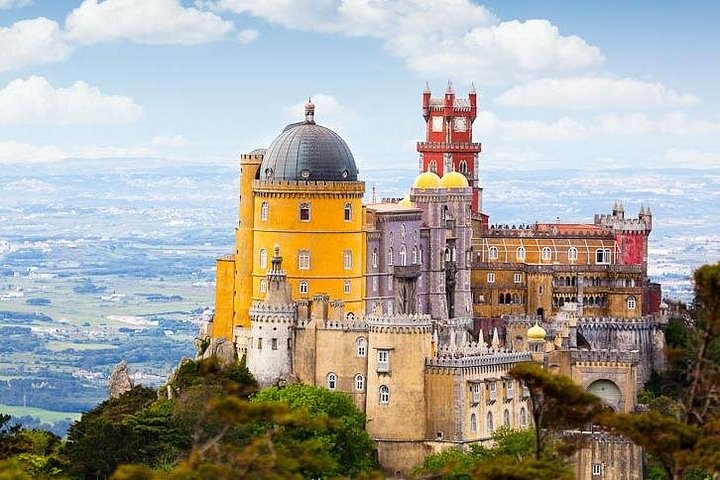
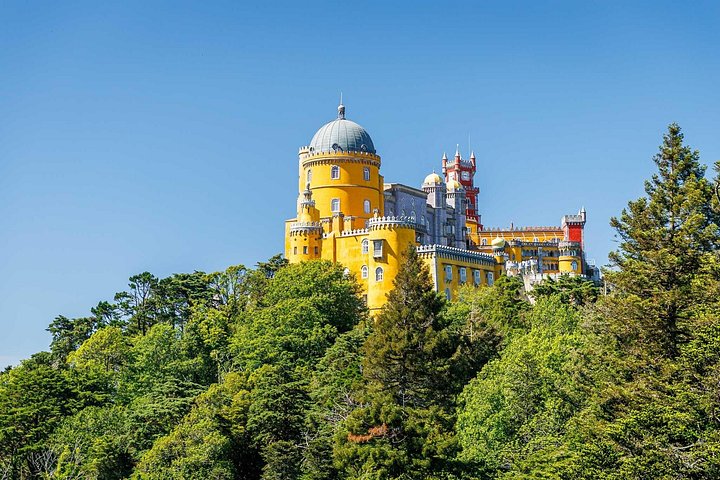
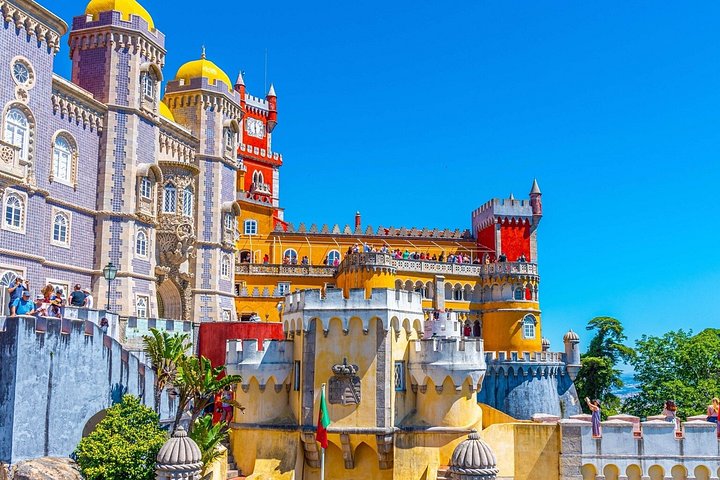
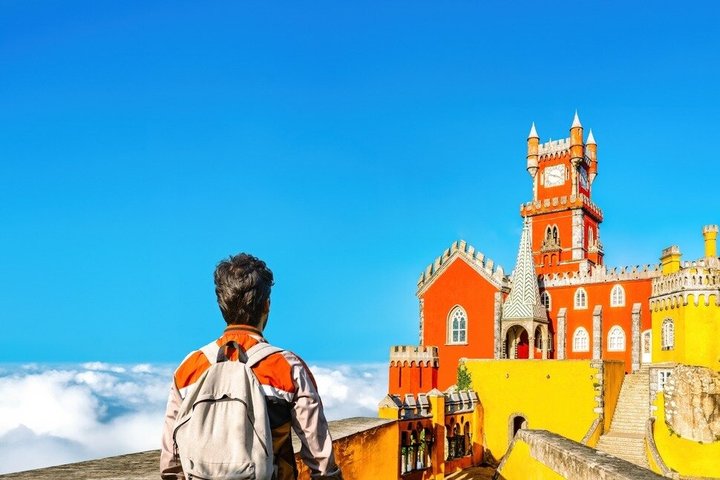
ena National Palace The fantastic Palácio da Pena is one of the best examples of 19th-century Romantic revivalism in Portugal. Situated at the top of the Monte da Pena, the palace was built on the site of an old monastery belonging to the Order of St. Jerome. It was the fruit of the imagination of Dom Fernando of Saxe Coburg-Gotha, who married the queen Dona Maria II in 1836. After falling in love with Sintra, he decided to buy the convent and the surrounding land to build a summer palace for the royal family. The king consort adopted Portuguese architectural and decorative forms for the palace, which he built according to the revivalist taste (neo-Gothic, neo-Manueline, neo-Islamic, neo-Renaissance), and, in the surrounding area, he decided to make a magnificent woodland park in the English style, with a wide variety of exotic tree species. The interior of the palace is still decorated according to the tastes of the kings and queens who lived there, and its great highlight is the chapel, where it is still possible to see a magnificent alabaster altarpiece attributed to Nicolau Chanterenne (one of the architects of the Mosteiro dos Jerónimos, in Lisbon). Special reference should also be made to the painting of the walls with a trompe l’oeil effect and the azulejos. A restaurant has now been installed in one of the wings of the palace, with a terrace that offers a beautiful panoramic view over the Serra de Sintra and the coast.
The sheer magnificence of the monumental architectural design of the palace, convent and basilica of Mafra bears witness to the opulence of the court of king João V (1707-1750). It was king João V who ordered the building of what proved to be the defining landmark of the Portuguese Baroque era. The design was by Frederico Ludovice who incorporated an architectural language and style Italian in inspiration. The summer residence of the royal family, the Palace includes various collections featuring works by mainly Portuguese, Italian and French artists working to royal order including Baroque painting and sculpture, religious vestments and ornaments and mural paintings by leading Portuguese artists including Cirilo Volkmar Machado and Domingos Sequeira. The Basilica houses a set of six organs, unique worldwide and they come in addition to two carillons totalling 114 bells - 57 in each tower. Made in Antwerp in the 18th century, they are also the largest of their kind worldwide. The Rocaille Library must be seen. On the eastern wing of the Convent of Mafra, the library is housed in an 83-metre main room, the longest in the complex. It is by far the most important monastic-royal library of the 18th century in Portugal. The Monks from the Convent of Arrábida organised the some 40,000 18th and 19th century volumes into a system that has survived to this day. They drew up a catalogue featuring the titles of all books acquired through to 1819. This valuable collection includes, 16th, 17th and 18th century books, many of them highly rare, such as the 22 foreign incunabula and 41 maps.
キャンセル
開始24時間前まで無料でキャンセルでき、全額返金されます。
口コミ
5.0
- 51
- 40
- 30
- 20
- 10
評価は予約パートナーが集めた1件の口コミによるものです。旅行者自身の言葉を書かれた順に掲載しており、体験をよく見せるために並べ替えることはありません。
参加前に知っておくこと
- 送迎
- 送迎は全員に含まれます。
- チケットの種類
- Mobile or paper ticket accepted
- 催行会社
- abc Travel
- Infants and small children can ride in a pram or stroller
- Specialized infant seats are available
- Suitable for all physical fitness levels
- Dress code is smart casual
How it compares in リスボン
- Its from-price is 26% above the median of the 1396 日帰りツアー we list in リスボン.
- Its length is typical for the group.
- By number of reviews it ranks 834 of 1396.
- The operator lists free cancellation on it.
About リスボン
リスボンはテージョ川の河口に向かって丘を下る街で、タイル張りの外壁、ガタゴト走る黄色い路面電車、展望台、遅くゆったりとした夕食が魅力です。
旧市街に魅力の多くが詰まっています。アルファマの迷路のような路地はサン・ジョルジェ城へと上り、夜にはファドが響きます。バイシャの整然とした碁盤目の街路は川沿いの広大なコメルシオ広場へ下り、バイロ・アルトとシアードは昼は書店とカフェ、夜はバーの街に変わります。サンタ・ルジア展望台やセニョーラ・ド・モンテ展望台からは、赤い屋根と輝く川面が見渡せます。
Top-ranked sights in リスボン: Commerce Square (Praça do Comércio), Pena National Palace (Palacio Nacional da Pena), Alfama.
リスボンの特別価格
割引前と割引後の価格は事業者が示すもので、当サイトが付けたものではありません。