Private Tokyo Architecture Driver Guided Tour
説明は英語で表示されます。
- 8時間
- 24時間前まで無料キャンセル
- 英語のガイド付き
- 即時確定
見どころ
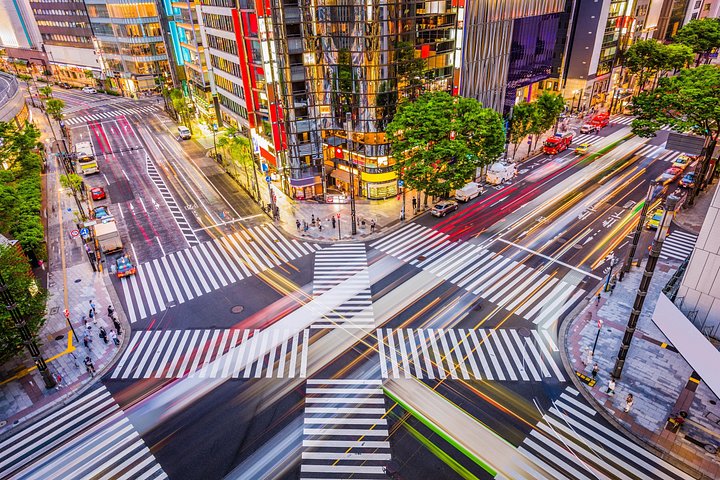
Explore Tokyo’s architectural marvels on this exclusive private tour with a knowlegeable driver guide, visit iconic sites like the Tokyo International Forum, Roppongi, and the bustling Shibuya crossing. This tour provides not only the opportunity to appreciate stunning buildings but also to uncover hidden gems and gain insights into the culture of Tokyo. Set at your own pace, enjoy a day filled with engaging commentary and provided a private vehicle and bottled water to keep you refreshed. - Duration: Approximately 8 hours, with a flexible itinerary - Private tour ensuring personalized attention for your group - Convenient pickup from your chosen location within Tokyo - Explore diverse neighborhoods including Ginza, Omotesando, and Daikanyama
含まれるもの
料金に含まれるもの
- Private vehicle
- Bottled water
- Snacks
- Driver Guide
行程
Odaiba is a popular shopping and entertainment district on a man-made island in Tokyo Bay. The building of Fuji Television Network, Inc., located on this site, was designed by Kenzo Tange, a legend in the Japanese architectural world. You can also enjoy the entire view of the beautiful bridge called "Rainbow Bridge".
Designed by Pritzker Prize-winning architect Kazuyo Sejima (co-founder of SANAA) and completed in 2011, Shibaura House is a masterclass in how architecture can dissolve the boundaries between the private corporate world and the public community. Located in Tokyo’s Minato-ku district, its charm lies in its "extroverted" nature—a radical departure from the typical, opaque office buildings of the city.
Ginza known as the most renowned area of Tokyo, has many boutiques, intimate galleries, stylish Japanese stores, and cutting edge architecture. Many buildings designed by the world’s leading architects who won The Pritzker Architecture Prize such as Kenzo Tange, Toyo Ito, Shigeru Ban, and Renzo Piano. The buildings you will see -Shizuoka Newspaper and Broadcasting Co. Tokyo Office Building -Nicolas G. Hayek Center -LOUIS VUITTON GINZA NAMIKI -Yamaha Ginza -Ginza Maison Hermès -GINZA PLACE -CHANEL Ginza -DE BEERS Ginza -MIKIMOTO Ginza 2
This postmodern masterpiece, the work of Uruguay-born American architect Rafael Viñoly, is the first major convention and art center of its kind in Tokyo. It is considered as one of Japan’s most important modern cultural buildings.
When people talk about the "charm" of Asahi’s architecture, they are almost always referring to the Asahi Beer Headquarters in Sumida, Tokyo. Completed in 1989 and designed by the iconic French designer Philippe Starck, it remains one of the most recognizable (and debated) landmarks in the world. 1. Kengo Kuma's Original Architectural Beauty The first thing that catches the eye is the unique exterior, which looks like seven single-story Japanese houses stacked on top of each other. Design: Designed by Kengo Kuma, a master of modern architecture, the warmth of "Wa" (Japanese style) combining wood and glass blends beautifully with the Edo-period atmosphere of Asakusa. Interior Details: Functionality and design are highly integrated, such as utilizing the gaps between the "roof" and "floor" on each floor for air conditioning and creating spaces that take advantage of the slopes.
St. Mary's Cathedral (Tokyo Cathedral) in Bunkyo-ku is one of the most striking architectural landmarks in Tokyo. It serves as the seat of the Roman Catholic Archdiocese of Tokyo and is a masterpiece of 20th-century Modernist design. Architectural Vision by Kenzo Tange The cathedral was designed by the world-renowned architect Kenzo Tange (who also designed the Yoyogi National Gymnasium and the Tokyo Metropolitan Government Building). The Cross from Above: When viewed from directly overhead, the entire building is shaped like a giant cross. Stainless Steel Exterior: The exterior is clad in shimmering stainless steel, meant to symbolize Christ as the "Light of the World." It reflects the changing colors of the Tokyo sky, looking brilliant in the sun and ethereal in the rain.
The Tokyo Metropolitan Government Building (often called Tochō) is more than just an office—it is a postmodern masterpiece and a beloved landmark of the Shinjuku skyline. Designed by the legendary architect Kenzo Tange and completed in 1991, its "charm" lies in the way it blends ancient tradition with futuristic ambition.
The National Yoyogi Stadium (officially Yoyogi National Gymnasium) is widely considered one of the most beautiful buildings of the 20th century. Designed by the legendary Kenzo Tange for the 1964 Tokyo Olympics, its "charm" lies in a masterful blend of cutting-edge structural engineering and traditional Japanese aesthetics.
Harakado (Tokyu Plaza Harajuku Harakado) isn't just another shopping mall; it’s a deliberate architectural statement positioned at one of the world’s most famous intersections. Located at the corner of Omotesando and Meiji-dori, it serves as a "creative intersection" that feels more like a living organism than a retail box.
Both the Nezu Museum and SunnyHills Aoyama were designed by the acclaimed architect Kengo Kuma. While the National Yoyogi Stadium (by Kenzo Tange) represents the bold, structural strength of post-war Japan, Kuma’s work at these two sites represents a "quieter" charm—focusing on natural materials, light, and the blurring of boundaries between architecture and nature.
The National Art Center, Tokyo (NACT) in Roppongi is widely considered a masterpiece of late-modern architecture. Designed by Kisho Kurokawa, a founder of the "Metabolism" movement, the building is often the main attraction for visitors, even before they see the art inside. Its charm lies in the tension between its massive scale and its surprisingly organic, fluid feel.
Located in Tokyo’s Roppongi district within the Midtown Garden, 21_21 Design Sight is more than just a museum; it is an architectural landmark that embodies a dialogue between fashion and structure. Designed by the world-renowned architect Tadao Ando, the building’s charm lies in its "quiet" presence and the technical mastery required to bring its conceptual vision to life. The building was born from a collaboration between Ando and fashion designer Issey Miyake.
キャンセル
開始24時間前まで無料でキャンセルでき、全額返金されます。
口コミ
5.0
- 51
- 40
- 30
- 20
- 10
評価は予約パートナーが集めた1件の口コミによるものです。旅行者自身の言葉を書かれた順に掲載しており、体験をよく見せるために並べ替えることはありません。
参加前に知っておくこと
- 送迎
- 送迎は全員に含まれます。
- チケットの種類
- Mobile or paper ticket accepted
- 催行会社
- supplied by OUTECH
- Wheelchair accessible
- Infants and small children can ride in a pram or stroller
- Public transportation options are available nearby
- Specialized infant seats are available
- Suitable for all physical fitness levels
How it compares in 東京
- Its from-price is 244% above the median of the 893 日帰りツアー we list in 東京.
- Its length is typical for the group.
- By number of reviews it ranks 409 of 893.
- The operator lists free cancellation on it.
About 東京
ネオンの輝く繁華街、静かな神社、すばらしい食、個性的な街区が集まる東京は、時間に正確な電車で結ばれた広大で秩序ある大都市です。
どの地区もそれぞれが独立した街のようです。渋谷の有名なスクランブル交差点と新宿の高層ビル、バー、ゴールデン街の路地は活気にあふれ、原宿は若者のファッションと、森に包まれた明治神宮の静けさが同居します。浅草では浅草寺と仲見世通りが古い東京を今に伝え、銀座には洗練された百貨店とギャラリーが並びます。
Top-ranked sights in 東京: Senso-ji Temple (Asakusa Temple), Tokyo Imperial Palace, Meiji Shrine (Meiji Jingu).
東京の特別価格
割引前と割引後の価格は事業者が示すもので、当サイトが付けたものではありません。