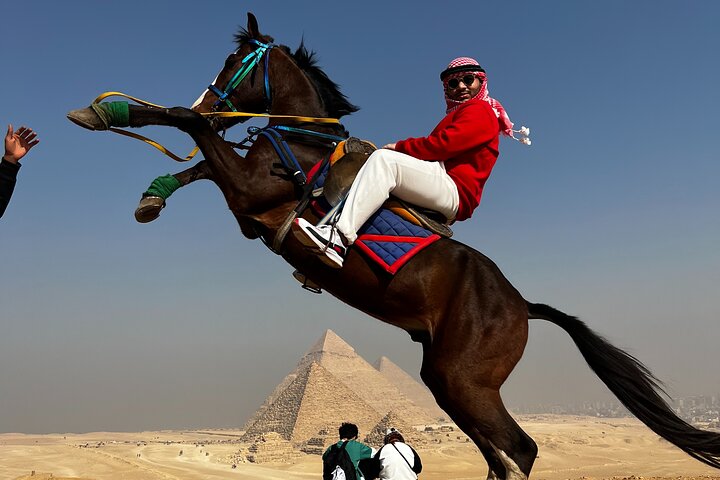
Private Camel Ride Adventure in Giza Pyramids And Egyptian Museum
説明は英語で表示されます。
- 8時間
- 24時間前まで無料キャンセル
- 6言語
- 即時確定
見どころ
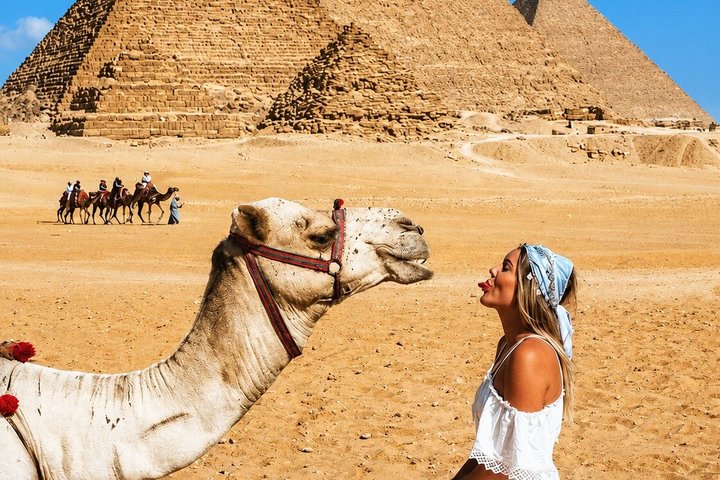
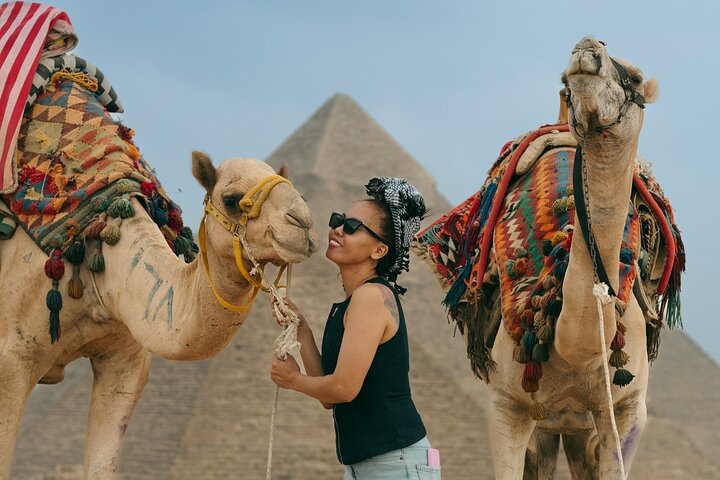
Experience the wonders of ancient Egypt with our exclusive Day Tour to the Giza Pyramids, Camel Ride, and Egyptian Museum in Cairo. Enjoy the convenience of all pickup and drop-off transfers, ensuring a hassle-free journey from start to finish. Our knowledgeable private tour guide will accompany you throughout, providing insightful commentary and answering any questions you may have. Immerse yourself in the magnificence of the iconic Giza Pyramids and embark on a delightful 20-minute camel ride around the Great Pyramid. Explore the captivating collections at the renowned Egyptian Museum, where you'll witness the treasures of Tutankhamun and other significant artifacts. Travel comfortably in our newest model private A/C vehicles and stay hydrated with a complimentary bottle of water. Uncover the secrets of the ancient Egyptians on this exceptional tour, making unforgettable memories along the way.
含まれるもの
料金に含まれるもの
- Bottled Water
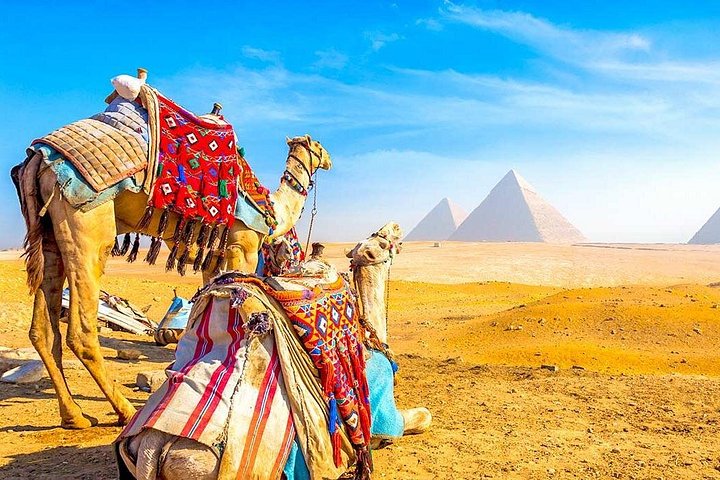
- 20-minute camel ride around the Great Pyramids
- Entry Fees
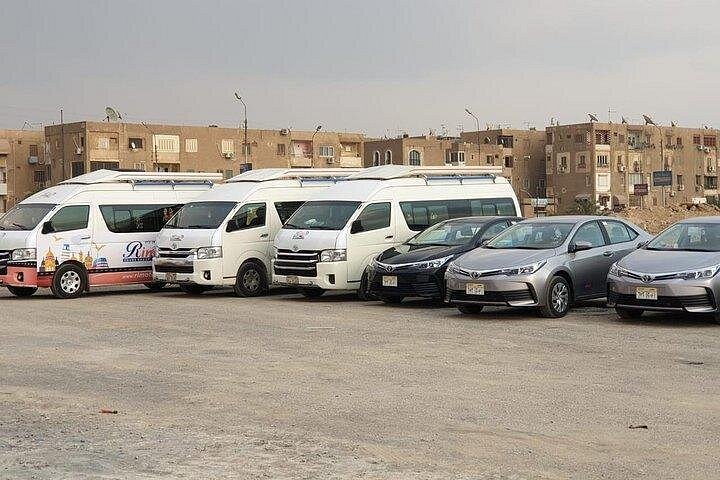
- Pickup & drop off transfers (private A/C vehicle newest model)
- Private Tour guide
含まれないもの
- Lunch at local restaurant (Optional)
- Tipping
行程
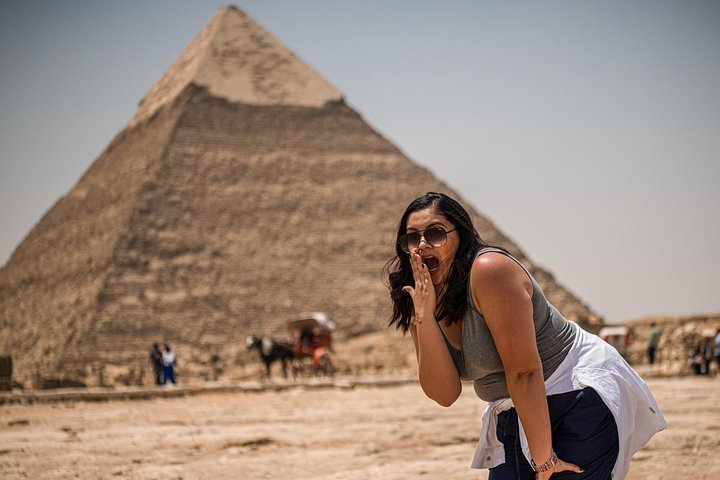
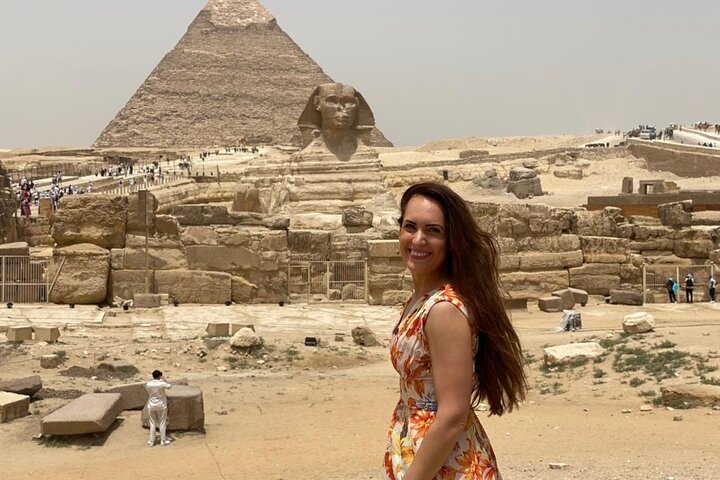
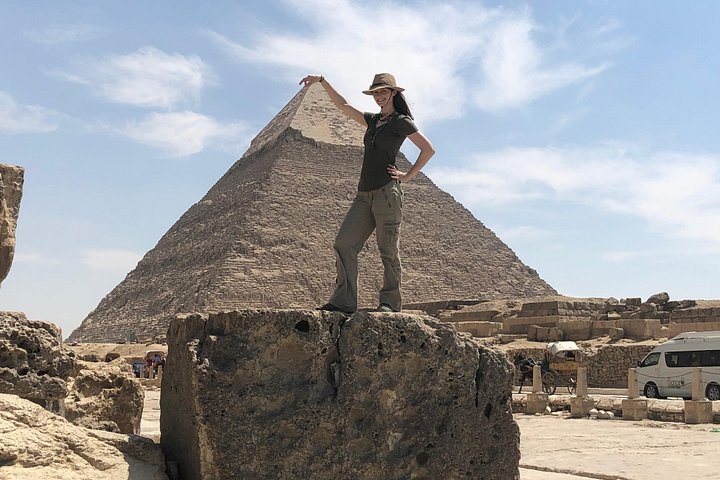
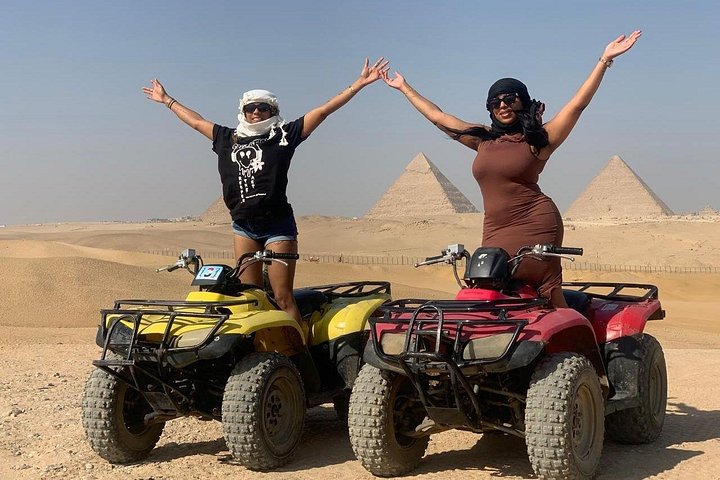
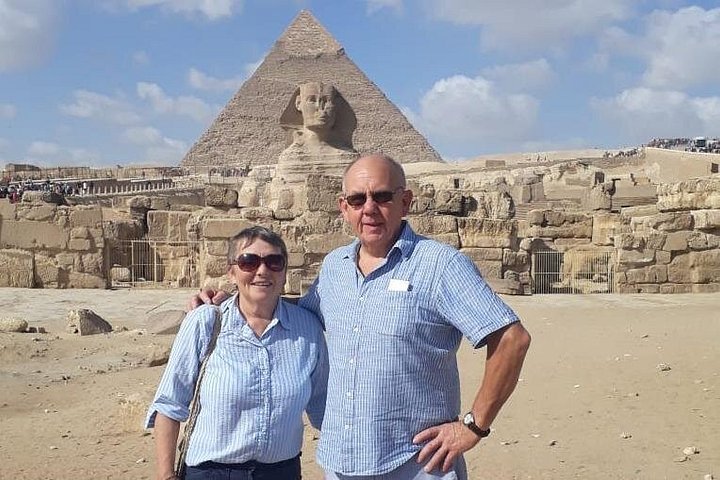
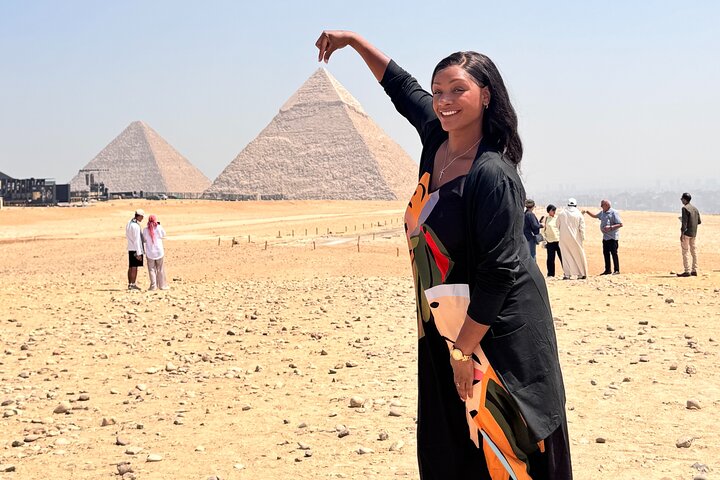
At 8:00 a.m., you will be picked up from your hotel in Cairo by our expert tour guide. then transfer to Giza Pyramids in a private A/C latest model vehicle and start your full-day tour by visiting the famous pyramids of Egypt which are known as Giza Pyramids. The pyramids of Giza and the Great Sphinx are among the most popular tourist destinations in the world and existed even in Roman times. Each of these spectacular structures served as the final resting place of a king of the 4th Dynasty (c.2613–2494 BC). The Great Pyramid of Giza was built for King Khufu (c.2589–2566 BC), and the other two for Khafre and Menkaure, his son and grandson. Khufu’s pyramid is both the oldest and largest of the three, and the first building to exceed its height would not be built for another 3,800 years! Enjoy a 20-minute camel ride and get back to history. Our guide will take you to the Panoramic Place where you can see all the Pyramids in one view.
The Great Pyramid, the tomb of King Khufu (c.2589–2566 BC), with its original height of 146.5 meters, was the tallest structure in the world for 3,800 years. It remains the last surviving member of the Seven Wonders of the Ancient World and took an estimated 10 to 20 years to build. To this day, it is not entirely certain how this was done. The Great Pyramid is made of local limestone, but its exterior was once entirely covered with high quality limestone. These casing stones were brought from Turah, south of Maadi, by ship. On the inside, the pyramid has three chambers, one cut into the bedrock underneath, and two high up within the masonry itself, a feature that no other pyramid possesses. The sarcophagus in which Khufu was once laid to rest can still be seen in the upper of these two rooms, the King’s Chamber. This room is accessed through the Grand Gallery, a majestic corbelled ascending passage, and a masterpiece of ancient engineering and architecture.
Khafre (c.2558–2532 BC), whom the ancient Greeks knew as Khefren, was a son of King Khufu (Cheops), the builder of the Great Pyramid. He built the second pyramid complex at Giza, and constructed his tomb on slightly higher ground, making it appear just as tall as his father’s. At 143.5 meters in height, however, his pyramid is only slightly shorter, and a tremendously impressive monument. Its core masonry is made of blocks of local limestone. The top of the pyramid still preserves the beautifully polished blocks of high-quality limestone that once encased the majority of the structure’s towering height. This white stone was quarried in Turah, south of Maadi, and transported here by ship.
Menkaure (Mykerinos to the ancient Greeks; c.2532–2503 BC) is the builder of the third of the three large Giza Pyramids. He was most likely the son of Khafre (Khefren) and grandson of Khufu (Cheops). With a base area that is less than a quarter of their pyramids’, and with an original height of 65 meters, Menkaure’s is by far the smallest of the three. This reduction in size is due to several factors, including the limited amount of space left on the Giza Plateau. The material used for the outer casing of Menkaure’s pyramid is another. Whereas his predecessors had used limestone for this purpose, Menkaure employed granite, which was quarried in Aswan, over 800 km away. In addition to the logistics involved in the transportation of the granite blocks, the material itself is much harder than limestone. However, only the bottom quarter of the casing stones are made of granite, the rest being limestone.
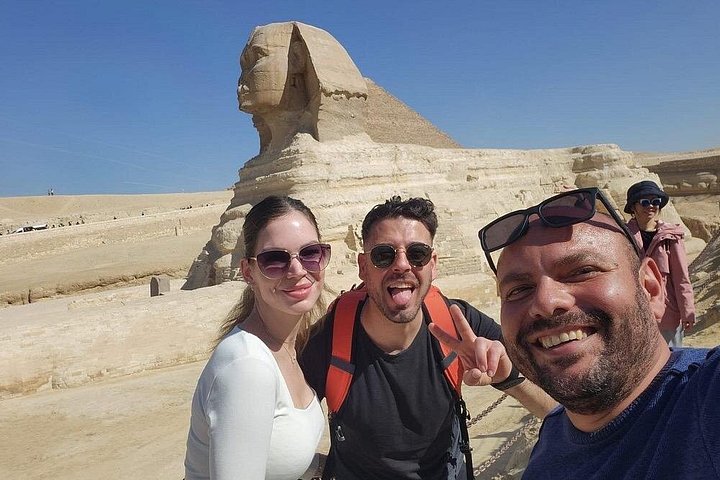
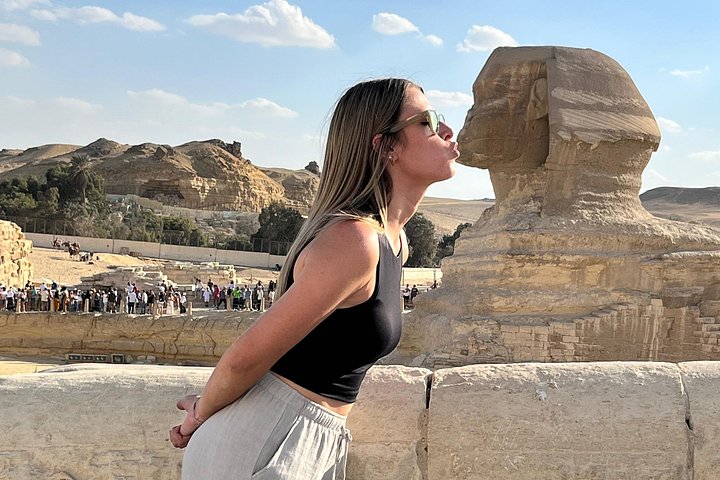
Colossal statues are one of the hallmarks of ancient Egyptian civilization, and the Great Sphinx of Giza is the most famous. It was carved directly out of the bedrock during the 4th Dynasty (c.2613–2494 BC), which also makes it the oldest. Ancient Egyptian sphinxes represented the king with the body of a lion, in a clear demonstration of his power. The evidence points to the Great Sphinx having been carved during the reign of Khafre (Khefren to the ancient Greeks; c.2558–2532 BC), the builder of the second of the Giza pyramids. The Great Sphinx and the temple in front of it, called the Sphinx Temple, lie directly next to Khafre’s valley temple and the lower portion of the causeway leading up to his mortuary temple and pyramid. Careful archaeological analysis has revealed that the valley temple was finished before work was begun on the Great Sphinx and its temple. Analysis of the Great Sphinx’s facial features has also revealed striking similarities with those of Khafre’s statues.
The Egyptian Museum in Cairo, commonly known as simply the Egyptian Museum (Arabic: المتحف المصري, romanized: al-Matḥaf al-Miṣrī, Egyptian Arabic: el-Matḥaf el-Maṣri [elˈmætħæf elˈmɑsˤɾi]), located in Cairo, Egypt, houses the largest collection of Egyptian antiquities in the world. It houses over 120,000 items, with a representative amount on display. Located in a building built in 1901, it is the largest museum in Africa. Among its masterpieces are Pharaoh Tutankhamun's treasure, including its iconic gold burial mask, widely considered one of the best-known works of art in the world and a prominent symbol of ancient Egypt. After that, the tour will be finished with a transfer back to the hotel.
キャンセル
開始24時間前まで無料でキャンセルでき、全額返金されます。
参加前に知っておくこと
- 送迎
- 送迎は全員に含まれます。
- チケットの種類
- Mobile or paper ticket accepted
- 催行会社
- Egyptian Daily Tours
- Public transportation options are available nearby
- Specialized infant seats are available
- Not recommended for travelers with spinal injuries
- Not recommended for pregnant travelers
- Not recommended for travelers with poor cardiovascular health
- Suitable for all physical fitness levels
How it compares in カイロ
- Its from-price is 19% above the median of the 10229 experiences we list in カイロ.
- Its length is typical for the group.
- The operator lists free cancellation on it.
About カイロ
カイロはナイル川沿いに広がるエジプトの首都で、ギザのピラミッド、中世のモスク、にぎやかなバザール、ファラオの宝物が出会います。
街の西端には、砂漠の台地からギザの大ピラミッドとスフィンクスがそびえ、さらに南にはサッカラの階段ピラミッドとメンフィスの遺跡があります。カイロの大きな博物館、タハリール広場のエジプト考古学博物館と、台地のそばにある巨大な大エジプト博物館には、数千年にわたる遺物が収められています。
Top-ranked sights in カイロ: Egyptian Museum (Museum of Egyptian Antiquities), Saqqara (Sakkara), Khan El-Khalili.
カイロの特別価格
割引前と割引後の価格は事業者が示すもので、当サイトが付けたものではありません。