Naples Museums: Archeological & Capodimonte Private from Rome
説明は英語で表示されます。
- 10〜11時間
- 3言語
- 即時確定
- 貸切ツアー
見どころ
The Neapolitan Archeology Museum keeps the richest and most valuable archaeological works of art in Italy and it’s considered one of the most important archeological museums in the world. It’s a definite must-see for every tourist. The Capodimonte Museum is home to an extraordinary collection of works one of the best collections in Italy. Here you’ll find Caravaggio’s Flagellation of Christ, and works by the female Baroque artist, Artemisia Gentileschi and the contemporary art including Andy Warhol’s Vesuvius.
含まれるもの
料金に含まれるもの
- Entrance tickets at the Museum and Real Bosco of Capodimonte
- Private tour leader at your disposal (choose the language on the checkout)
- Entrance tickets at the Archeological Museum (free of charge)
- Pick-up and drop off with luxury transportation and private chauffeur
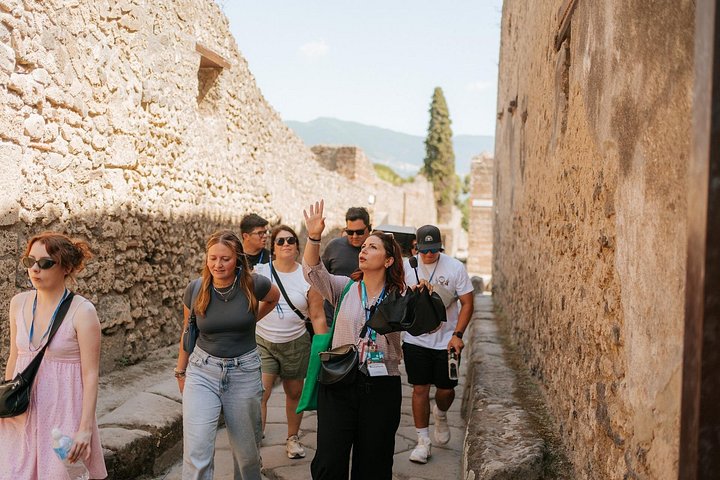
- Private professional guide by your side inside the 2 Museums
含まれないもの
- Food and Beverages
- Gratuities. If you are satisfied with the service, a gratuity is customary.
行程
Rome represents the starting point but also the end of the tour , because there will be 2 hours of driving time to get in Naples, and then 2 hours to come back from Naples to your accomodation
This place was originally an hunting area of the King Charles III and it became a royal residence for three dynasties: the Bourbons, the French kings Joseph Bonaparte and Joachim Murat, and the House of Savoy after the Italian unification. The magnificent halls of the Palace like the Room of Cradle and the Ball Room are found side by side with more private rooms like the Pompeian Alcove. There are also family portraits, artistic and ornamental objects and luxury goods of Bourbon manufacture such as weapons, silks, tapestries and the famous porcelain of Capodimonte. The masterpiece of Neapolitan manufacture is the salon of Queen Maria Amalia, a boudoir where walls are entirely crafted out of polychrome porcelain between 1757-1759. From the very beginning the Palace was destined to host the Farnese Collection, a famous collection known since XVI century. Charles Bourbon inherited it from his mother Elisabeth. Over time, the Farnese collection was significantly expanded by acquisitions, works from churches and convents, bequests and donations as well as works of contemporary art donated by artists and gallerists. The halls are full of masterpieces of every Italian art school Tuscan, Venetian, Emilian, Neapolitan, Roman along with important works of foreign artists like Pieter Brueghel. Many of these works are world-known absolute masterpieces, for example Danaё by Titian, The Crucifixion by Masaccio, The Flagellation of Christ by Caravaggio and Vesuvius by Warhol.
Naples' National Archaeological Museum serves up one of the world’s finest collections of Graeco-Roman artefacts. Originally a cavalry barracks and later seat of the city’s university, the museum was established by the Bourbon king Charles VII in the late 18th century to house the antiquities he inherited from his mother, Elisabetta Farnese, as well as treasures looted from Pompeii and Herculaneum. Star exhibits include the celebrated Toro Farnese (Farnese Bull) sculpture and awe-inspiring mosaics from Pompeii's Casa del Fauno. The Farnese collection of colossal Greek and Roman sculptures features the Toro Farnese and a muscle-bound Ercole (Hercules). Sculpted in the early 3rd century AD and noted in the writings of Pliny the Elder, the Toro Farnese, probably a Roman copy of a Greek original, depicts the humiliating death of Dirce, Queen of Thebes. Carved from a single colossal block of marble, the sculpture was discovered in 1545 at the Baths of Caracalla in Rome and was restored by Michelangelo, before eventually being shipped to Naples in 1788. Ercole was discovered in the same Roman excavations, albeit without his legs. Replacement pins were commissioned by Michelangelo and sculpted by Guglielmo della Porta. When the statue's original legs were found, the Farnese family decided not to have them fitted, but they were reinstated when the statue was gifted to the King of Naples. The mezzanine floor, home to an exquisite collection of mosaics, mostly from Pompeii. Of the series taken from the Casa del Fauno, it is La battaglia di Alessandro contro Dario (The Battle of Alexander against Darius) that really stands out. The best-known depiction of Alexander the Great, the 20-sq-metre mosaic was probably made by Alexandrian craftsmen working in Italy around the end of the 2nd century BC.
キャンセル
All sales are final. No refund is available for cancellations.
参加前に知っておくこと
- 送迎
- 送迎は全員に含まれます。
- チケットの種類
- Mobile or paper ticket accepted
- 催行会社
- Rome Italy Explora
- Infants are required to sit on an adult’s lap
- Specialized infant seats are available
- Public transportation options are available nearby
- Infants and small children can ride in a pram or stroller
- All areas and surfaces are wheelchair accessible
- Transportation options are wheelchair accessible
- Wheelchair accessible
- Suitable for all physical fitness levels
How it compares in ローマ
- Its from-price is 63% above the median of the 984 日帰りツアー we list in ローマ.
- Its length is typical for the group.
About ローマ
ローマは3000年近い歴史が重なる歩いて巡れる街で、コロッセオやフォロ・ロマーノからバロックの広場、バチカンの美術まで見どころが揃います。
古代ローマの遺構は、今も街のあちこちで目にすることができます。コロッセオ、フォロ・ロマーノ、パラティーノの丘は街の中心に並び、パンテオンは丸い天窓を開けたまま堂々と立ち、集合住宅の間からは神殿や水道橋の断片がのぞきます。テヴェレ川の向こうには、バチカン市国があり、サン・ピエトロ大聖堂、バチカン美術館、ミケランジェロのシスティーナ礼拝堂の天井画が収められています。
Top-ranked sights in ローマ: Colosseum, Vatican Museums, Sistine Chapel.
ローマの特別価格
割引前と割引後の価格は事業者が示すもので、当サイトが付けたものではありません。