My Son Holy Land Half Day Tour
説明は英語で表示されます。
- 5時間
- 24時間前まで無料キャンセル
- 英語のガイド付き
- 即時確定
見どころ
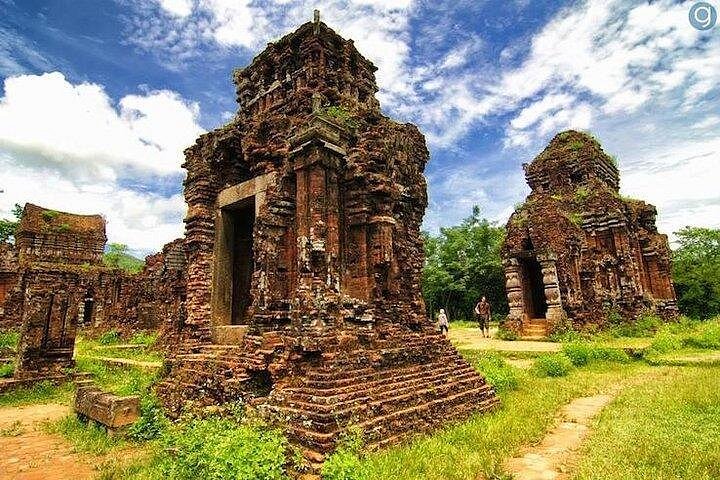
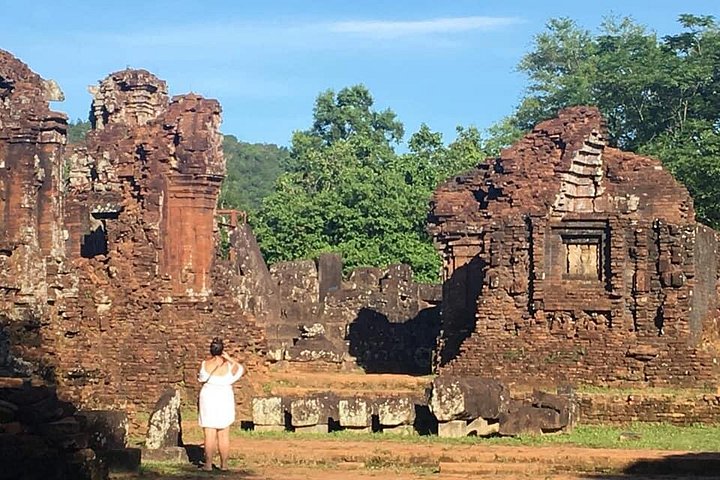
Visit My Son, the former capital of the ancient Cham civilization that ruled Central Vietnam from the second to the thirteenth century. Explore one of the best-preserved Cham structures in Vietnam, with Hindu-like towers and temples dating from the second century. This UNESCO World Heritage site is a must-see for travelers interested in architecture and ancient civilizations.
含まれるもの
料金に含まれるもの
- - All private transportation with guide
- - Exclusive and personalized single agent/single customer service.
- - Experienced English speaking guide.
- - 24/7 hotline support guaranteed
- - Services charges and government tax.
- - Tissues and water on coach.
- - All sightseeing tickets.
- - No extra charge after services confirmation
含まれないもの
- - International flights & departure taxes
- - Personal expenses, tips and gratuities
- - Travel insurance
- Beverage
- - Peak season surcharge if any
- - Vietnam visa
- - Other services not mentioned above.
行程
Visit My Son, the former capital of the ancient Cham civilization that ruled Central Vietnam. Explore one of the best-preserved Cham structures in Vietnam, with Hindu-like towers and temples dating from the second century.
キャンセル
開始24時間前まで無料でキャンセルでき、全額返金されます。
参加前に知っておくこと
- 送迎
- 送迎は全員に含まれます。
- チケットの種類
- Mobile or paper ticket accepted
- グループの人数
- 最大15名
- 催行会社
- Realistic Asia
- Infants are required to sit on an adult’s lap
- Suitable for all physical fitness levels
How it compares in Mỹ Sơn
- Its from-price is 39% below the median of the 28 experiences we list in Mỹ Sơn.
- It is shorter than most of them.
- The operator lists free cancellation on it.
About Mỹ Sơn
Mỹ Sơn is a forested valley in central Vietnam where the Cham kingdom raised brick Hindu temples, now a World Heritage site of ruins.
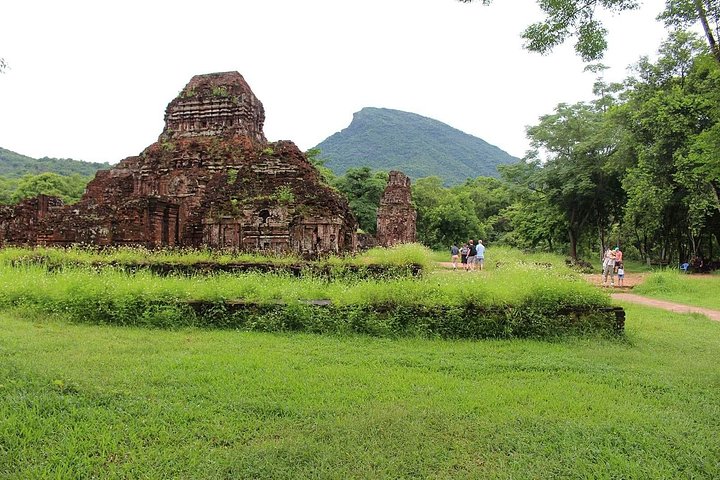
Mỹ Sơn lies in a green basin ringed by hills in Quảng Nam province, about 40 kilometres from Hội An. From the fourth to the thirteenth century the kings of Champa built brick temple towers here, dedicated mainly to Shiva, and the complex became a religious centre of the Cham people. It has been a World Heritage site since 1999.