Meteora Full Day Private Tour 4seat
説明は英語で表示されます。
- 12時間
- 24時間前まで無料キャンセル
- 英語のガイド付き
- 貸切ツアー
見どころ
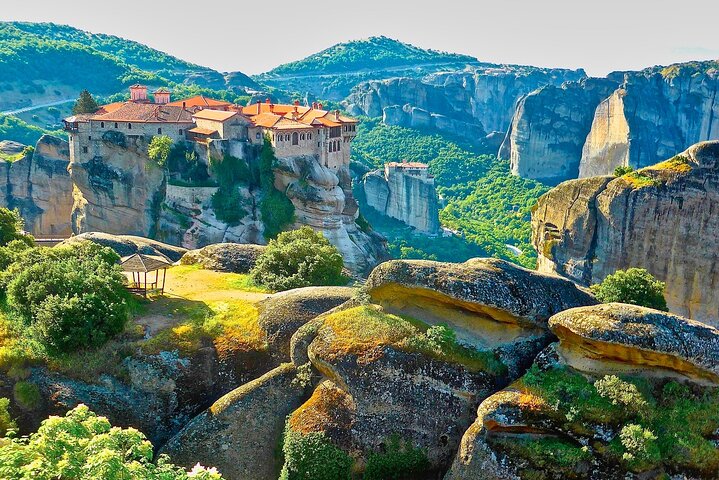
This trip offers a unique experience of combining nature’s greatness with history, architecture and religion. It is an inspiring and spiritual place where one can discover their inner peace. The trip starts from Athens early in the morning. Our route will have beautiful views of the lake and sea. We will pass by Thebes, we will see Lake Yliki and Lake Kopaida, and we will drive along the beautiful city of Trikala. After this, we will arrive in Meteora, which consists of a breathtaking geological phenomenon. There, we will visit the monasteries and have a closer look at the massive rocks where one of the most important complexes of Eastern Orthodox Monasteries is located. Afterwards, we will move to the town of Kalampaka for lunch, and then we will head to Thermopylae and visit the battleground where the famous battle of Thermopylae took place between an alliance of Greek city-states and the Persian Empire. After seeing the statue of Leonidas, we will return to Athens.
含まれるもの
料金に含まれるもの
- WiFi on board
- Air-conditioned vehicle
- Transfer in new, luxury non-smoking cars
- Hotel pick-up and drop off
- Luggage service
含まれないもの
- Lunch
- Snacks
- Admission ticket for museums & attractions
- Guided Tours (only upon request)
行程
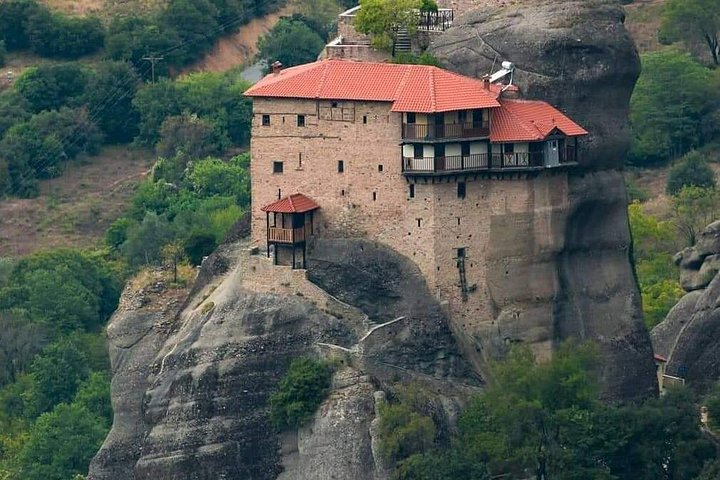
Meteora is a cluster of sandstone rocks, some rising to 400 meters, northeast from the town of Kalampaka with a group of Orthodox monasteries built on top of the rocks. The Greek word Meteora means “suspended in the air” which describes these outstanding Greek Orthodox monasteries to seem as if they are floating in midair. It is believed that these rock pillars were formed about 60 million years ago, during the Tertiary Period. In the beginning, the area was covered by sea but a series of earth movements pushed the seafloor upwards. The high plateau that was created, caused many cracks which were continuously hit by extreme weather conditions such as strong winds and waves. These events impacted their shape and turned them into huge rock pillars composed of sandstone and conglomerate. In the twelve century AD, an ascetic group of hermit monks were the first people that inhabited Meteora and moved up to the ancient pinnacles and resided at the caverns of Meteora. However, monasteries were not built until the fourteenth century, when saint Athanasios established the Holly Monastery of the Transfiguration. More than 20 monasteries were built in the fourteenth century. Between the 15nth to 16nth centuries, Meteora developed and flourished by creating places of worship and Orthodox iconography. For many centuries, the monks used scaffolds to climb the rocks to bring supplies. Later, this method was replaced by the method of nets with hooks and rope ladders. Other tools needed for the access to the monasteries where wooden ladders, 40 meters in length, and baskets which were pulled up by monks. Today only six monasteries are active with a small number of monks or nuns who live in Meteora. In 1988, the Meteora monasteries were included in the UNESCO World Heritage List and the Meteora-Antichassia area is part of the Natura 2000 network hosting some rare species of birds and flowers.
The small city with the great view of Meteora
Thermopylae, which means "hot gates", is a place in Greece where a narrow coastal passage existed in antiquity. The name derives from its hot sulfur springs. In Greek mythology, it was the cavernous entrance to Hades. This passage from north to south along the east coast of the Balkan Peninsula requires use of the pass and for this reason Thermopylae has been the site of several battles. Thermopylae is world-known for the battle that took place in 480 BC between an outnumbered Greek army probably of one thousand (including the famous 300 Spartans) and the invading and extremely larger army of Persians under Xerxes. Despite being greatly inferior in numbers, the Greeks held the narrow pass for three days with Spartan King Leonidas fighting a last-ditch defense with a small force of Spartans and other Greek soldiers. Eventually, the Persians took control of the pass. Leonidas fought heroically and his heroism has impacted and made a lasting impression on later generations of Greece. Within a year the Persian invasion was repelled at the battles of Salamis and Plataea. A bronze statue of Leonidas was built at Thermopylae in 1955. Under the statue, the following is written: Molon Labe ("Come and take them"), which was Leonidas' reply when Xerxes offered to spare the lives of the Spartans if they gave up their arms.
キャンセル
開始24時間前まで無料でキャンセルでき、全額返金されます。
口コミ
5.0
- 51
- 40
- 30
- 20
- 10
評価は予約パートナーが集めた1件の口コミによるものです。旅行者自身の言葉を書かれた順に掲載しており、体験をよく見せるために並べ替えることはありません。
参加前に知っておくこと
- 送迎
- 全員が出発場所で合流します。送迎はありません。
- チケットの種類
- Mobile or paper ticket accepted
- 催行会社
- TSquared_Travel
- Infants and small children can ride in a pram or stroller
- Public transportation options are available nearby
- Specialized infant seats are available
- Suitable for all physical fitness levels
How it compares in アテネ
- Its from-price is 114% above the median of the 926 日帰りツアー we list in アテネ.
- It is longer than most of them.
- By number of reviews it ranks 549 of 926.
- The operator lists free cancellation on it.
About アテネ
アテネは広がる近代の首都の上にアクロポリスがそびえ、古代遺跡、丘の斜面の路地、長いタベルナの夜が隣り合う街です。
アクロポリスの頂にはパルテノン神殿が立ち、少女像の柱廊で知られるエレクテイオンが寄り添います。丘のふもとにはアクロポリス博物館があり、岩山から出土した彫刻を展示しています。周囲の古代アゴラ、オリンピア・ゼウス神殿、ハドリアヌスの門、大理石のパナシナイコ競技場など、古代の街並みは歩いて巡れます。
Top-ranked sights in アテネ: Acropolis, Parthenon, Acropolis Museum.