Kyoto Customized Tour & Ramen Making with Licensed Guide
説明は英語で表示されます。
- 6時間
- 24時間前まで無料キャンセル
- 2言語
- 即時確定
見どころ
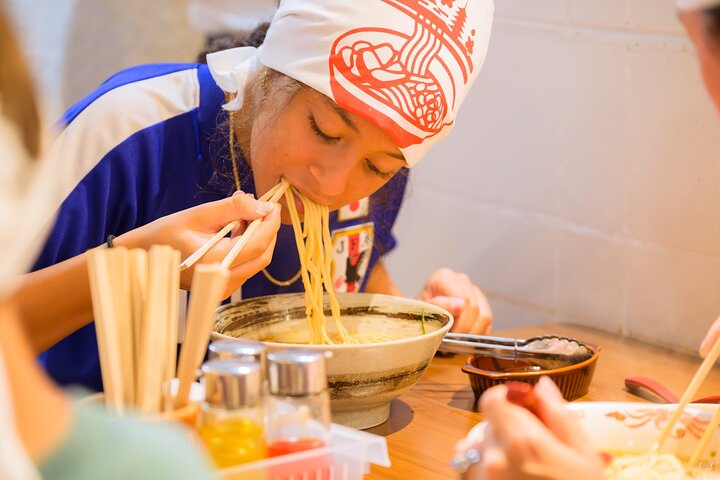
This 6 hr walking tour includes 90 minutes of Ramen making at Ramen Factory in Kyoto. Ramen Factory is a unique restaurant where you can make original ramen by hand and enjoy its deliciousness. In this experience, you will learn noodle making from scratch and homemade char siu making under the guidance of an English-speaking instructor. Before your experience, you will go on a walking tour with our licensed guide! Your guide will drop you off at Ramen Factory after a 4-hour walking tour. Please craft your itinerary by choosing 2 to 3 spots on the ‘what to expect’ or ‘itinerary’ list. Start time: Your start time for the experience may vary. The estimated time for the experience will be about 4 hours from the start of the tour.
含まれるもの
料金に含まれるもの
- Customizable Tour 2 -3 sights
- 90 minutes Ramen making experience
- Meet up with guide on foot within designated area of Kyoto City
- Licensed Local English Speaking Guide
含まれないもの
- Private Vehicle
- Guide Entry fees are only covered for sights listed under What to Expect.
- Transportation fees, Entrance fees, Lunch, and Other personal expenses
行程
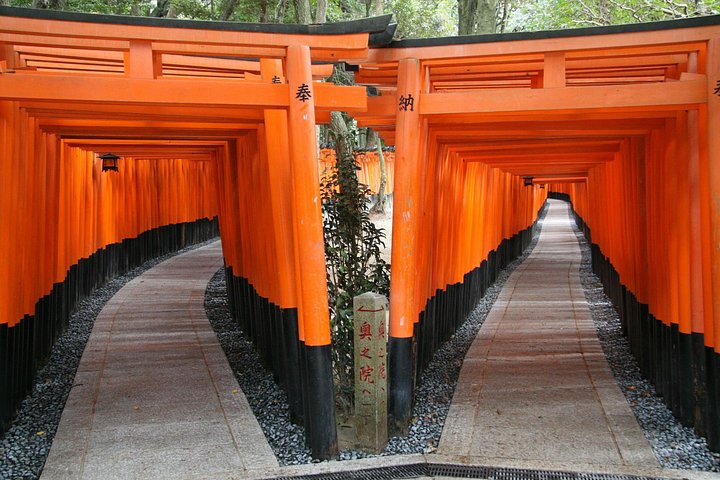
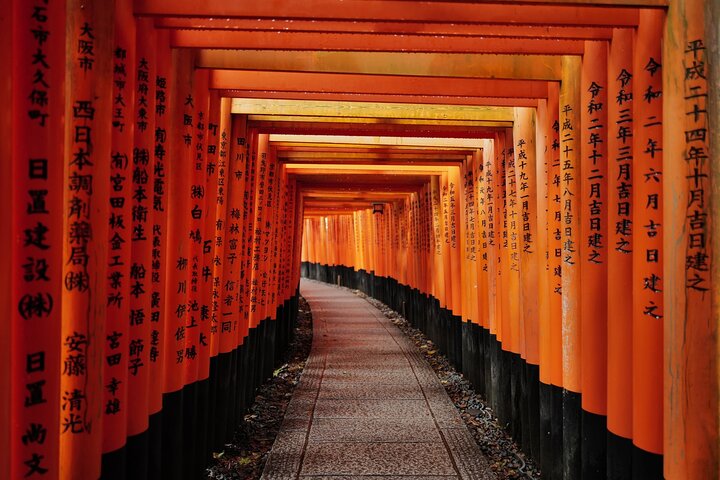
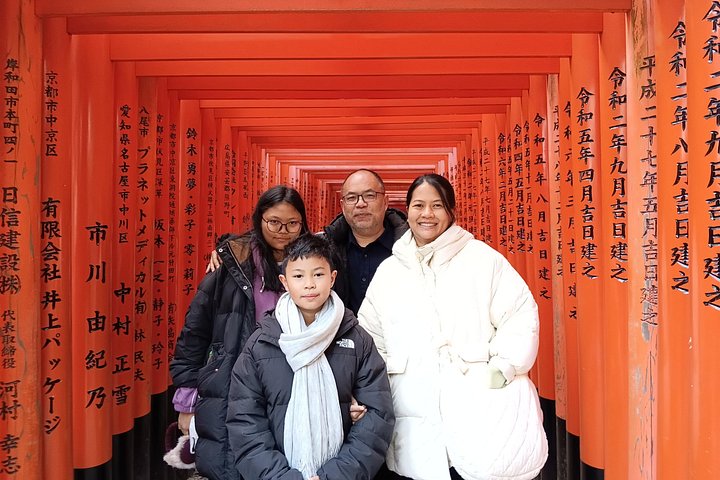
We are here to help you discover new things, the Fushimi Inari Shrine is so more than its famous tunnels of vermillion-red torii gates. Most people are satisfied by a scenic view of it. But this has a lot of stories to tell that will connect you to the Japan's history and culture and your guide will show you deeper. You will see a fascinating story attached to the origin of the shrine dedicated to the god of grains – that’s what “Inari” means – . This is also why you’ll see statues of the fox around the shrine. “Kitsune” or the fox is a servant to the god Inari. They are cunning tricksters, clever minded animals who make perfect guides for the treacherous business world. You may would want the foxes on your side after this tour.
Nijo Castle, a UNESCO World Heritage site was built in 1603 as the Kyoto residence of Tokugawa Ieyasu, the first shogun of the Edo Period (1603-1867).
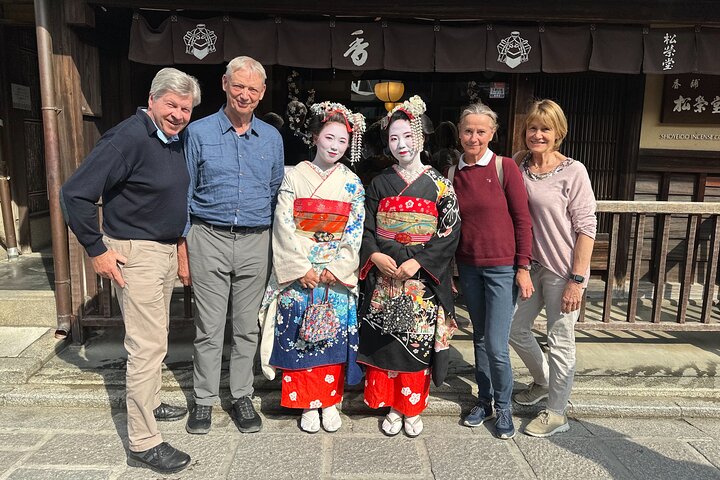
Exploring the narrow alleyways of Kyoto’s Geisha District—Gion can be daunting for a first-time visitor. Eliminate the worry of getting lost by going on a guided tour. It’s a great way to discover hidden places that locals love, and to hear about Kyoto’s ancient past. Highlights include learning about Geisha culture and rituals, and visiting Gion, Pontocho, and Miyagawacho.
Nishiki Market (錦市場, Nishiki Ichiba) is a narrow, five block long shopping street lined by more than one hundred shops and restaurants. Known as "Kyoto's Kitchen", this lively retail market specializes in all things food related, like fresh seafood, produce, knives and cookware, and is a great place to find seasonal foods and Kyoto specialties, such as Japanese sweets, pickles, dried seafood and sushi. Nishiki Market has a pleasant but busy atmosphere that is inviting to those who want to explore the variety of culinary delights that Kyoto is famous for. The stores found throughout the market range in size from small narrow stalls to larger two story shops. Most specialize in a particular type of food, and almost everything sold at the market is locally produced and procured.
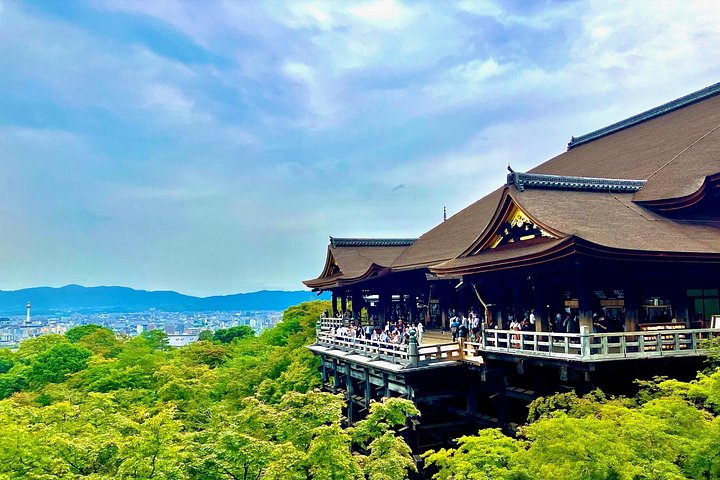
Discover one of Kyoto’s most popular temples—Kiyomizu-dera Temple. Exploring the temple grounds with a guide means you’ll be able to learn about Japan’s history and culture as you explore the magnificent building. Enjoy commentary from your English-speaking guide who will make sure you don't miss any important features.
The Kyoto Imperial Palace (京都御所, Kyōto Gosho) used to be the residence of Japan's Imperial Family until 1868, when the emperor and capital were moved from Kyoto to Tokyo. It is located in the spacious Kyoto Imperial Park (京都御苑, Kyōto Gyoen), an attractive park in the center of the city that also encompasses the Sento Imperial Palace and a few other attractions.
Pontocho (先斗町, Pontochō) is one of Kyoto's most atmospheric dining areas. It is a narrow alley running from Shijo-dori to Sanjo-dori, one block west of Kamogawa River. The alley is packed with restaurants on both sides offering a wide range of dining options from inexpensive yakitori to traditional and modern Kyoto cuisine, foreign cuisine and highly exclusive establishments that require the right connections and a fat wallet. Business hours and closing days of the restaurants, bars and shops along Pontocho vary by establishment, but most places are usually open from around 17:00 to 23:00. Some also open for lunch. An increasing number of establishments offer English menus.
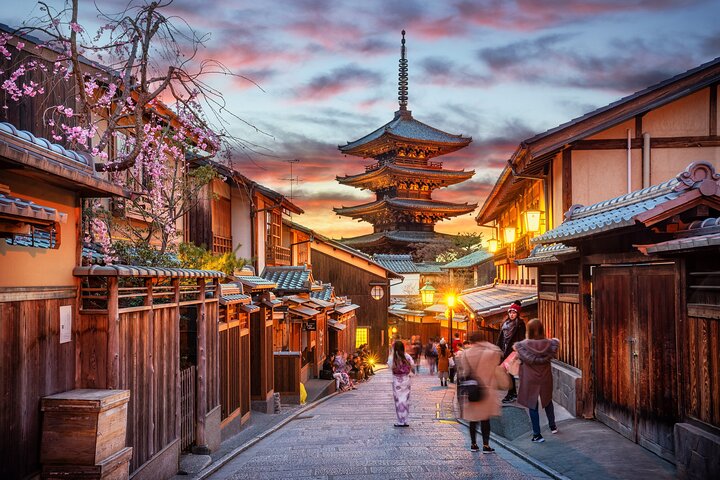
The Higashiyama District (東山) along the lower slopes of Kyoto's eastern mountains is one of the city's best preserved historic districts. It is a great place to experience traditional old Kyoto, especially between Kiyomizudera and Yasaka Shrine, where the narrow lanes, wooden buildings and traditional merchant shops invoke a feeling of the old capital city. Recent renovations to remove telephone poles and repave the streets have further improved the traditional feel of the district.
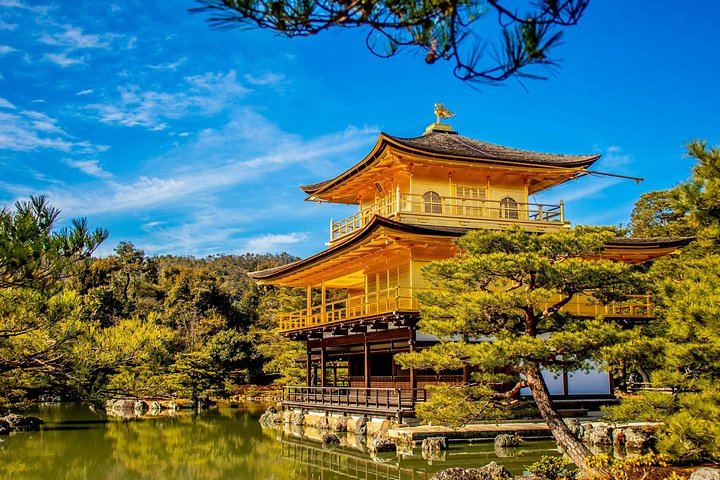
Ginkakuji (銀閣寺, Silver Pavilion) is a Zen temple along Kyoto's eastern mountains (Higashiyama). In 1482, shogun Ashikaga Yoshimasa built his retirement villa on the grounds of today's temple, modeling it after Kinkakuji (Golden Pavilion), his grandfather's retirement villa at the base of Kyoto's northern mountains (Kitayama). The villa was converted into a Zen temple after Yoshimasa's death in 1490. As the retirement villa of an art obsessed shogun, Ginkakuji became a center of contemporary culture, known as the Higashiyama Culture in contrast to the Kitayama Culture of his grandfather's times. Unlike the Kitayama Culture, which remained limited to the aristocratic circles of Kyoto, the Higashiyama Culture had a broad impact on the entire country. The arts developed and refined during the time include the tea ceremony, flower arrangement, noh theater, poetry, garden design and architecture.
Nanzenji Temple (南禅寺), whose spacious grounds are located at the base of Kyoto's forested Higashiyama mountains, is one of the most important Zen temples in all of Japan. It is the head temple of one of the schools within the Rinzai sect of Japanese Zen Buddhism and includes multiple subtemples, that make the already large complex of temple buildings even larger. The history of Nanzenji dates back to the mid 13th century, when the Emperor Kameyama built his retirement villa at the temple's present location and later converted it into a Zen temple. After its founding, Nanzenji grew steadily, but its buildings were all destroyed during the civil wars of the late Muromachi Period (1333-1573). The oldest of the current buildings was built after that period.
Tofukuji (東福寺, Tōfukuji) is a large Zen temple in southeastern Kyoto that is particularly famous for its spectacular autumn colors. The temple was founded in 1236 at the behest of the powerful Fujiwara clan. Its name is a combination of the names of two great temples in Nara that were also associated with the Fujiwara, Todaiji Temple and Kofukuji Temple. Tofukuji has historically been one of the principal Zen temples in Kyoto, and is a head temple of one of the schools of the Rinzai sect of Zen Buddhism. In autumn, people come from all over Japan to see Tofukuji's autumn colors. The most popular view is of the Tsutenkyo Bridge, which spans a valley of lush maple trees. The view from the bridge is equally spectacular, and the 100 meter long, covered walkway becomes extremely crowded when the colors reach their peak, usually around mid to late November.
Toji Temple (東寺, Tōji), literally "East Temple", was founded at the beginning of the Heian Period just after the capital was moved to Kyoto in the late 700s. The large temple, together with its now defunct sister temple Saiji ("West Temple"), flanked the south entrance to the city and served as the capital's guardian temples. Toji Temple is one of Kyoto's many UNESCO world heritage sites. About thirty years after the temple's establishment, Kobo Daishi, the founder of the Shingon sect of Japanese Buddhism, was appointed head priest of Toji, and the temple became one of the most important Shingon temples besides the sect's headquarters on Mount Koya. Kobo Daishi also added many of the large wooden buildings that stand on the grounds today.
キャンセル
開始24時間前まで無料でキャンセルでき、全額返金されます。
口コミ
5.0
- 51
- 40
- 30
- 20
- 10
評価は予約パートナーが集めた1件の口コミによるものです。旅行者自身の言葉を書かれた順に掲載しており、体験をよく見せるために並べ替えることはありません。
参加前に知っておくこと
- 送迎
- 送迎は全員に含まれます。
- チケットの種類
- Mobile or paper ticket accepted
- 催行会社
- Japan Guide Agency
- Service animals allowed
- Public transportation options are available nearby
- Infants and small children can ride in a pram or stroller
- All areas and surfaces are wheelchair accessible
- Transportation options are wheelchair accessible
- Wheelchair accessible
- Suitable for all physical fitness levels
- Children 3 years old or older can participate the experience.
How it compares in 京都
- Its from-price is 112% above the median of the 1713 experiences we list in 京都.
- It is longer than most of them.
- By number of reviews it ranks 1002 of 1713.
- The operator lists free cancellation on it.
About 京都
千年以上にわたり日本の都だった京都は、寺院、庭園、木造の町家、洗練された伝統が息づく街です。
この街には日本で最も大切にされている名所の多くがあります。伏見稲荷大社の数千基の朱色の鳥居は森の山を登り、金閣寺は池の上で輝き、清水寺の木造の舞台は街を見下ろす山腹に突き出しています。龍安寺の石庭と苔むした銀閣寺の庭は、静かな思索を誘います。
Top-ranked sights in 京都: Fushimi Inari Shrine (Fushimi Inari Taisha), Kinkaku-ji (Golden Pavilion), Kiyomizu-dera Temple.
京都の特別価格
割引前と割引後の価格は事業者が示すもので、当サイトが付けたものではありません。