Historic Lisbon : Belém, Alfama, Pastéis de Belém - small group
説明は英語で表示されます。
説明文は主催者によるもので、自動的に翻訳されています。
- 5時間
- 24時間前まで無料キャンセル
- 6言語
- 即時確定
見どころ
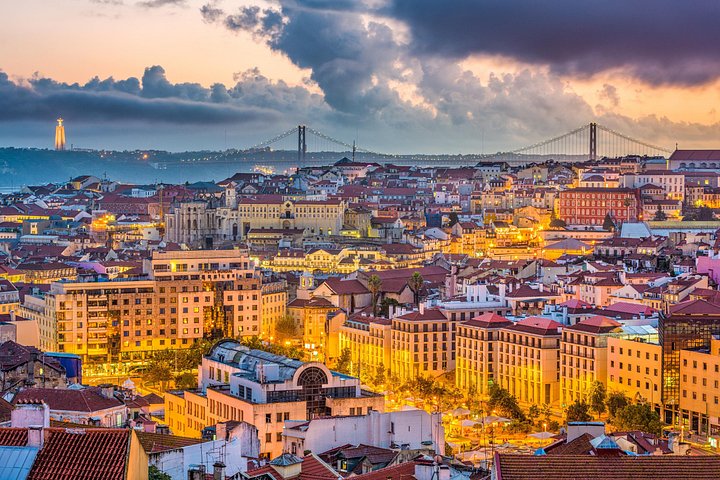
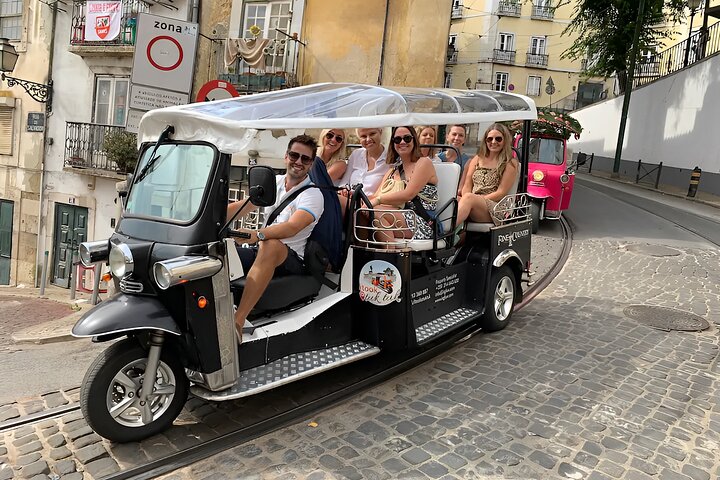
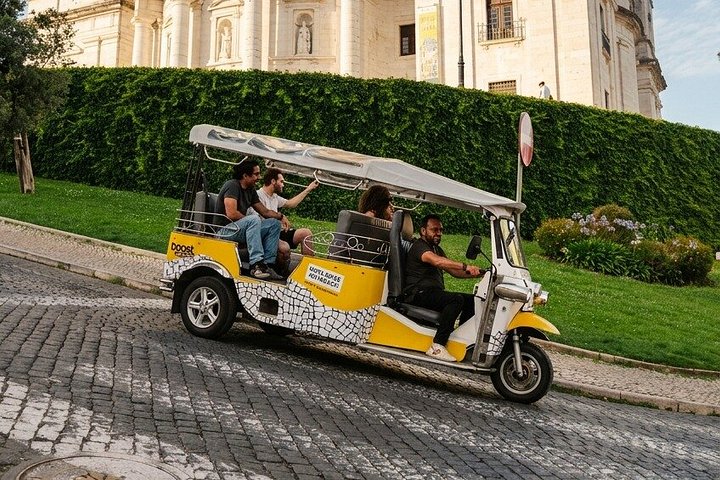
This will be the best introduction to Lisbon on a 5-hour small group tour, limited to a maximum of 8 people. You will enjoy the magnificent views of the city from the seven hills. Driving along the narrow streets of the historical districts of the old city such as Baixa, Bairro Alto and Alfama, stopping at its best lookouts. You will travel back to the 16th century in Bethlehem to discover all the adventures of the brave Portuguese navigators around the world. Try the Pastéis de Belém, the original recipe for cream pastries that only 6 people know in an old bakery from 1837. Cross the 25 de Abril Bridge (Portuguese Golden Gate Bridge!) And enjoy the stunning view of Lisbon on the Statue of Christ King (a replica of the statue of Christ the Redeemer of Rio de Janeiro).
含まれるもの
料金に含まれるもの
- Private transportation
- Bottled water
- WiFi on board
- Air-conditioned vehicle
含まれないもの
- Breakfast
- Lunch
- Dinner
行程
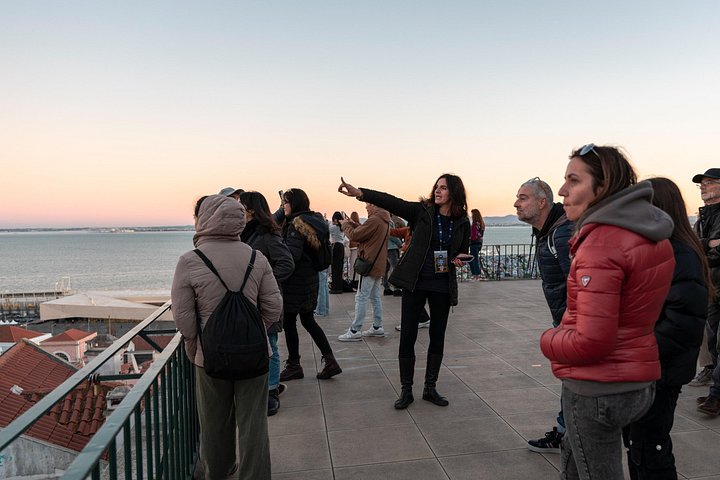
Mirador de Senhora do Monte is located in the parish of São Vicente (Graça), in Lisbon. The belvedere develops in front of the Chapel of Our Lady of the Mount. From it you can see, to the south, the sea of the Straw, the Castle of São Jorge, part of the Baixa of Lisbon and the estuary of the Tagus river, to the west, from the Bairro Alto to the Forestry Park of Monsanto and to the north , the valley of Avenida Almirante Reis.
It goes back to a church, begun in 1582 in the place where D. Afonso Henriques had built a primitive temple also under the invocation of St. Vincent. This saint was proclaimed patron of Lisbon in 1173, when his relics were transferred from the Algarve to a Church outside the city walls. The construction began only in 1590 by the hand of the architect and engineer Filippo Terzi (1520 - 1597) according to a drawing of the Spanish architect Juan de Herrera (1530 - 1597). Another outstanding figure in the work of São Vicente de Fora is undoubtedly the Portuguese architect Baltasar Álvares. The latter takes with him a learned learning of the Roman Mannerism acquired through his uncle architect and Portuguese engineer Afonso Álvares (15 ?? - 1580). A new architectural style was born in Portugal that would serve as a model in the following religious buildings. The work was completed in 1627. The church of São Vicente de Fora, located in the area of Alfama, an area that identifies the context of the medieval surroundings of the city of Lisbon in the sixteenth century.
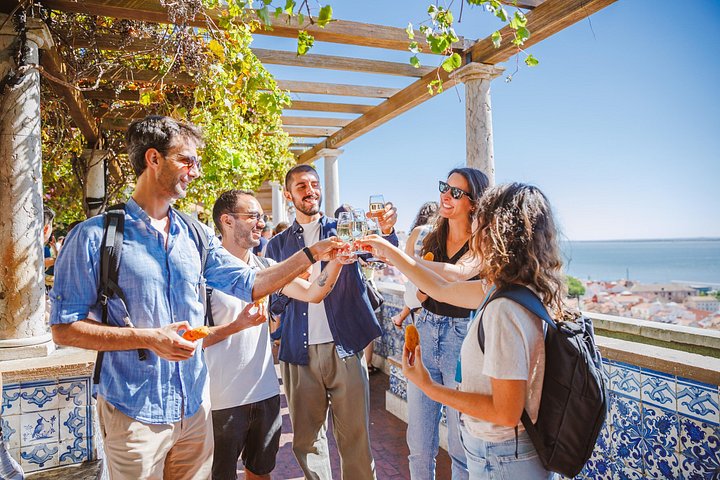
Largo da Portas do Sol is a street in the city of Lisbon, which belongs to the parish of Santa Maria Maior, in the historic quarter of Alfama. It derives its name from the old Porta do Sol, integrated in the Moorish fence of Lisbon, that existed in this place, ruined in the earthquake of 1755. From the Miradouro do Portas do Sol, among several points of interest, we can see the Church of São Vicente de Fora and the typical neighborhood of Alfama that stretches through several narrow winding streets to the Tagus River. The gazebo of Portas do Sol is a balcony-like space. The magnificent view of the city of Lisbon in its eastern zone blends in perfectly with the view over the Tagus River.
The Lisbon Cathedral, or Church of Santa Maria Maior, is located in the city of the same name, in Portugal. It is the seat of the Patriarchate of Lisbon and the Parish of Sé. Its construction began in the second half of the twelfth century, after the resumption of the city to the Moors by D. Afonso Henriques, and presents itself today as a mixture of architectural styles. It is classified like National Monument from 1910.
The Church of Santo António is a building located in the parish of Santa Maria Maior (Sé), in the municipality of Lisbon, Portugal. It is allegedly in the place of the house where St. Anthony was born, next to the old Port of the Sea, that existed in the wall of access to the interior of medieval Lisbon, and is assumed as its sanctuary. Next door is a small museum dedicated to him. It is the tradition that the young men who intend to marry on the day of marriage visit the church, pray and leave flowers for Saint Anthony, who is the intercessor of the newlyweds. On the descent to the crypt, there is a panel of modern tiles that celebrates the visit of Pope John Paul II in 1982.
Edward VII Park in England is the largest park in the center of Lisbon and is commonly known only as Edward VII Park. Located in São Sebastião da Pedreira, present parish of Avenidas Novas, was baptized in 1903 in honor of Eduardo VII of the United Kingdom, who had visited Lisbon the previous year to reaffirm the alliance between the two countries. Until then, it was designated Freedom Park [1].
The Águas Livres Aqueduct is a complex system of water collection, adduction and distribution to the city of Lisbon, in Portugal, and whose most emblematic work is the grand arcaria in stonework that stands on the Alcântara valley, one of the postcards of Lisbon. The Aqueduct was built by King João V in the 18th century, and originated at the source of Águas Livres, in Belas, Sintra, and progressively reinforced and expanded throughout the 19th century. It resisted unscathed to the earthquake of 1755.
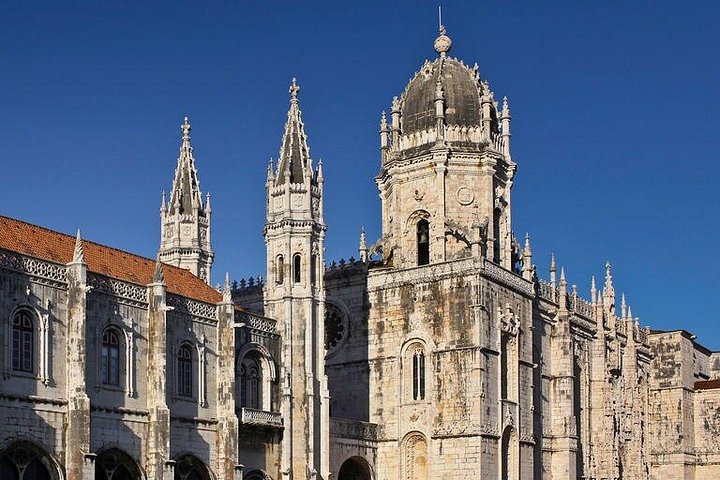
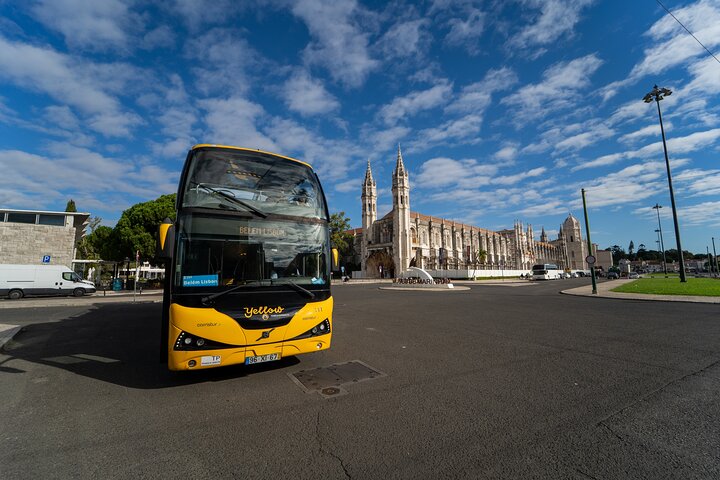
The Jerónimos Monastery or Monastery of Santa Maria de Belém is a Portuguese monastery of the Order of St. Jerome built in the 16th century. It is located in the parish of Belém, in the city and municipality of Lisbon. It has, since 2016, the status of National Pantheon. [2] A culmination of the Manueline architecture, this monastery is the most remarkable Portuguese monastic complex of its time and one of the main churches in Europe. Its construction began on the initiative of King Manuel I at the beginning of the 16th century and lasted for a hundred years and was led by a remarkable group of architects / masters of works. of João de Castilho). The Jerónimos Monastery has been classified as a National Monument since 1907 and in 1983 it was classified as a World Heritage Site by UNESCO along with the Torre de Belém. On July 7, 2007 it was elected as one of the seven wonders of Portugal. Closely linked to the Portuguese Royal House and the epic of the Discoveries, the Jeronimos Monastery was, from a very early age, "internalized as one of the symbols of the nation" [3]. It is now one of the most important tourist attractions in Portugal, with a total of 807 854 visitors in 2014, 944 000 in 2015 and 1 166 793 in 2017.
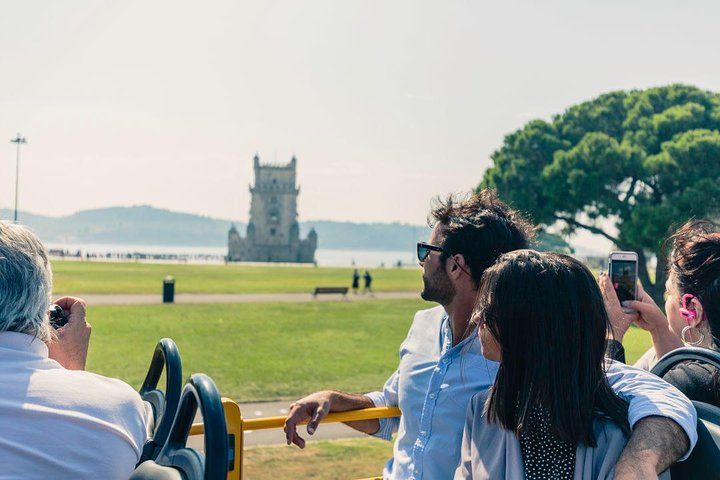
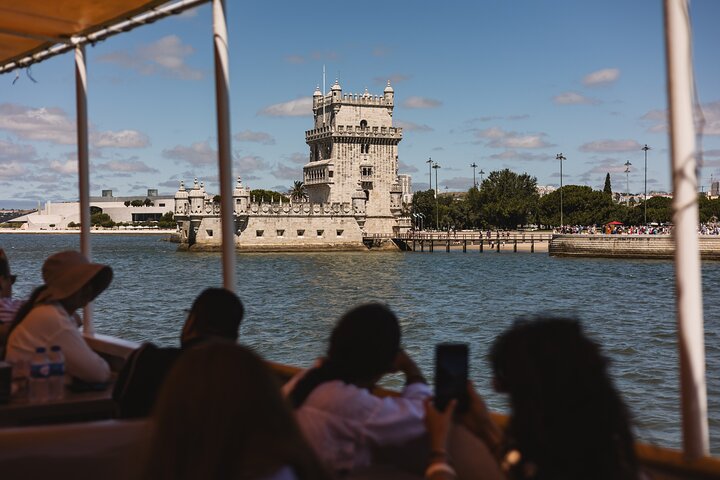
The Torre de Belém, officially Torre de São Vicente [2], is located in the parish of Belém, municipality and district of Lisbon, in Portugal. On the right bank of the river Tagus, where Belém beach once existed, it was originally surrounded by water around its perimeter. Over the centuries it was surrounded by the beach, until today it is incorporated the terra firma. One of the ex libris of the city, the monument is an icon of the architecture of the reign of D. Manuel I, in a synthesis between the medieval tradition tower and the modern bulwark, where pieces of artillery were available. Over time, the tower was losing its defense function of the Tagus bar and, from the Filipino occupation, the old warehouses gave way to dungeons. On the four floors of the tower, the Governor's Room, the Kings Room, the Audience Hall, and finally the Chapel with its fifteenth-century vaults remain. The Torre de São Vicente (1514) belongs to a defensive formation of the Tejo basin, which was erected by João II of Portugal, composed by the tower of São Sebastião da Caparica (1481) to the south, and to the west by the Torre de Santo António de Cascais ( 1488).
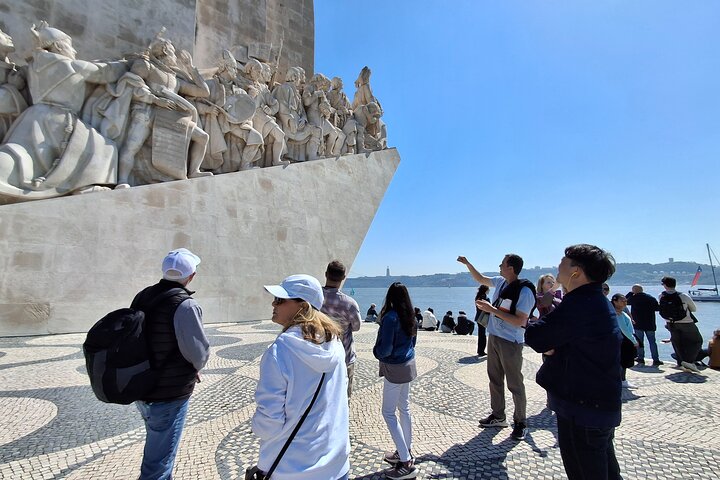
From Wikipedia, the free encyclopedia Jump to: navigation, search Jump to: navigation, search Skip to search Coordinates: 38 ° 41'37 "N, 9 ° 12'20" W Standard of the Discoveries Inauguration 1960 (59 years) Visitors 231,000 (2013) [1] Geography Country Portugal Portugal City Lisboa Location The Monument to the Discoveries (Monument to the Discoveries) is located in the parish of Belém, in the city and District of Lisbon, in Portugal. The architectural design is of Cottinelli Telmo and the sculptures are of Leopoldo de Almeida. In a prominent position on the right bank of the River Tagus, the original monument in perishable materials was erected in 1940 on the occasion of the Portuguese World Exhibition to honor the historical figures involved in the Portuguese Discoveries. The present replica, in concrete and stone, is later, having been inaugurated in 1960.
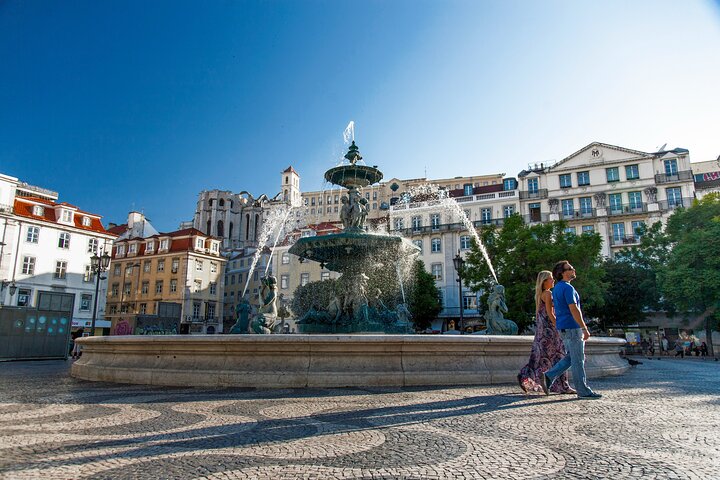
Praça dos Restauradores is located in Baixa de Lisboa, at the southern end of Avenida da Liberdade, a few meters from Praça Dom Pedro IV (better known as Rossio). The square is characterized by the high obelisk, 30 meters high, called Monument to the Restorers and inaugurated on April 28, 1886, with the cost of 45 contos de reis [1], which commemorates the liberation of the country from the Spanish dominion in 1 of December 1640. The floor of the sidewalk in the central plate of the square is Portuguese sidewalk.
This low-lying area of the city was called Valverde! Articles with links needing disambiguation [disambiguation required], due to a tributary of the Tagus River. The filthy Rossio bush was still covered in Lisbon at four hundred. It was an irregularly squared square but it was always a large space where fairs and markets were held.
キャンセル
開始24時間前まで無料でキャンセルでき、全額返金されます。
口コミ
5.0
- 53
- 40
- 30
- 20
- 10
評価は予約パートナーが集めた3件の口コミによるものです。旅行者自身の言葉を書かれた順に掲載しており、体験をよく見せるために並べ替えることはありません。
参加前に知っておくこと
- 送迎
- 全員が出発場所で合流します。送迎はありません。
- チケットの種類
- Mobile or paper ticket accepted
- 催行会社
- RecordTours
- Public transportation options are available nearby
- Specialized infant seats are available
- Suitable for all physical fitness levels
How it compares in リスボン
- Its from-price is 42% below the median of the 4320 experiences we list in リスボン.
- Its length is typical for the group.
- By number of reviews it ranks 1827 of 4320.
- The operator lists free cancellation on it.
About リスボン
リスボンはテージョ川の河口に向かって丘を下る街で、タイル張りの外壁、ガタゴト走る黄色い路面電車、展望台、遅くゆったりとした夕食が魅力です。
旧市街に魅力の多くが詰まっています。アルファマの迷路のような路地はサン・ジョルジェ城へと上り、夜にはファドが響きます。バイシャの整然とした碁盤目の街路は川沿いの広大なコメルシオ広場へ下り、バイロ・アルトとシアードは昼は書店とカフェ、夜はバーの街に変わります。サンタ・ルジア展望台やセニョーラ・ド・モンテ展望台からは、赤い屋根と輝く川面が見渡せます。
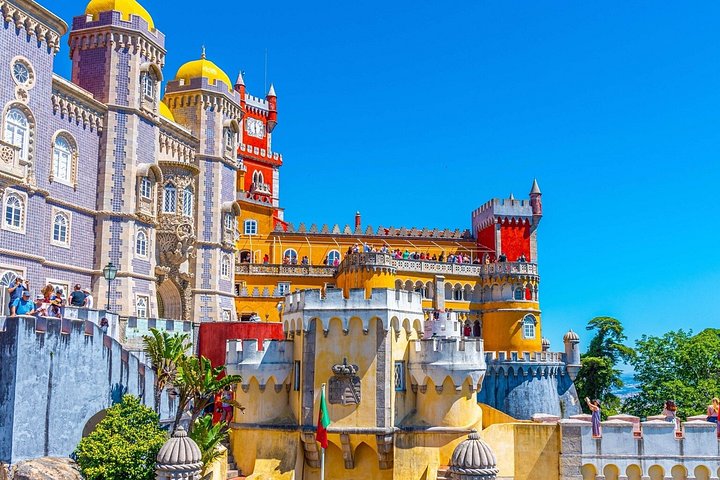
Top-ranked sights in リスボン: Commerce Square (Praça do Comércio), Pena National Palace (Palacio Nacional da Pena), Alfama.
リスボンの特別価格
割引前と割引後の価格は事業者が示すもので、当サイトが付けたものではありません。